
Travel to Greece from Australia: The 2026/27 Planning Guide
Updated July 2026
Greece is a long flight, a complicated booking, and a country that punishes the over-planner and rewards the slow traveller. If you’re an Australian going for the first time, that combination can make the trip planning feel impossible. This guide is the one I wish someone had handed me the first time I booked a flight from Sydney to Athens, when I had two weeks of holiday and three months to plan.
It’s the practical decisions in the order you need to make them. When to go. How long to take. How to fly. What to skip. How not to waste the slot.
Quick answer (the bits worth knowing before you book)
If you only read this section, take this:
Best months for Aussies: May, June, late September, early October. Best weather, fewer crowds, manageable prices.
Minimum trip length: 10 days on the ground. Two weeks is better. Three is ideal.
Direct flights from Australia: none. Plan for one stop in Singapore, Dubai, Doha, or Abu Dhabi.
Visa: Australians don’t need one for stays under 90 days. The EU Entry/Exit System (EES) launched in late 2025 and requires biometric registration on first entry.
Currency: Euro. Tap-to-pay works almost everywhere.
Budget: AUD $4,000 to $7,000 per person for a two-week trip including flights, depending on season and how much island time you include.
Where to focus: Athens as the gateway, plus one or two destinations beyond. Don’t try to do six places in 14 days.
What to skip: Santorini and Mykonos. Read why.
Picking your month for a Greek trip
The Australian travel calendar and the Greek travel calendar don’t line up the way you might want them to. Our peak holiday weeks (December, January, early July) hit Greece at its worst. The Greek months that work for us are the shoulder seasons, which means most Australians need to pick their leave deliberately.
May to early June, the sweet spot
Daytime temperatures sit at 22 to 28°C. The sea is swimmable from late May for the Aussie definition of swimmable. Tavernas are open. The wildflowers on Naxos and Crete are still out in early May. Prices are reasonable and ferries are running but not yet packed. This is my preferred window for first-timers.
Mid-September to mid-October, the locals’ favourite
The sea is at its warmest (24 to 25°C) because it’s been heating up all summer. The crowds have thinned. The light goes softer through September and the air gets crisper into October. Prices drop after 15 September. The downside is that some smaller islands start winding down after 20 October, so don’t plan late-October Folegandros or Sifnos unless you’ve confirmed your accommodation is still open.
July and August, only if you have to
If you’re tied to Australian winter school holidays, July is your forced hand. Late June and early July are bearable. Late July is hot. August is brutal. Temperatures hit 32 to 38°C in Athens and the islands fill up. The 15 August holiday (Panagia) is a national long weekend and ferries book out months ahead. For the cultural side of summer, read Greek Festivals & Cultural Events 2026.
Winter (November to March) for a different trip entirely
Athens in winter is genuinely lovely. 15 degrees, no crowds, museum prices halved. Wrong season for islands (most of them are closed). Right season for Athens plus Meteora plus mainland Greece plus skiing at Parnassus. For the full month-by-month breakdown, read The Best Time to Visit Greece.
How long to go (and why a week isn’t enough)
You’re flying 22 hours each way. Two days of that are jet lag. If you book a one-week trip you’ll spend the first two days dazed, the last day packing, and the four in between trying to see Athens and one island at speed. You’ll come home exhausted and you won’t want to do it again.
The practical minimum is 10 days. Two weeks lets you do Athens plus one base plus one slower place. Three weeks lets you do Athens plus the Peloponnese plus an island. Three weeks is the Goldilocks length for a first trip from Australia.
If you have four weeks, don’t add more destinations. Stay longer in the places you’ve picked. Greece rewards the people who slow down and stops rewarding the people who don’t.
Flights from Australia, routes and stopovers
No direct flights from Australia to Greece. Every route involves at least one stop. The four realistic options:
Singapore via Singapore Airlines or Qantas: the most popular. Sydney/Melbourne to Singapore is 8 hours, Singapore to Athens is around 11 hours via Star Alliance code shares. Total transit time roughly 22 to 24 hours. Singapore Changi is the best airport on earth for a long layover.
Dubai via Emirates: direct flight from major Australian cities to Dubai, then 4.5 hours to Athens. Slightly faster overall. Emirates economy is comfortable. Dubai layovers are easy.
Doha via Qatar: similar to Emirates. Qatar consistently wins service awards. Doha airport is excellent.
Abu Dhabi via Etihad: less common but works. Often the cheapest of the four.
What matters more than the airline is the layover. A 2-hour layover after a 14-hour flight is brutal. A 6-hour layover lets you shower at the Plaza Premium lounge, eat a real meal, walk, and arrive in Athens functional. Pay the extra $50 for a long layover.
Booking timing: 3 to 5 months ahead is the sweet spot. Sale fares appear in February and August for mid-year travel. Use Skyscanner’s “whole month” view to find cheap dates.
Cost benchmarks: Sydney to Athens return in shoulder season runs AUD $1,800 to $2,400. Peak summer (July-August) hits $2,800 to $3,800. Winter dips to $1,400 to $1,800.
How long is the flight from Australia to Greece?
The honest answer is somewhere between 20 and 32 hours door to door, depending on your city, your route, and how long you sit on the ground at your stopover. There is no direct flight from Australia to Greece. Every route involves at least one stopover, usually in the Middle East or Asia.
Sydney (SYD) to Athens (ATH)
Via Dubai (Emirates): approximately 22 hours total, including a 2 to 4 hour stopover
Via Doha (Qatar Airways): approximately 21.5 hours total
Via Abu Dhabi (Etihad): approximately 22 hours total
Via Singapore (Singapore Airlines then onward carrier): approximately 24 to 26 hours total
Via Bangkok (Thai Airways): approximately 25 to 27 hours total
Melbourne (MEL) to Athens (ATH)
Via Dubai: 22 to 23 hours
Via Doha: 22 hours
Via Abu Dhabi: 22.5 hours
Via Singapore: 25 to 27 hours
Brisbane (BNE) to Athens (ATH)
Via Dubai: 22.5 to 23 hours
Via Doha: 22 hours
Via Singapore: 26 to 28 hours
Perth (PER) to Athens (ATH)
Via Dubai: 20 to 21 hours (Perth’s the shortest of the mainland capitals, thanks to the Kangaroo Route)
Via Doha: 20 hours
Adelaide, Cairns, Hobart, Darwin: add 1 to 2 hours to the Sydney/Melbourne times, plus a domestic leg.
One thing worth knowing in 2026: the Iran conflict has pushed Middle East hub routes to fly around Gulf airspace, adding 30 to 90 minutes to most Dubai/Doha/Abu Dhabi routes. Asian hub routes (Singapore, Hong Kong, Bangkok) are unaffected and are increasingly competitive on price.
Best airlines from Australia to Greece 2026
Seven carriers do the Australia to Athens run reliably. This is our current ranking, based on service, on-time performance, price competitiveness, and how they handle disruption.
1. Qatar Airways (via Doha)
Consistently top-rated globally for service and one of the shortest total flight times to Athens. Doha’s Hamad International is the best transit airport in the region. Q-Suites in business class are the gold standard. Prices sit AUD 1,600 to 2,400 economy, AUD 6,000 to 9,000 business. Our first pick.
2. Emirates (via Dubai)
Highest frequency (multiple daily flights out of Sydney, Melbourne, Brisbane, Perth), most Aussie airports served, generous baggage. Dubai is a bigger airport with more shopping and lounges. Slightly more affected by current Middle East routing changes than Qatar. AUD 1,500 to 2,200 economy.
3. Singapore Airlines (via Singapore)
The best premium economy in the sky and the smart pick if you want to avoid Middle East hubs. Onward from Singapore to Athens is usually a codeshare with LOT Polish Airlines or Aegean Airlines. Total flight time longer, but Changi is a genuinely enjoyable stopover. AUD 1,700 to 2,600 economy.
4. Etihad (via Abu Dhabi)
Similar to Emirates but slightly less frequency out of Australia. Abu Dhabi’s new Terminal A is excellent. Etihad’s The Residence is the most extravagant first-class product in the sky if you have USD 30,000 spare. AUD 1,550 to 2,300 economy.
5. Cathay Pacific (via Hong Kong)
Underrated for this route. Hong Kong is a great stopover city if you can build in 24 hours. Onward from Hong Kong to Athens is a codeshare with British Airways or Finnair. AUD 1,700 to 2,500 economy.
6. Thai Airways (via Bangkok)
Usually the cheapest of the majors. Longer total flight time than the Middle East hubs. Bangkok is a fun stopover if you want to break the trip. AUD 1,400 to 2,000 economy.
7. Turkish Airlines (via Istanbul, from Sydney and Melbourne only)
Direct connection from Istanbul to Athens (55 minutes). Turkish Airlines has expanded its Australia network significantly. Istanbul airport is enormous. Onward flight to Athens is a short hop. AUD 1,550 to 2,300 economy.
Codeshare fine print: Qantas partners with Emirates, Qatar and Cathay. British Airways feeds many Athens routes. Virgin Australia partners with Singapore Airlines. Points transferrable through Velocity, Qantas Frequent Flyer or Emirates Skywards depending on your program.
Best stopover cities between Australia and Greece
If you are flying 20-plus hours, the stopover city matters. A good one is a treat. A bad one is 3 hours of walking terminal corridors and eating overpriced dumplings. Here are the seven realistic options, ranked by how much they actually enhance the trip.
Singapore. The winner. Changi Airport is a destination in its own right, and Singapore itself is worth a 24- or 48-hour break in either direction. Warm year-round, safe, extremely easy for Aussies (no visa, English everywhere, tap and go on the metro). Best food scene of any stopover on this list. Hawker centres, Marina Bay, Gardens by the Bay.
Dubai. Efficient rather than delightful. Airport is huge and works well. City is impressive at first sight and loses charm quickly. Great for a hotel pool and a shopping mall. Best for winter travel because summers hit 45°C. Emirates offers free stopover hotel packages on longer layovers.
Doha. Underrated. Hamad International is arguably the world’s best transit airport. Doha itself has quietly become a legitimate stopover destination: the National Museum of Qatar (Jean Nouvel-designed), the Souq Waqif, the Museum of Islamic Art. Qatar Airways offers stopover packages. Winter only.
Hong Kong. A serious city, worth 48 hours if you can. Cathay makes it easy. Best skyline in Asia, dim sum, tram rides up to The Peak. Comfortable most of the year.
Bangkok. The fun one. Cheap, warm, chaotic, delicious. Skip if you are travelling with kids or someone easily overwhelmed. Take advantage if you want a 3-day pre-Greece decompress with massage and street food.
Abu Dhabi. Quieter Dubai. New Terminal A at Zayed International is beautiful. Louvre Abu Dhabi is worth a half-day. Grand Mosque is essential. Better winter than summer.
Istanbul. The most rewarding stopover on the list, if you have the time. Bosphorus, Hagia Sophia, Blue Mosque, Grand Bazaar. Turkish Airlines offers free stopover packages including hotel and a city tour. Give it 48 hours minimum.
Cycladic Spaces tip: if you are doing the flight in one hit, choose Qatar or Emirates (shortest total time). If you can build in a break either on the way over or on the way back, split it in Singapore or Bangkok. The 8 to 10 hour Melbourne to Singapore leg is much easier to face fresh than the Doha to Melbourne leg at the end of a Greek holiday.
Jet lag and how to land in Athens functional
Greece is 7 hours behind Sydney (8 in daylight saving). The journey is mostly westward, which is easier than eastward. The trick is to land late in the day and stay awake until 10pm local time. Don’t take a nap on arrival even if you’re destroyed. Eat dinner, walk Plaka, go to bed.
If you can, build a 24-hour buffer into your trip. Land in Athens, do a Greek dinner that night, walk the next day without an itinerary, then start the trip properly on day three. The buffer pays for itself in not wasting the first proper day to brain fog.
Read more about our Jet Lag tips.
Visas, the EES, and the paperwork that’s changed since 2024
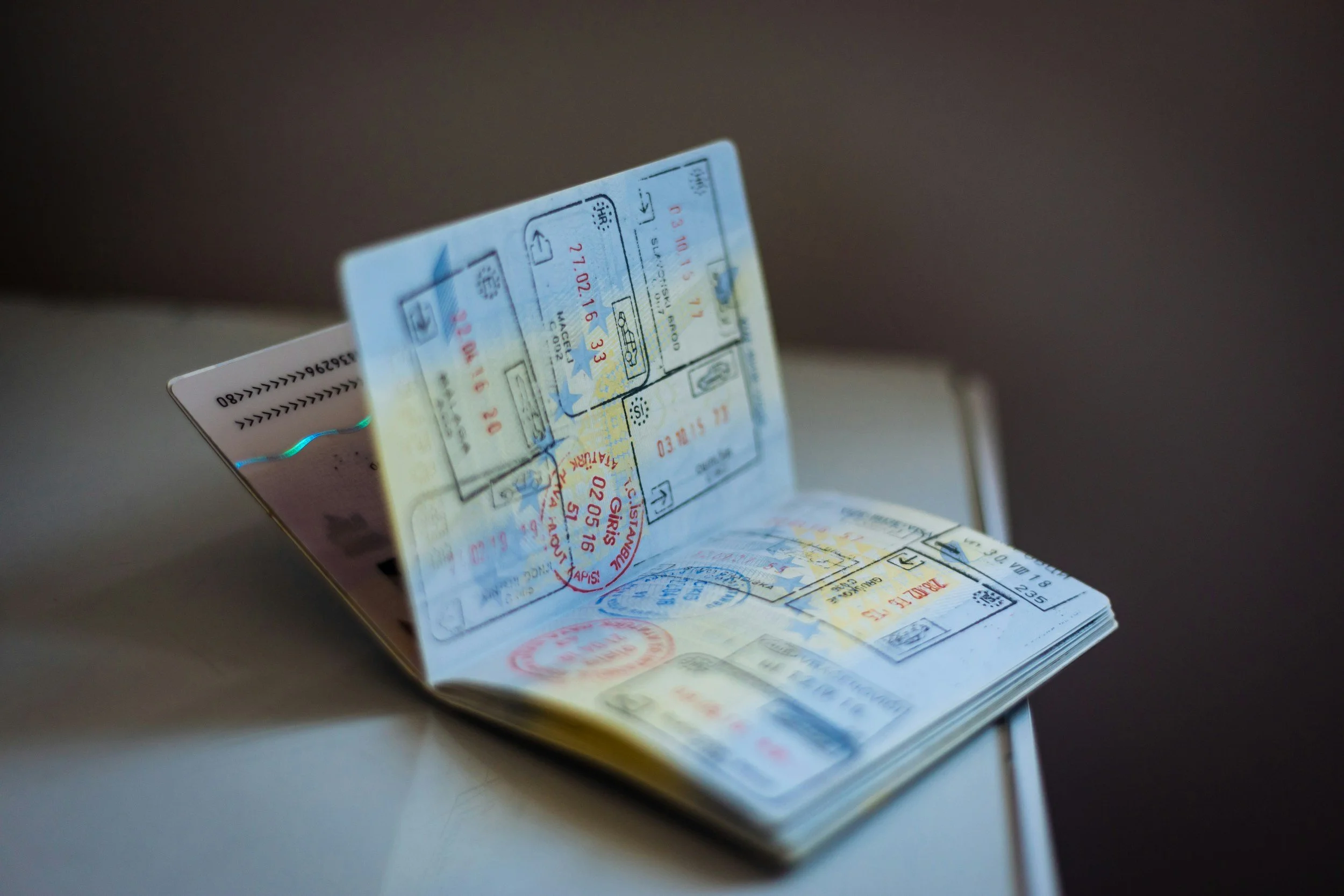
Australians don’t need a visa for stays under 90 days within a 180-day rolling window. You also can’t spend more than 90 days in the Schengen Zone in any 180-day period, which matters if you’re doing a longer Europe trip.
What changed in 2025: the EU rolled out the Entry/Exit System (EES). On your first entry to a Schengen country, your fingerprints and a facial photo are recorded. This replaces the passport stamp. Expect 5 to 15 extra minutes at the border on your first arrival. Subsequent entries are faster.
What’s coming in 2026: ETIAS, a pre-arrival authorisation similar to the US ESTA. It costs around €7, is valid for three years, and you apply online before you travel. Confirm the current rollout status before you book through the official Smartraveller Greece page.
Passport rule: your passport needs at least 6 months validity beyond your planned return date. Renew now if it’s close.
Money in Greece and what Aussies get wrong
Currency: Euro. Tap-to-pay (Apple Pay, Google Pay, contactless cards) is accepted in tavernas, hotels, museums, ferry ticket offices, even taxi ranks. You almost never need cash.
When you do need cash: village kafenios, small island bakeries, occasional taverna in the islands, and tipping. Pull €200 from an ATM on arrival at Athens airport and that’s usually enough for a fortnight.
ATM tip: use bank ATMs (Alpha Bank, Piraeus, Eurobank) not the brightly coloured Euronet machines you see in tourist areas. The Euronet fees are roughly 4 times higher.
Bank cards: Wise (formerly TransferWise), Up Bank, ING travel-friendly cards. Avoid Westpac and Commonwealth’s standard debit cards for overseas use unless you like the fees.
Tipping: rounding up at a taverna is standard. A €28 bill becomes €30. A nice dinner gets 10%. Hotel housekeeping gets €1 per day. Taxis get the change.
Tourist tax: applied per night per room, paid at check-out. Rates depend on hotel category and the new climate-resilience surcharge from 2025. Read Greek Tourist Tax 2026.
What a two-week trip from Australia really costs
Per person, all in, for 14 days in shoulder season, including flights from Sydney or Melbourne:
Budget: AUD $4,000 to $5,000. Hostels and guesthouses, ferries instead of flights between islands, tavernas not restaurants, no car hire.
Mid-range: AUD $5,500 to $7,500. 3 to 4-star hotels, mix of ferries and one inter-island flight, normal restaurants, occasional taxi.
Upper mid: AUD $8,000 to $12,000. Boutique hotels in good locations, some private transfers, dinners at the better tavernas, a wine tour or two.
Luxury: $15,000 plus. 5-star, private boat days, Michelin star restaurants…the works.
The biggest budget swings are flights (where you book matters), accommodation (Mykonos costs three times what Paros costs) and whether you eat at tourist-strip restaurants or step one street back.
Where to go (and what to skip)
The honest answer to “where should I go in Greece” is “Athens plus one or two other places.” The trap is trying to see five islands in 12 days. You’ll spend more time on ferries than on land.
Athens (always)
3 to 4 nights minimum. The Acropolis deserves a morning. The neighbourhoods deserve days. Read Where to Stay in Athens for the neighbourhood breakdown. Eat in Pangrati, drink rooftops in Kolonaki, walk Plaka without buying a single magnet.
The islands (pick wisely)
Don’t do Santorini. Don’t do Mykonos. Read why. The Greek islands worth your trip from Australia are the ones almost nobody in your group will be talking about: Paros, Naxos, Milos, Sifnos, Folegandros, Tinos, Lefkada (drivable from Athens), Kefalonia, Kimolos. Read Your 2026 Guide to the Greek Islands (Beyond the Obvious) to pick.
The mainland (don’t skip it)
The Peloponnese has the best food, the best wine, the fewest tourists, and four UNESCO sites. Meteora is one of the more spectacular places on earth. The Pelion peninsula is what Greek villages looked like in the 1960s. Northern Greece (Thessaloniki, Halkidiki, Mount Olympus) is its own holiday. Mainland Greece is the part Australians keep skipping and it’s usually the part they wish they hadn’t.
Athens as your base, your gateway, and your decompression
Most flights from Australia land in Athens. Smart trips use Athens as the gateway in and the soft landing out. The shape that works:
3 to 4 nights Athens on arrival.
Travel out to islands or the mainland.
1 to 2 nights Athens at the end before flying home.
That last Athens night sounds like padding. Take it anyway. Without it you board a 16-hour flight straight from a 7am ferry and regret it.
Getting around (the Greek transport choice tree)
Ferries between islands
The backbone of island travel. Routes are reliable in summer, sketchy in shoulder seasons, mostly cancelled in winter. Big operators: Blue Star Ferries (slower, larger, comfortable), Seajets (fast catamarans), Hellenic Seaways. Book through Ferries in Greece. Avoid Greek Easter week and 15 August where possible.
Internal flights
Aegean Airlines and Olympic Air run Athens to most major islands. Useful if you’re short on time or going long-distance (Crete, Rhodes, Corfu). Less useful for Cyclades hops where the ferry is just as quick door to door.
Hire car
Worth it on the islands you’re basing on and across the mainland. International Driving Permit required from late 2024 onwards (it wasn’t before, this changed). Get it from your local AAA office. Manual transmission is cheaper and more available than automatic.
Public transport in Athens
The metro is excellent, cheap (€1.20 a ride), and runs to the airport. Buy a 24-hour ticket if you’ll be moving around. Taxis are honest if you insist on the meter. Beat and Free Now (apps) work in Athens. Walking is the right speed in central Athens.
What to pack (the Aussie-specific version)
Electrical adapter: Greece uses the Type C/F two-pin European plug. Your Australian plugs need an adapter. Don’t buy at the airport, snag one at Kmart AND hot tip- bring a powerboard, so then you only need one adaptor.
Sunscreen and a hat: Greek summer sun is no joke. Bring reef-safe sunscreen.
Walking shoes with grip: the marble at the Acropolis, the cobblestones in Plaka, the polished stone in Cycladic villages. All slippery. Trainers, not sandals.
A light layer: even summer evenings on the islands get cool. A linen overshirt or a light jumper.
Modest layer for churches and monasteries: Meteora and certain churches require covered shoulders and knees. A sarong does the job.
Reusable water bottle: tap water in Athens is fine. On most islands it’s not (Crete and Naxos excepted). Refill where you can.
An open suitcase: Greek olive oil, honey, raki, and ceramics come home with most Aussies. Leave room.
A note on links: some of the product links in this post go to Amazon Australia through our affiliate program. If you buy after clicking one, we earn a small percentage at no extra cost to you. As an Amazon Associate we earn from qualifying purchases. Every recommendation is genuine; we would send you to the same gear over a coffee.
Travel adaptor for Greece
Greece uses Type C and Type F plugs (two round pins). Australia uses Type I (three angled flat pins). You will need an adaptor. Every hotel we have ever stayed at in Greece has assumed you brought one, which means you either brought one or you did not charge your phone.
Three we have actually bought and used:
Best for most Aussies flying to Greece: the LENCENT AU to EU Travel Adapter with 1 USB-C + 3 USB-A. Type E/F, one AC socket plus four charging ports. About AUD $25 and covers all of Europe. This is the one to buy if you only buy one.
Cheapest option, Australian brand: the KORJO Travel Adaptor Europe. Small, no USB, does one job (converts an AU plug for European sockets), $11.69, made by an Aussie brand. Over 1,400 reviews at 4.8 stars. Buy two, keep one in your carry-on.
Power-strip alternative for groups or families: the One Beat AU to EU Adapter with 4 USB ports (2 USB-C). One socket plus four USB ports means everyone charges at once. $19.99. Solves the bedside-socket war before it starts.
What we would not do: buy the airport version. Sydney Airport charges $30 for the same Korjo adaptor you can get for $11 online with a week’s notice.
Cycladic Spaces tip: Greek hotel bedside sockets are often only one per side of the bed. The One Beat above solves this in one product. If you already have a plain adaptor, throw a small AU power board into your suitcase and you can charge a phone, watch and Kindle from one socket. Non-negotiable if you travel with a partner.
Booking strategy for a Greek trip
Book early (4 to 6 months out): Flights. Accommodation in popular bases (Athens central, Paros, Naxos). Acropolis timed-entry tickets.
Book 2 to 3 months out: Inter-island ferries for summer dates. Restaurant reservations in Athens fine-dining.
Book day-of or week-of: Most tavernas. Day trips. Boat trips from your island base. Cars on the islands.
Don’t book at all: Walking tours and tickets to ancient sites outside Athens (just turn up). Random village discoveries.
Common mistakes Aussies make
Trying to see five islands in 12 days. You’ll spend half the trip on ferries.
Putting Santorini and Mykonos on the itinerary because everyone said to. Read the editorial.
Booking the Acropolis without timed entry. From 2024 this is mandatory. Buy through etickets.tap.gr.
Wearing flip-flops at archaeological sites. The marble is genuinely slippery and the sites are vast.
Eating dinner at 7pm. Greeks eat at 9.30pm. If you go at 7pm you’re eating with other tourists in restaurants that have lowered their game.
Ordering a Greek salad in Plaka. The Greek salad in your local Athenian neighbourhood will be cheaper, better, and made by someone who isn’t cynical yet.
Skipping mainland Greece. Meteora and the Peloponnese will probably end up your favourite part of the trip.
Tight ferry connections during Greek Easter, 15 August, or major festivals. Build in buffers.
Not learning a single Greek phrase. Read Greek phrases you’ll use on holiday in Greece.
Practical tools to download before you fly
The phrases above get you through the social moments. These get you through everything else.
Google Translate camera mode. Point at any menu, sign or supermarket jar. The translation appears overlaid in real time. The single most useful travel tool in 2026. Read the Google Translate help centre if you haven’t used the camera feature before.
Google Maps offline. Download Athens, your destination island, and the broader region before you fly. Saves you on back roads with no signal.
An eSIM. Airalo or Holafly. Buy a Greek data eSIM in the app, activate before you land, and you have data the moment the wheels hit the runway.
Ferryhopper. The best ferry booking app. Live cancellation alerts.
Beat or Free Now. Greek taxi apps. Set the destination once, no fare-haggling.
Apple Pay or Google Pay. Contactless is everywhere. Carry a small amount of cash for villages and tipping.
Cycladic Spaces tip: screenshot the Greek alphabet to your camera roll. Faster than opening Translate when you’re squinting at a ferry port destination board.
FAQs
Do Australians need a visa for Greece?
No, for stays under 90 days within a 180-day window. From late 2025, biometric registration is required on first entry to a Schengen country under the EES. ETIAS pre-authorisation is rolling out through 2026. Check Smartraveller before you book.
How long should I go for?
10 days minimum. Two weeks is comfortable. Three weeks is ideal for a first trip from Australia.
What’s the cheapest time to visit Greece from Australia?
November to early March for flights. May or late September for the best value with good weather. Avoid July and August unless you’re tied to school holidays.
How much does a two-week trip from Australia cost?
AUD $4,000 to $7,500 per person mid-range, including return flights, accommodation, food, transport and entry fees. Luxury runs higher. Budget runs lower if you can do hostels and ferries.
Should I visit Santorini and Mykonos?
No. Both islands are over-touristed and the gap between expectation and reality is wide. Read the editorial for the full reasoning and the alternatives.
Which Greek islands are good for first-time Aussie visitors?
Paros and Naxos in the Cyclades. Lefkada and Kefalonia in the Ionians. Crete if you want a bigger destination. All easier and more rewarding than the famous two.
Do I need an International Driving Permit?
Yes, since late 2024. Get one from your state automobile association before you fly. Costs around AUD $50, valid for 12 months.
Is Greece safe for Australian travellers?
Generally very safe. Petty theft and pickpocketing in Athens tourist areas are the most common issues. Standard precautions are enough. Smartraveller currently rates Greece as “exercise normal safety precautions”.
Can I use my Australian bank card in Greece?
Yes. Tap-to-pay works almost everywhere. Use a travel-friendly card (Wise, Up, ING) to avoid international transaction fees. Pull a small amount of euros from a bank ATM on arrival for the rare cash-only places.
What if I’m stuck with August travel because of school holidays?
Skip Cycladic Spaces’ usual island recommendations. The popular smaller islands fill up. Consider Crete (big enough to absorb tourism), the mainland (Peloponnese, Meteora), or building the trip around Panagia on 15 August in a village that does it properly.
