
Every Greek will tell you, sooner or later, that Thessaloniki eats better than Athens. Athenians will resist this claim. They will pivot, mention a particular taverna in Monastiraki, or invoke some seafood spot in Piraeus. But they know. Deep down, they know. Thessaloniki is where Greece goes to eat. (If you're still planning the Athens leg of your trip, we've got you covered there too.)
The city has geography on its side, sitting at the crossroads of Byzantine, Ottoman, and Sephardic Jewish culinary traditions that layered over one another across centuries until the result became something entirely its own. Thessaloniki is not just the food capital of Greece. It is arguably the food capital of the eastern Mediterranean, and it wears this distinction with the quiet confidence of somewhere that has never needed to market itself.
This guide is for the traveller who has heard the rumours and wants to know where to begin.
Why Thessaloniki has the edge on food
The short answer is history. Thessaloniki spent centuries as one of the Ottoman Empire's most cosmopolitan cities, a place where Greek, Turkish, Jewish, Slavic, and Romani communities lived in proximity close enough to trade recipes as readily as they traded goods. The Sephardic Jewish community, expelled from Spain in 1492 and welcomed into the Ottoman Empire, brought with them a cooking tradition that fused Iberian technique with Levantine ingredient and settled permanently into the city's palate.
That layering produced a cuisine that is richer, spicier, and more textured than what most visitors encounter in the island resorts or the tourist corridors of Athens. The mezes culture here is more elaborate. The cheese culture is more serious. The pastry culture is operating at a different altitude altogether. For a broader picture of what to eat in Greece, our food guide covers the full picture.
Add to this the city's proximity to the agricultural abundance of central Macedonia, the lakes and wetlands that supply exceptional freshwater fish, and the Halkidiki peninsula just to the south, and you have a food city with both the historical depth and the raw material to back up its reputation.
What to eat in Thessaloniki
Bougatsa
Start here. Start every day here. Bougatsa is Thessaloniki's breakfast in the same way that croissants are Paris's breakfast: technically available elsewhere, but nowhere near as good. The Thessaloniki version is a pastry made of crisp, paper-thin phyllo filled with warm semolina custard, dusted with icing sugar and cinnamon, and eaten at a marble counter while the city wakes up around you.
The best bougatsa shops have been operating for decades and they open early. Bantis is the name you will encounter most often, and it has earned the reverence. A family operation since 1969, now run by Philippos Bantis using his grandfather's recipe, with phyllo still stretched and folded by hand. Order one piece and one coffee. Order two pieces if you are honest with yourself about who you are.
Mezes and the art of the slow table
The meze tradition in Thessaloniki is its own philosophy of eating. This is not the starter platter you rush through before a main course. In Thessaloniki, mezes are the meal, arriving in no particular order over several hours at a low table, usually accompanied by tsipouro, the local grape spirit that is to this city what ouzo is to the islands.
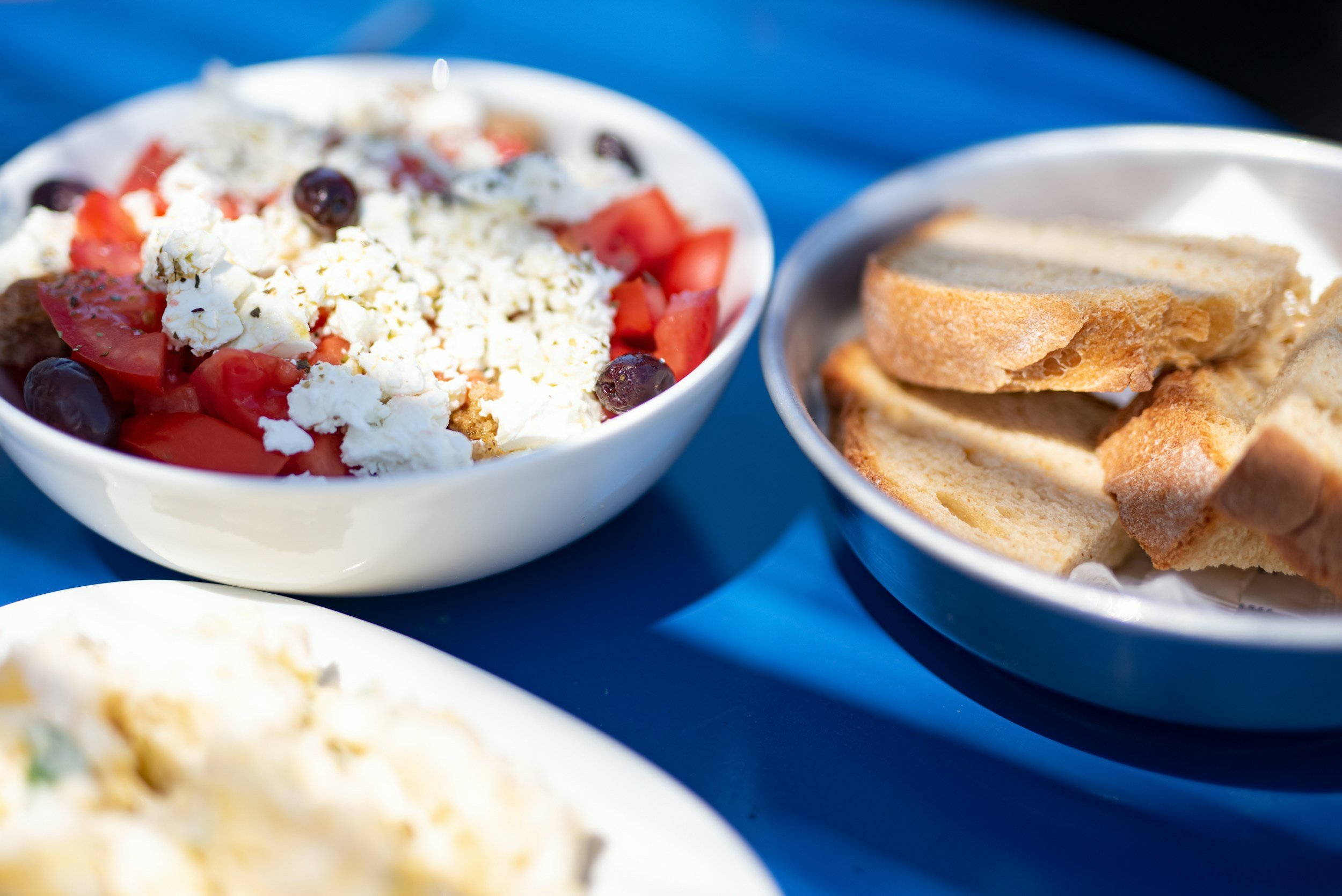
The dishes to watch for: taramosalata made in-house with a depth of flavour nothing from a supermarket approximates, grilled Florina peppers dressed with olive oil and garlic, chunks of aged feta served with a pour of honey and walnuts, mussel saganaki in a sauce of tomato and feta, and loukanika, pork sausages spiced in a way that reflects the Ottoman inheritance of this cuisine.
The tsipouradika, the traditional meze restaurants that centre around tsipouro service, are the soul of Thessaloniki's food scene. They open at lunch and they take their time. Let them.
Cheese
Macedonia and Epirus produce some of Greece's finest cheeses, and Thessaloniki is the distribution point for all of it. The cheese counter at any serious delicatessen in the city is worth an extended visit: aged graviera from Crete sitting alongside young manouri, smoky Metsovone, and the local specialty, a fresh white cheese called batzos with a crumble and a salinity that pairs particularly well with a glass of Xinomavro.
Buying cheese at a market stall, eating it wrapped in paper on a bench by the waterfront, is one of the more honest pleasures Thessaloniki offers.
Street food
Thessaloniki does not have Athens's density of food stalls, but what it has is better. The koulouri Thessalonikis, a sesame-covered ring bread that is more substantial and more flavourful than its Athenian counterpart, is sold from carts throughout the city from early morning. It is breakfast for those who cannot sit down.
Trigona panoramatos are the other street-food institution: cone-shaped pastry shells filled with cream, made to a recipe that has remained essentially unchanged since Giannis Elenidis first created them in the Panorama neighbourhood in the 1960s. The Elenidis family still runs the original shop and two other locations in the city. They are the correct thing to eat while walking along the waterfront promenade.
Where to eat in Thessaloniki
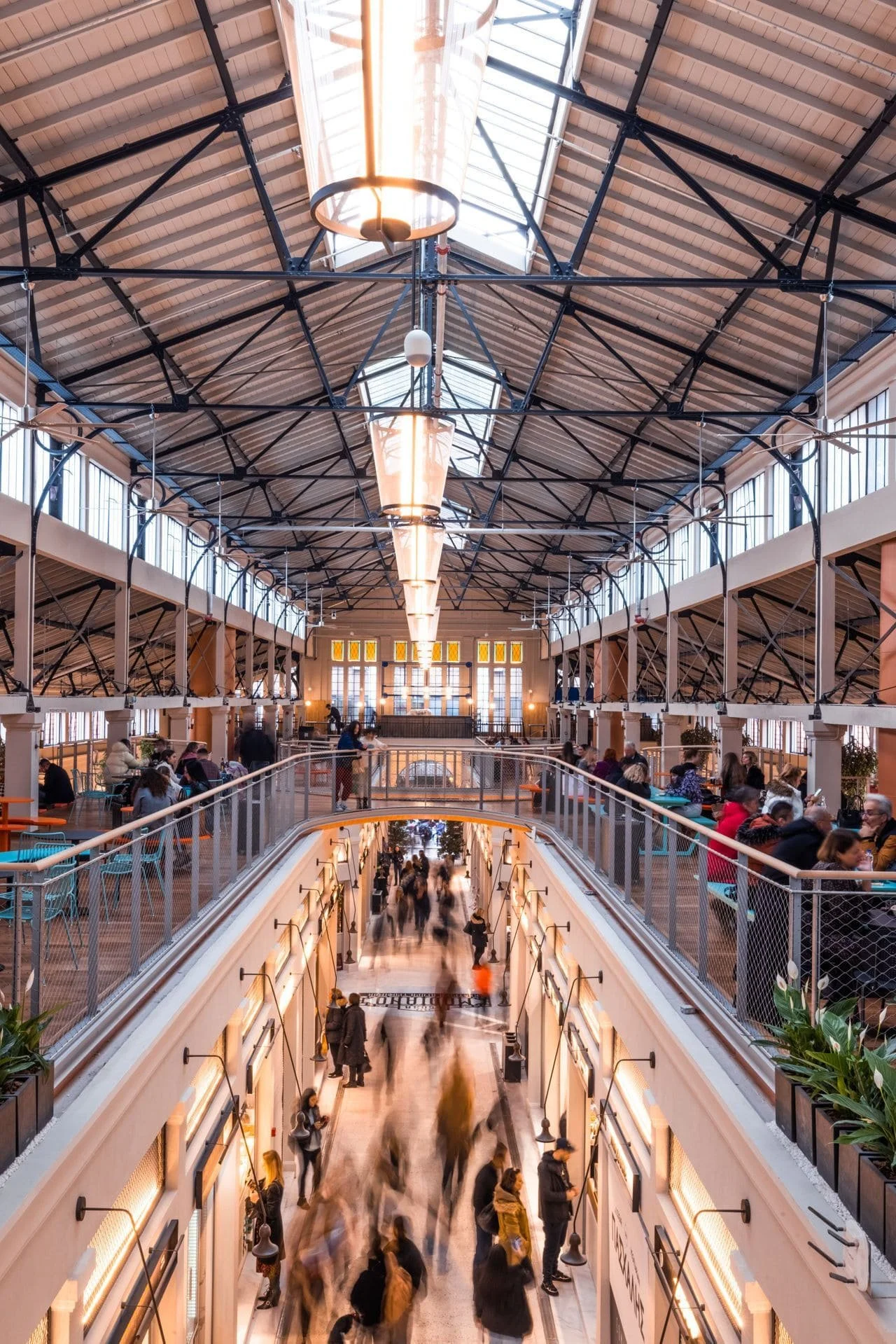
The Modiano Market and Kapani markets in the city centre are the logical starting point for understanding what Thessaloniki eats. These are functioning daily markets, not tourist attractions, and the difference in atmosphere is palpable. The merchants here are selling to the people who actually cook in this city.
For the tsipouradiko experience, the area around Ladadika, the old warehouse district near the port, is dense with options. Avoid anywhere with a translated menu displayed on an A-frame sign outside. The better places do not need to recruit passing foot traffic.
The Ano Poli, the upper town with its Ottoman-era timber houses and Byzantine churches, has a quieter cluster of neighbourhood restaurants that operate closer to local rhythms. Lunch service, no bookings, whatever is fresh that morning. This is the Thessaloniki that the travel guides do not quite capture.
When to visit for food
Thessaloniki rewards visitors in every season, but autumn is the period when the city's food culture reaches its full expression. The grape harvest is finished, the first rains have cooled the air, and the weekly markets overflow with quince, pomegranate, wild mushrooms, and the kind of produce that makes cooking feel effortless. The Thessaloniki International Film Festival in November brings a cultural energy to the city that sharpens the atmosphere in the restaurants and bars without overwhelming it.
Summer is also workable. The Halkidiki coast is close enough for a morning swim followed by a long lunch at a seafood restaurant where the fish arrived that morning. But if you have the flexibility to choose your season, choose autumn.
A note on the city itself
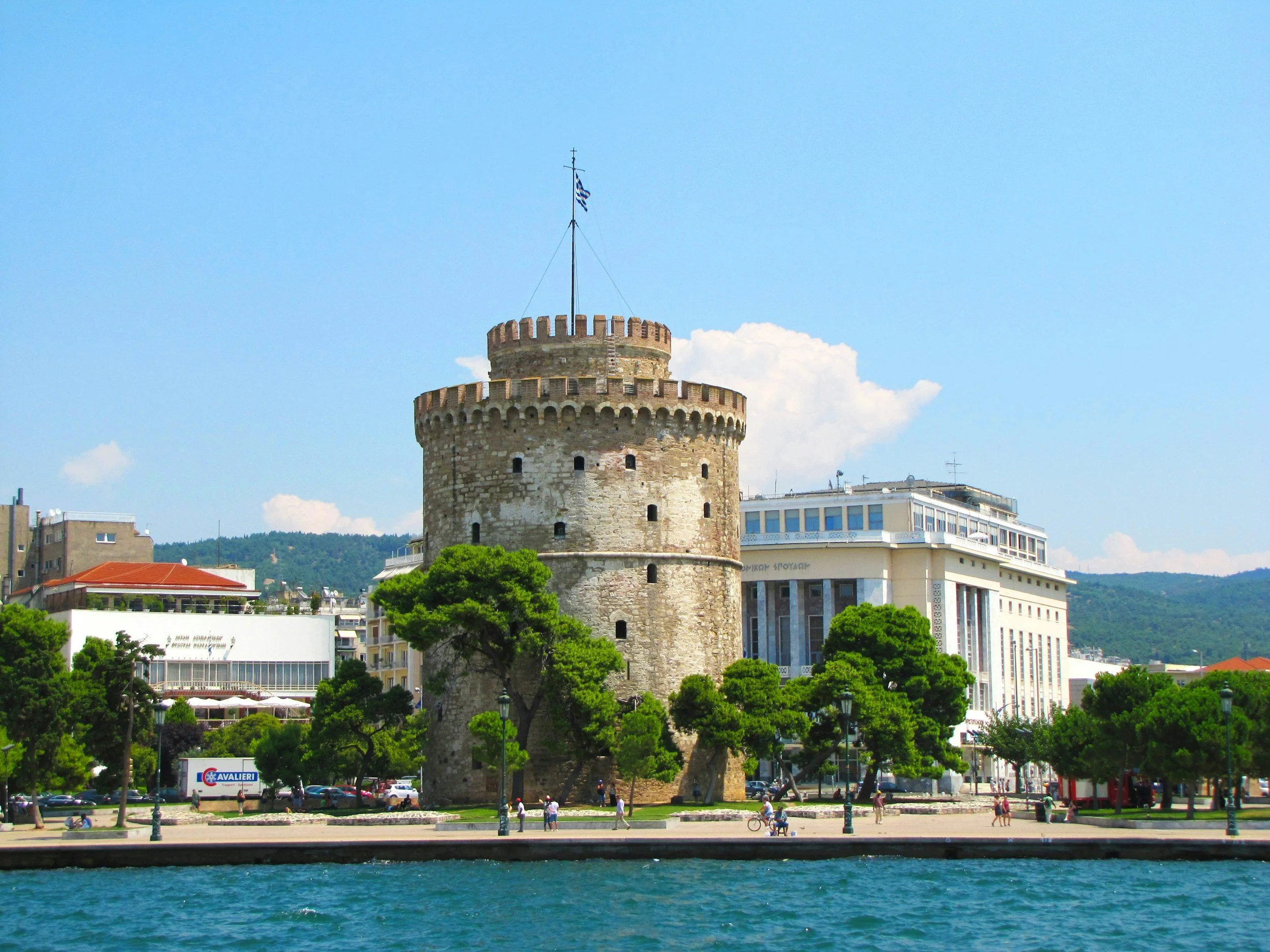
Thessaloniki is a city that rewards a slow pace. It has a waterfront promenade, the Nea Paralia, that stretches for several kilometres and is designed for the kind of unhurried walking that Greeks do better than almost anyone. It has Byzantine churches in surprising corners, a Roman forum still partly visible in the middle of the city, a White Tower standing at the water's edge as one of the more understated historic landmarks in Greece.
But the city is best understood through its eating. Sit long enough at a table in Thessaloniki and you will start to understand something about the Greek character that the tourist-facing version of Greece tends to obscure: a seriousness about pleasure, a conviction that the table is where life happens, a patience with time that is not laziness but something closer to wisdom. Greece's Michelin-starred restaurants are worth knowing about too, but Thessaloniki will feed you better than almost any of them.
Thessaloniki has been eating well for a thousand years. It intends to keep going. Ready to plan your trip? Browse our Greece travel guides for Australians.
Frequently Asked Questions
What is the most famous food in Thessaloniki?
Bougatsa, the warm semolina custard pastry in crisp phyllo, is the dish most closely associated with Thessaloniki. The city also has a strong claim to the best mezes culture in Greece, and its koulouri, a sesame-covered ring bread, is widely considered superior to the Athenian version.
Is Thessaloniki worth visiting for food?
Absolutely. Many food writers and Greek locals consider Thessaloniki the best eating city in Greece, ahead of Athens. Its mix of Byzantine, Ottoman, and Sephardic Jewish culinary influences produces a food culture with unusual depth and variety.
What is tsipouro and where can I try it in Thessaloniki?
Tsipouro is an unsweetened grape spirit, similar to grappa, that is the traditional drink of northern Greece. In Thessaloniki, it is served at tsipouradika, traditional meze restaurants where the spirit arrives alongside a rotating series of small dishes. The Ladadika district near the port has a concentration of these restaurants.
What markets should I visit in Thessaloniki?
The Modiano Market and the adjacent Kapani Market in the city centre are the main daily food markets. Both are working markets selling fresh produce, meat, fish, cheese, and spices. They are at their busiest and best in the morning.
What is the best time of year to visit Thessaloniki?
Autumn, from late September through November, is the ideal time for food-focused travel to Thessaloniki. The seasonal produce is exceptional, the city's cultural calendar is active, and the summer heat has passed. Spring is also excellent. Summer is hotter and busier, though the proximity of the Halkidiki coast makes it manageable.
