
Visiting the Acropolis in 2026: Tickets, Hours, and the Best Time to Go
Updated June 2026
Quick answer: Adult tickets €30 year-round, book a timed slot through etickets.tap.gr. Open daily from 8am. Best time to visit is at the 8am opening, using the south entrance near the Acropolis Museum. Avoid 9-11am (cruise ship arrivals) and avoid July-August midday heat. Allow 2 to 3 hours for the site, 2 more for the museum.
I first climbed the Acropolis when I was fifteen, during a winter trip with my family. It was cold, the crowds were thin, and I had the Parthenon almost to myself. I remember looking up at those Doric columns and feeling something I couldn't articulate then. That it mattered. That standing here meant something.
I've been back many times since. The Acropolis still makes me feel that way.
This is the most visited site in Greece, and for good reason. The Acropolis of Athens is the birthplace of democracy, the symbol of Western civilisation, and one of the most extraordinary things humans have ever built. It also requires more planning than it used to. The days of wandering up whenever you feel like it are over.
Quick planning tips (read this before you book)
Book timed entry tickets early, especially from May to September.
Go at 8am, and use the south entrance near the Acropolis Museum if you want to skip the worst queues.
Budget 2 to 3 hours for the Acropolis, plus 2 hours for the museum.
Avoid 9am to 11am if you can (cruise crowds hit hard).

What is the Acropolis of Athens
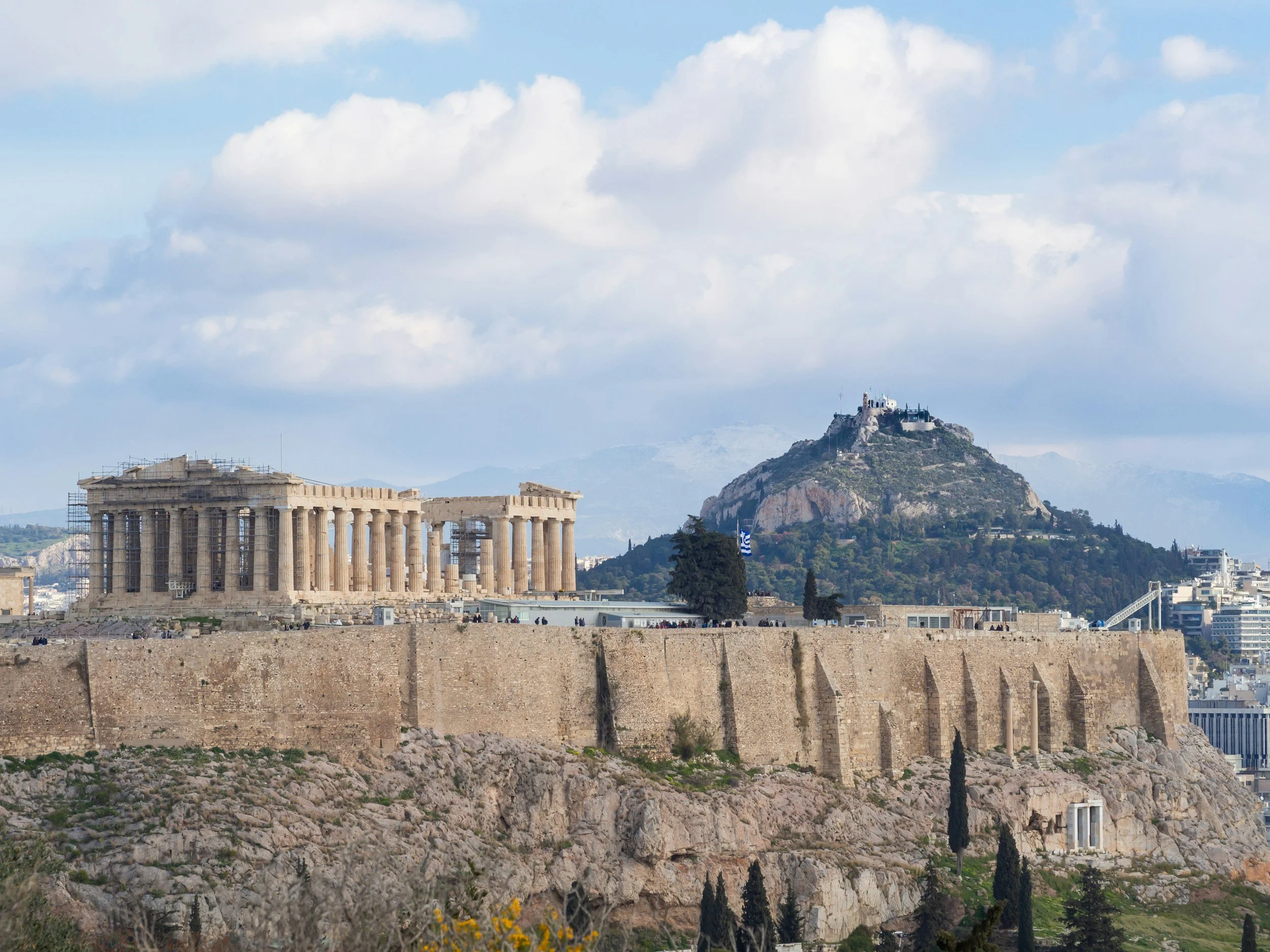
The word “acropolis” means “high city” in Greek. This limestone hill rises 157 metres above Athens and has been a place of worship and civic pride for over 3,000 years. The buildings you see today date from the 5th century BCE, the golden age of Athenian democracy under Pericles.
The site covers about three hectares and includes the summit plateau plus the slopes, which hold the Theatre of Dionysus (where Greek tragedy was born) and the Odeon of Herodes Atticus (still used for performances today). If you’re visiting in 2026, you might catch the Parthenon briefly without scaffolding, depending on where restoration works are up to.
What to See at the Acropolis
The Parthenon is not the only ruin on top. Your ticket includes access to multiple monuments, and they’re worth your time.
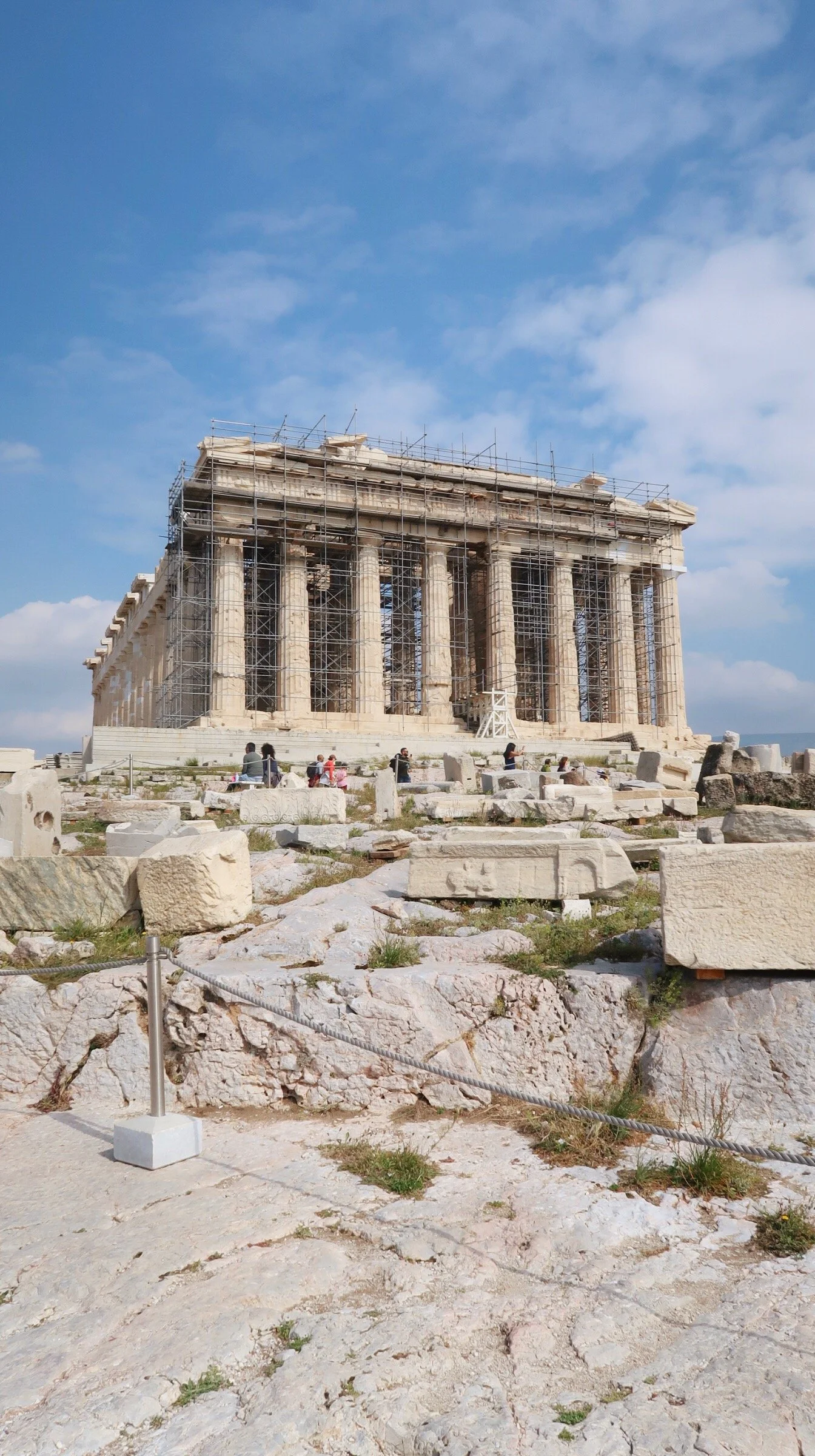
The Parthenon is the main event. Built between 447 and 432 BCE, it’s the most important surviving building of Classical Greece. The columns curve slightly inward to create the optical illusion of perfect straightness. You can’t go inside, but walking around it takes 30 to 45 minutes if you’re paying attention.
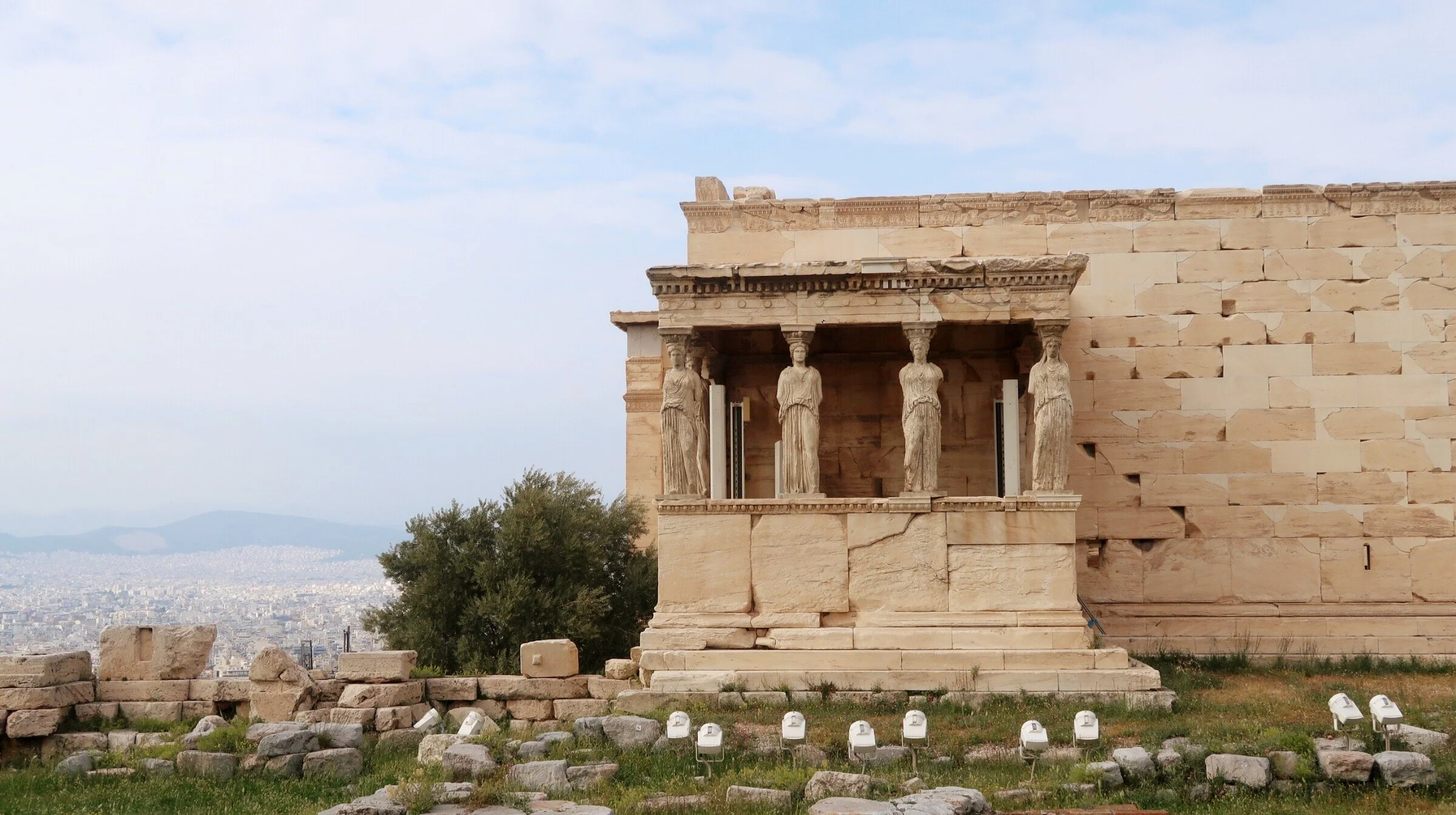
The Erechtheion is the temple with the famous Caryatids, six female figures serving as columns. The ones on site are replicas. Five originals are in the Acropolis Museum. The sixth is in London, separated from her sisters since 1801.
The Propylaea is the monumental gateway. The Temple of Athena Nike is a small Ionic temple perched on a bastion with spectacular views. On the slopes, the Theatre of Dionysus is where Sophocles and Euripides premiered their plays. Allow 2 to 3 hours to see everything properly.
Acropolis of Athens tickets and prices 2026
A standard adult ticket costs €30 year-round. There’s no longer a reduced winter rate. EU citizens under 25 and non-EU visitors under 5 qualify for reduced admission with valid ID.
You must book a specific timeslot. The ticket is valid from 15 minutes before to 15 minutes after your slot. For example, if you book 10:00 to 11:00, you can enter from 9:45 to 11:15. They’re strict about this.
Buy tickets through the official Acropolis e-ticket site (etickets.tap.gr). Third-party sites charge more and I’ve heard reports of QR codes being rejected at the gate. Tickets are non-refundable regardless of where you buy.
The old combination ticket covering six other sites was discontinued in April 2025. You now need separate tickets for the Ancient Agora, Roman Agora, Hadrian’s Library, and other sites.
Free entry days: March 6 (Melina Mercouri Day), October 28 (Oxi Day), plus the first and third Sunday of each month from November through March. Expect crowds, and always double-check official updates in case dates change.
Acropolis of Athens opening hours (summer and winter)
Open daily from 8am. Summer closing (April to mid-September) is 7:30pm or 8pm. Winter (November to March) closes at 5pm. Closed January 1, March 25, May 1, Easter Sunday, December 25 and 26. Verify on the Greek Ministry of Culture website before you go.
Heat closures: When temperatures exceed 40°C, the site closes from 1pm to 5pm. This happened multiple times in 2024 and 2025. Check the weather if visiting in summer.
Best time to visit the Acropolis (avoid cruise crowds)
Timing matters enormously. Get it wrong and you’ll be shuffling through crowds in searing heat.
Best months: April, May, September, October. Mild weather, manageable crowds, beautiful light. I visited in winter at fifteen and had the place nearly to myself. For more, see my guide to the best time to visit Greece.
Best time of day: 8am when the gates open. You’ll be 5 to 10°C cooler than midday and experience the site before the chaos. Second choice is after 4pm in summer.
The cruise ship problem: Cruise tourists typically arrive at the Acropolis between 9am and 10am. Avoid the 9am to 11am window entirely.
Avoid: July and August unless you have no choice. Temperatures regularly hit 35 to 40°C. The heat is punishing, the crowds overwhelming.
How to Get to the Acropolis
Take Metro Line 2 (red) to Acropoli station, then walk five minutes. From Monastiraki Square, it’s 10 to 15 minutes on foot through Plaka. There’s no parking at the site.
Which entrance to use: There are two entrances. The main western entrance is where tour buses park and most visitors queue. The south entrance near the Theatre of Dionysus (opposite the Acropolis Museum) is significantly less crowded. This is the one I use.
What to Bring
Sturdy shoes with good grip. The marble is slippery and there are many stairs. Hat and sunscreen. There’s no shade up there and virtually no benches. A water bottle. You can’t buy anything inside, but there’s a fountain to refill for free. Food and drinks other than water aren’t allowed. Your ticket on your phone. Patience.
How Long to Spend at the Acropolis
Allow 2 to 3 hours for a proper visit. You can rush through in 45 minutes, but you’ll regret it. If you’re visiting the Acropolis Museum as well (and you should), budget a full half day.
Pro tip: Head straight to the top first, especially in summer. Dart to the Parthenon when it’s cooler and less crowded, then work your way down. Don’t spend your quiet window exploring the slopes. You can only validate your ticket once, so once you exit, you can’t re-enter.
The Acropolis Museum
The Acropolis Museum is essential to understanding what you’ve seen on the hill. The top-floor Parthenon Gallery positions the sculptures exactly as they appeared on the temple, with floor-to-ceiling windows framing the Parthenon itself. The original Caryatids are here. Glass floors reveal an ancient Athenian neighbourhood beneath the building.
Requires a separate ticket. Photography is allowed except in the Archaic Gallery. There’s a restaurant with Acropolis views, and admission to the café and shops is free even without a ticket. Most people spend about 2 hours.
(If you’re staying in Athens, you’ll also love my guide to Athens neighbourhoods, where to stay and where to skip.)
For more on what to see in Athens beyond the rock, browse our best museums in Athens guide — from the National Archaeological to the smaller specialist gems most visitors miss.
The Parthenon Marbles
I can’t write about the Acropolis without addressing the marble in London.
In the early 1800s, Lord Elgin removed approximately half of the surviving Parthenon sculptures. Metopes, frieze sections, pediment figures, a Caryatid. They’ve been in the British Museum for over 200 years. The British call them the Parthenon Sculptures. Greeks call them stolen.
The legality matters less to me than the simple wrongness. These sculptures were designed as a unified artistic programme, meant to be experienced together in the light of Athens. They were ripped apart. Half remain here. Half sit in a dim room in Bloomsbury.
When you walk through the Acropolis Museum, you’ll see the gaps. White plaster casts mark where the originals should be. The museum was built, in part, as an argument. Greece has a world-class facility ready to reunite these pieces. The “they don’t have anywhere proper” excuse died in 2009.
Public opinion in Britain has shifted. A 2023 YouGov survey found 49% support return, only 15% opposed. The campaign for reunification continues. As someone with Greek heritage, I find it difficult to be neutral. The sculptures belong in Athens, reunited, whole. When you see the gaps, you’ll understand.
What to Do Near the Acropolis
Walk down through Plaka for lunch. For views back at the Parthenon, head to Areopagus Hill (Mars Hill). The sunset from there is spectacular.
The Ancient Agora is where Athenians lived, shopped, argued, and voted. It has the remarkably intact Temple of Hephaestus and needs 2 to 3 hours. Just below the Acropolis, Anafiotika is a charming neighbourhood that feels more like Santorini than Athens.
Don’t forget the Greek tourist tax which applies to accommodation.
If you’re building an Athens itinerary, my 48 hours in Athens guide maps out a perfect first-timer plan.
Is the Acropolis Worth Visiting
Yes. Unequivocally.
It’s crowded, expensive, and requires planning. It’s also one of the most significant places on earth. Skipping it while in Athens would be like visiting Paris without seeing the Eiffel Tower. Go early. Use the south entrance. Wear good shoes. And when you see those gaps in the museum, think about what reunification would mean.
The Acropolis has survived wars, explosions, occupations, and millions of tourists. Still standing. Still beautiful. Still worth the climb.
Frequently Asked Questions
How much do Acropolis of Athens tickets cost?
€30 year-round for adults. EU citizens under 25 and non-EU visitors under 5 get reduced admission with ID.
Do I need to book in advance?
Yes. Timed entry is mandatory. Book through etickets.tap.gr. Popular slots sell out in peak season.
Can I arrive at a different time than my slot?
You can enter 15 minutes before to 15 minutes after your slot. So a 10:00 to 11:00 slot means entry from 9:45 to 11:15. They’re strict.
What’s the best time to visit the Acropolis?
8am when gates open, or after 4pm in summer. Avoid 9am to 11am (cruise ship arrivals). Best months: April, May, September, October.
How long does a visit take?
2 to 3 hours for the site. Add 2 hours for the Acropolis Museum. Budget a half day for both.
Is the Acropolis combo ticket still available?
No. Discontinued April 2025. You need separate tickets for Ancient Agora, Roman Agora, Hadrian’s Library, etc.
Can I re-enter after leaving?
No. You can only validate your ticket once.
Which entrance is less crowded?
The south entrance near Theatre of Dionysus, opposite the Acropolis Museum.
Can I bring food and drinks?
Water only. There’s a free refill fountain inside. No other food or drinks allowed.
Is the Acropolis wheelchair accessible?
There’s a lift on the northwest side. It may close in bad weather. Reserve access through the official website. Visitors with 67%+ disability and one companion enter free.
