
Goat Beach Symi (Marathounda): How to Visit and What It’s Really Like
Updated June 2026
Most people give Symi about four hours. They come over from Rhodes on the day boat, photograph the pastel mansions stacked above the harbour, eat a plate of the tiny sweet shrimp the island is known for, and they are gone before the light turns good. They never make it over the hill. Their loss.
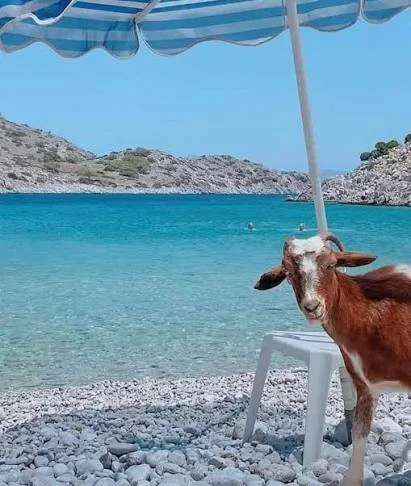
Because over the hill, on the southeast coast, is Marathounda: Symi's goat beach, where the goats walk down to the water and help themselves to your lunch. This is the beach worth staying an extra day for. This guide covers where it is, how to get there, the taverna on the sand, and what to do when a goat is standing on your towel deciding if your sandwich is worth the effort.
Quick answers before you scroll
Where is it? Marathounda, southeast Symi, about 17km from the main harbour at Gialos.
How do you get there? By car or scooter (around 35 minutes from town) or by taxi-boat, where it is the final stop.
Are the goats real? Very. They live on the slope behind the bay and come down for shade, water, and whatever you packed for lunch.
Where do you eat? Taverna Marathounda, the one taverna right on the beach.
Worth it? If you want a quiet pebble bay, a long taverna lunch, and goats for company, yes.
Yes, the goats really do come down to the sand
Every Greek island has goats. You hear the bells first, a loose clatter somewhere up on a brown hillside, and that is usually the whole encounter. A sound, a squint, a couple of shapes moving through the scrub.
Marathounda did not get the memo. Here the goats come all the way down, pick their way between the sunbeds, and flop into the shade of your umbrella like they hold the lease. They are not aggressive. They are something worse: confident. Decades of day-trippers and one very patient taverna kitchen have taught them that humans arrive with bags, and bags contain food, and food is, broadly speaking, theirs.
Watch a kid clock this for the first time. The face. A goat, on the beach, looking them dead in the eye over a packet of crisps. That is the memory that survives the trip, long after the museums and the boat transfers have blurred into one long warm smear.
In my family this would not even rate. Half the relatives back in the village have a few goats wandering the yard, and nobody photographs them. What makes this bay worth the drive is that you get the goats and one of the clearest swims in the Dodecanese in the same afternoon. The animals are the gimmick. The water is the reason.
Where is Marathounda beach, and how do you get there?
Marathounda sits on the southeast side of Symi, folded into a bay the summer meltemi wind mostly ignores. That detail earns its place. Plenty of Symi beaches get whipped into chop on a blowy afternoon while this one stays glassy, which is half of why the goats, the swimmers, and the one taverna all ended up here together.
Two ways in:
By road. This is one of the few Symi beaches you can drive to at all, which on this island is a genuine luxury. Hire a car or a scooter and it is roughly 35 minutes from Gialos, the harbour town, along a road that climbs, winds, and then tips you down into the bay. Drive it slowly. The lanes are narrow, the drops are real, and the goats do not look both ways.
By taxi-boat. Through summer, small boats run a beach circuit out of Gialos and Marathounda is usually the last stop on the line. Slower than the car, but you trade the hairpins for an hour of coastline, and you arrive with your nerves intact.
On foot, the beach is about a 3km walk from Panormitis, the big monastery on Symi's south coast. Do both in a day: incense and icons in the morning, salt and goats in the afternoon. Very Greek, that swing.
Getting to Symi in the first place is the longer saga for an Aussie. Nothing flies direct, so you are looking at around 24 hours in transit with a stopover in Dubai, Doha, Singapore, or Abu Dhabi, then the last leg through Rhodes: fly into Rhodes, then ferry across in about an hour (summer services run with operators like Blue Star Ferries and the local Dodekanisos Seaways). The Greek tourism board's Visit Greece page is a sound sanity-check for current routes. For the full door-to-door version, read our guide to getting to Greece from Australia, and if your patience for ferries is short, our list of Greek islands you can reach without a long ferry. Symi is best slotted into a Dodecanese run, and it earns its spot in our wider 2026 guide to the Greek islands.
What is the beach like once you are there?
Pebbles, not sand. Say it again so it lands: pebbles, not sand. Pack for that and the beach is a delight. Turn up in thongs expecting soft golden powder and you will be hopping to the water swearing in two languages.
What you get for the pebbles is the water, and the water is the whole argument. Deep, clear, and that bottle-green colour the rockier Greek bays do better than any postcard cove. It drops away quickly, so it is a proper swim rather than a long wade, and the rocky ends are good for a snorkel if you brought a mask. Part of the bay is set up with hireable sunbeds and umbrellas. The rest is yours to throw a towel on.
Spend the day. That is the move here. Swim, eat, coffee, swim again, then sit while the light goes gold and the heat finally backs off. Marathounda rewards the slow visit and punishes the rushed one, which is the opposite of how most people treat Symi.
Eating at Taverna Marathounda
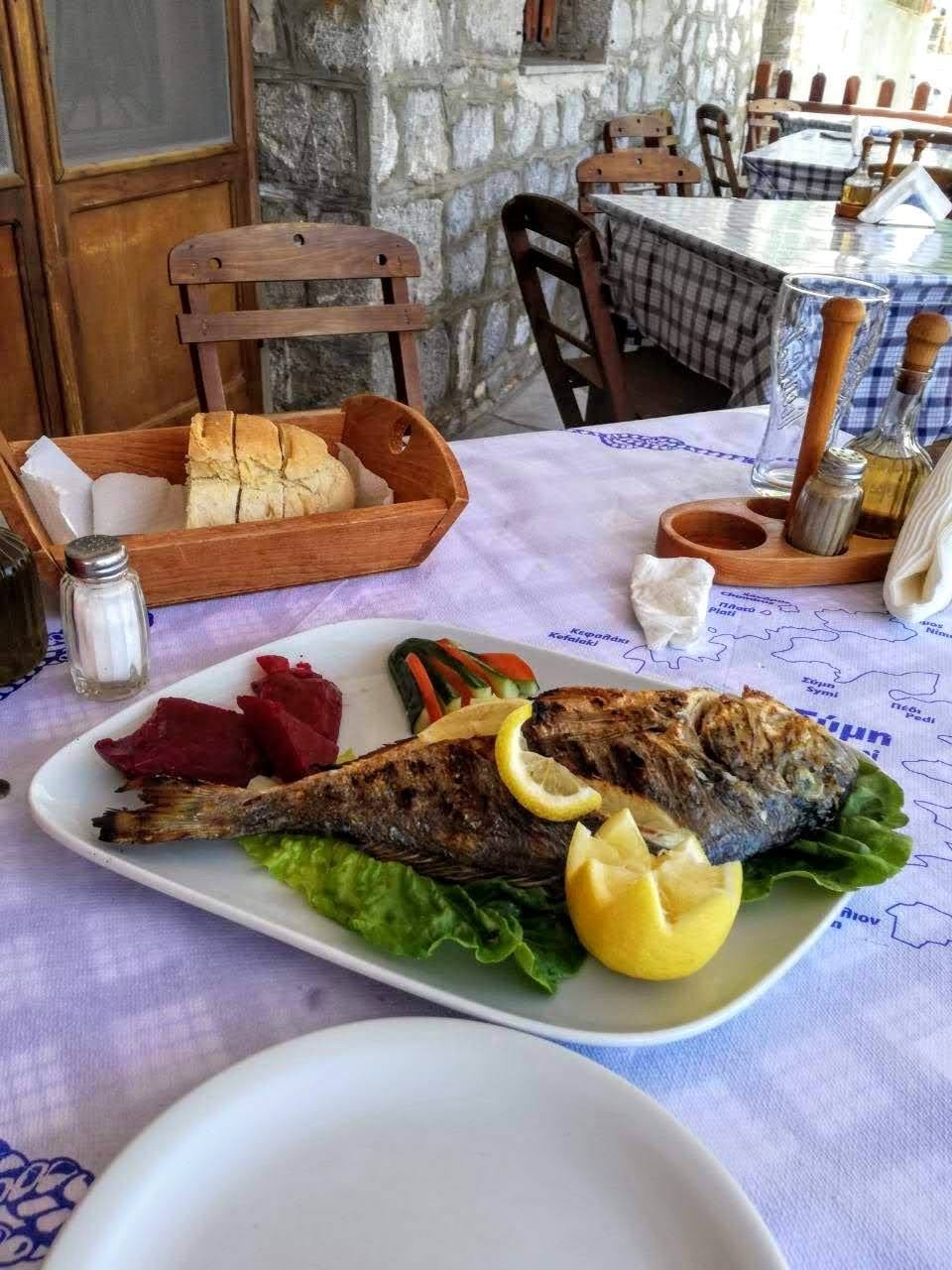
The taverna on the sand is Taverna Marathounda, and it is the reason a swim becomes a day.
It is the simple, done-properly kind of Greek beach taverna: a kitchen a few steps from the water, grilled fish, a few salads, whatever looked good that morning, served without ceremony to people in damp swimmers. You order, you sit, and two hours go missing. Nobody rushes you, because rushing is not the point and there is nowhere else on this stretch of coast to be.
Cycladic Spaces tip: eat at the taverna rather than hauling an esky down. The goats leave the kitchen alone (they have tried, they have learned), but an open bag on a sunbed is a buffet. The taverna feed is half the reason to make the drive anyway. Bring cash and order more than you think you want.
The one rule with the goats
Do not start feeding them.
Hand one goat a chip and you have not made a friend. You have rung a bell. One becomes four becomes nine, your towel is being taste-tested, and your lunch has left the building. The goats are gentle and they are fast and they have run this con on a thousand tourists before you ever parked the scooter.
So look, photograph, let the kids lose their minds. Keep food zipped away or up on the taverna table where the goats have signed a truce. Manage that one thing and Marathounda is a perfect day. Forget it, and you will learn a brisk lesson in island economics, starring a goat, your sandwich, and your dignity.
Is Marathounda worth it? Who should go, who should skip
Go if you want a quiet, scenic swim with a story attached, you are travelling with kids who will talk about the goats for a year, or you simply rate a long taverna lunch with your feet near the water. This is one of the best days on Symi and most day-trippers miss it entirely.
Skip it if you are chasing soft sand, a beach club, and a cocktail list with a DJ. Also skip if you dont like goats. That is not Symi, and this bay least of all. Stay near Gialos, keep your shoes clean, and let the rest of us have the goats.
What to bring
The short, honest kit list:
Reef shoes or sturdy sandals. The single thing people wish they had. Pebble beach, sharp entry.
Cash. Cards work plenty of places in Greece now, but a small beach taverna is exactly where you want euros in your pocket.
A zip-up or dry bag. Goat-proof and splash-proof at once. Food and phones go inside.
Water and sunscreen. The sheltered bay that keeps the sea calm also keeps the breeze off, so it runs hot. Reapply.
An offline map. Download the Symi map in Google Maps before you drive. The road loses signal and has a couple of unmarked forks waiting to send you the wrong way.
Marathounda beach FAQs
Where is the goat beach on Symi? It is Marathounda, on the southeast coast of Symi in the Dodecanese, about 17km from the main harbour at Gialos. It sits in a sheltered bay and is one of the few Symi beaches you can reach by road.
Why are there goats on Marathounda beach? Goats live on the hillside behind the bay and have for generations. They come down to the sand for shade, water, and food, and years of day-trippers and a beachside taverna have made them comfortable around people.
Can you feed the goats at Marathounda? You can, but you shouldn't. Feed one and the rest swarm fast. Keep food sealed and let them wander. They are tame but very food-motivated.
Is there a taverna at Marathounda beach? Yes. Taverna Marathounda sits right on the sand, serving grilled fish, salads, and home-style Greek cooking. Part of the beach also has sunbeds and umbrellas to hire. Bring cash.
How do you get to Marathounda beach? By car or scooter it is about 35 minutes from Gialos on a winding road, and it is one of the few Symi beaches you can drive to. In summer you can also arrive by taxi-boat from the harbour, usually as the last stop on the route.
Is Marathounda beach sandy? No, it is pebbles, with clear, deep water that is excellent for swimming and snorkelling. Bring reef shoes for getting in and out without the hopping.
When is the best time to visit? Late spring and early autumn. May, June, and September give you warm water and far fewer people than peak August. Our month-by-month guide to the best time to visit Greece has the full picture.
Where to read next
If a goat raiding your lunch is your idea of a good travel day, Greece is well stocked. Three to keep going with:
Pig Island Greece (Atokos), the Ionian island where wild pigs wander into your swim stop. Same novelty, more bristles.
Greek islands you can reach without a long ferry, for the island day without the all-day boat.
The best time to visit Greece, so you time Symi for warm water and small crowds.
Some beaches you remember for the view. This one you remember because a goat looked you in the eye, weighed up your hat, and went for it.
