
Greek Easter 2026 | Dates, Traditions and Holy Week Guide (Greece)
Greek Easter is my favourite time of year.
For me (and honestly, for a lot of Greeks) it’s bigger than Christmas. Christmas is sweet, but Easter is the one that feels like home. It’s louder, messier, more emotional, and somehow more personal.
It starts in tiny ways you could miss if you weren’t looking. Bakeries stacking tsoureki in the window like trophies. The smell of vanilla and orange zest drifting onto the footpath. Red dye packets appearing in every supermarket aisle like a warning sign. Someone’s yiayiá buying candles in bulk, because of course she is.
Then suddenly it’s Holy Saturday night and you’re outside a church you didn’t plan on visiting, holding a candle you didn’t plan on buying, protecting that little flame like it’s your responsibility. Midnight hits, Christos Anesti flies through the crowd, fireworks crack somewhere nearby, and for a second everything feels connected.
If you’ve never experienced Greek Orthodox Easter in Greece, this guide will walk you through the dates, the traditions, the food, and the little details that make it stick.
Quick overview (read this first)
Greek Easter 2026 falls on Sunday 12 April 2026.
Holy Week is the lead-up, with Good Friday (10 April), Holy Saturday (11 April) and the midnight Resurrection service being the emotional peak.
Expect candles, church processions, fireworks, and a whole country running on family energy.
The classic Easter foods are red eggs, tsoureki, magiritsa (or avgolemono), and roast lamb.
If you learn one phrase, make it “Christos Anesti” (and get ready to hear it everywhere).
Greek Easter 2026 dates (save these)
Palm Sunday: 5 April 2026
Holy Thursday: 9 April 2026
Good Friday (Megali Paraskevi): 10 April 2026
Holy Saturday (Megalo Savvato): 11 April 2026
Easter Sunday (Pascha): 12 April 2026
Easter Monday: 13 April 2026’
Greek Easter at a glance (day-by-day table)
| Day | Date (2026) | What you’ll see | What people eat |
|---|---|---|---|
| Palm Sunday | Sun 5 Apr | Church services, a calm lead-in, and little palm-leaf crosses handed out to take home | Fish day (often bakaliaros with skordalia) |
| Holy Monday–Wednesday | 6–8 Apr | Quiet build-up, night services, families prepping | Lenten food (veg, legumes, seafood) |
| Holy Thursday | Thu 9 Apr | Red eggs dyed, tsoureki baking, kitchens in overdrive | Tsoureki, koulourakia, lent-friendly dishes |
| Good Friday | Fri 10 Apr | The Epitaphios, evening procession, a more reflective mood | Simple meals, some people fast strictly |
| Holy Saturday | Sat 11 Apr | Midnight Resurrection with candles and fireworks | Midnight magiritsa (or avgolemono), red eggs, tsoureki |
| Easter Sunday | Sun 12 Apr | Family feasts, lamb on the spit, music, long tables | Roast lamb, salads, potatoes, wine, sweets |
| Easter Monday | Mon 13 Apr | A slower day, coffee dates, leftovers for days | Leftovers done properly (no one wastes Easter lamb) |
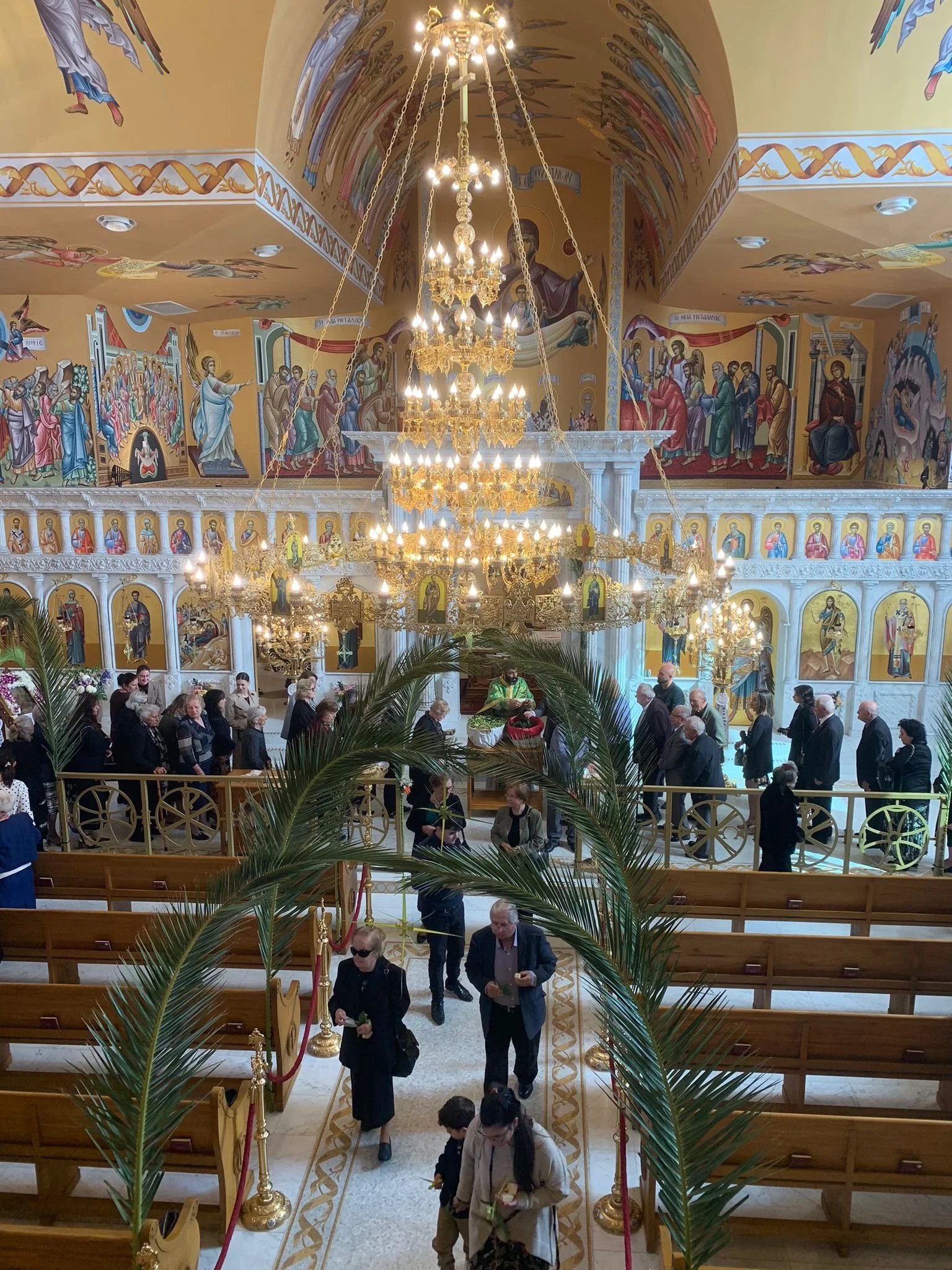
Why Greek Easter is on a different date
If you’ve ever looked at the calendar and thought, “Why doesn’t this match the Easter I grew up with?”, you’re not imagining it.
Greek Easter follows the Orthodox Church calendar rules, which are calculated differently to Western Easter. The big reason is the calendar system behind it.
The Orthodox Church traditionally uses calculations based on the Julian calendar, while most Western churches use the Gregorian calendar.
Easter isn’t a fixed date, it’s worked out using a formula tied to the spring equinox and the full moon.
Because those calendars don’t line up perfectly, the final Easter date can land on a different Sunday.
Some years Greek Easter and Western Easter fall on the same weekend. Other years, they’re weeks apart. Either way, the feeling on the ground in Greece is the same, the whole country shifts into Holy Week mode.
What is Greek Easter (and why it feels huge)
Greek Easter is the week Greece feels the most Greek.
Not the postcard version. The real one.
It’s neighbours dropping off plates of biscuits without any warning. Kids running around with red eggs like they’re priceless. Streets that feel quiet one minute, then packed the next because everyone has had the exact same idea. It’s church incense, candle wax on your fingers, and the sound of someone singing along even if they’re a little out of tune.
Even if you’re not religious, Easter still pulls you in. It’s tradition, memory, and family, all happening at once. Then you wake up on Sunday and the whole country smells like lamb.
Holy Week in Greece (what happens and when)
If you want the real Greek Easter experience, you don’t just rock up for Sunday lunch. Holy Week is the full story, and it builds day by day.
And while it’s easy to focus on the food and the atmosphere (because yes, it’s beautiful), the traditions come from something deeper. Holy Week follows the final days of Christ’s life, his crucifixion, his burial, and then the Resurrection.
When you understand what each day represents, everything you see in Greece makes more sense. The quiet on Friday night. The emotion. The candlelight. The joy that hits at midnight.
One small thing worth knowing. Holy Tuesday and Holy Wednesday often feel quieter to travellers, but they’re important nights in church life, with beautiful evening services that many locals attend even if they can’t make it every day.
Palm Sunday
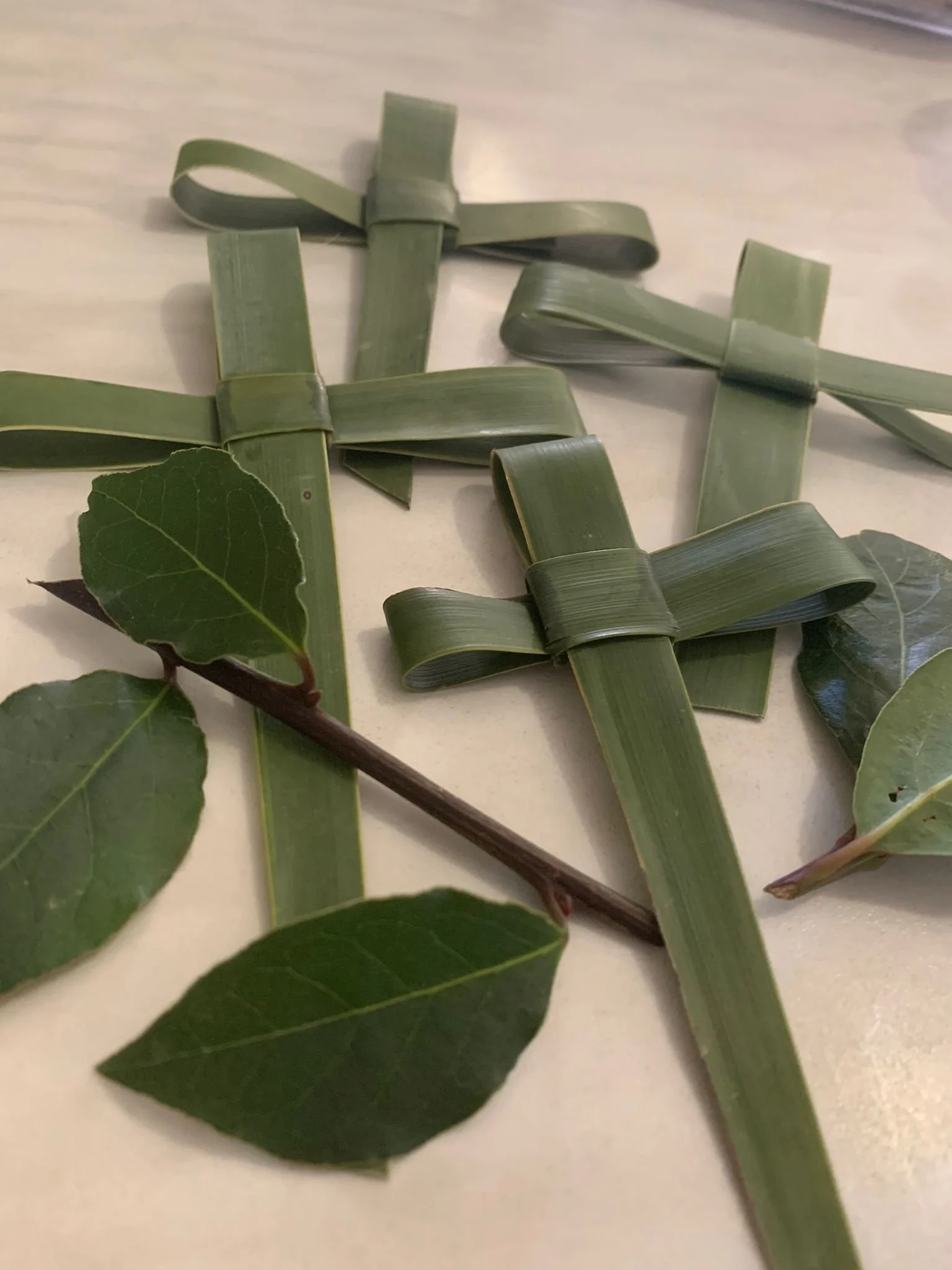
Palm Sunday marks Christ’s entry into Jerusalem, when crowds welcomed him with palm branches. It’s the gentle opener to the week, but it’s also a reminder of how quickly the story turns.
One of my favourite details is the crosses made from palm leaves. In many churches, you’ll be handed a small palm cross to take home, and people tuck them into icon corners, hang them near doorways, or keep them somewhere safe like a tiny blessing for the house.
Palm Sunday is also a fish day, even though it’s still Lent. Traditionally, the Orthodox fasting rules ease up just enough to allow fish (plus oil and wine), which is why you’ll see families doing a proper seafood lunch.
The classic Palm Sunday plate is bakaliaros with skordalia, fried cod with that garlicky potato mash that clears your sinuses and your schedule for the rest of the afternoon.
Holy Thursday
Holy Thursday commemorates the Last Supper, and it’s the day the week starts to feel serious.
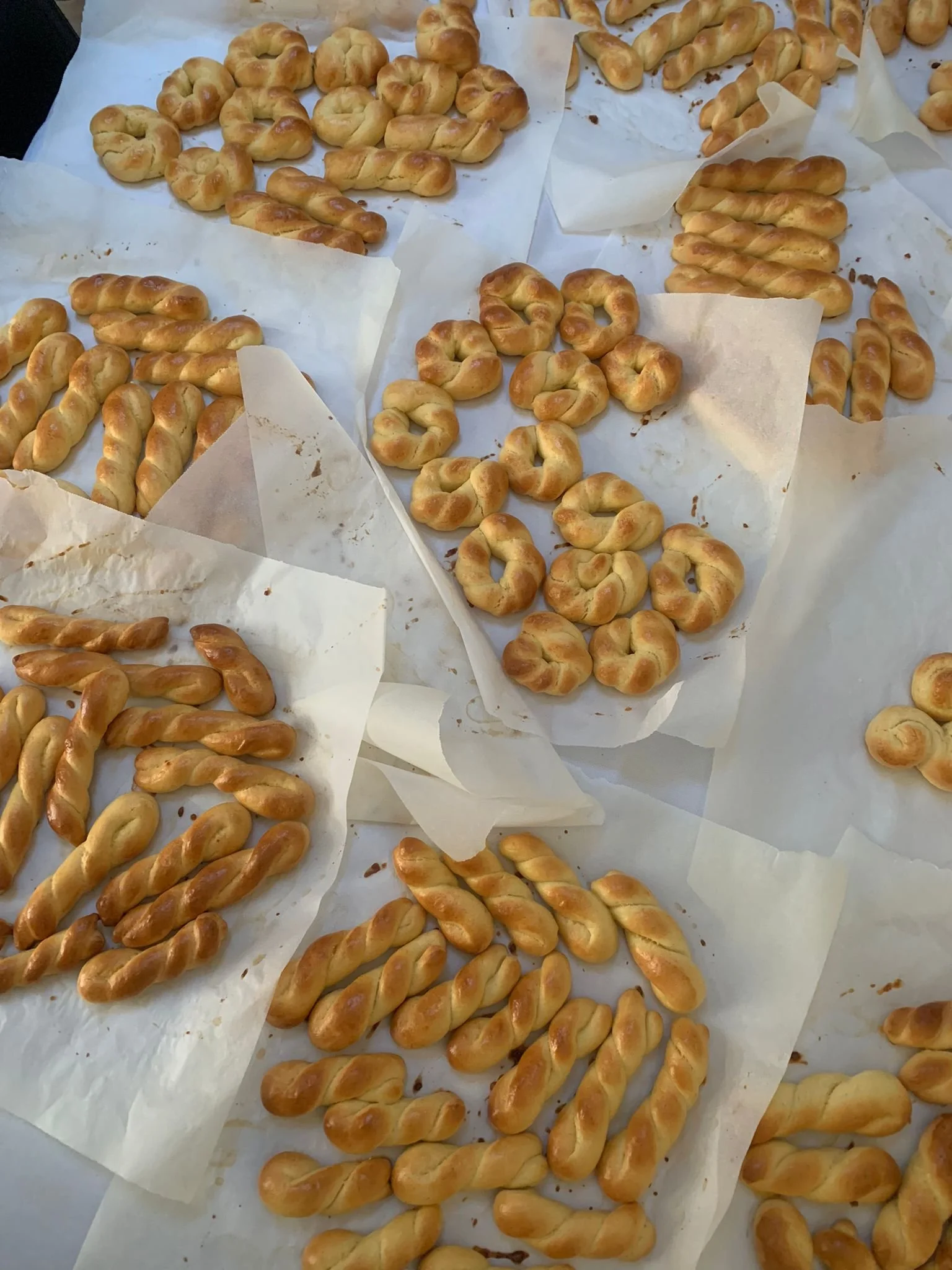
You’ll see aunties and yiayiás carrying bags of flour like they’re training for the Olympics. Kitchens are working overtime. Homes smell like orange zest, vanilla, and warm bread.
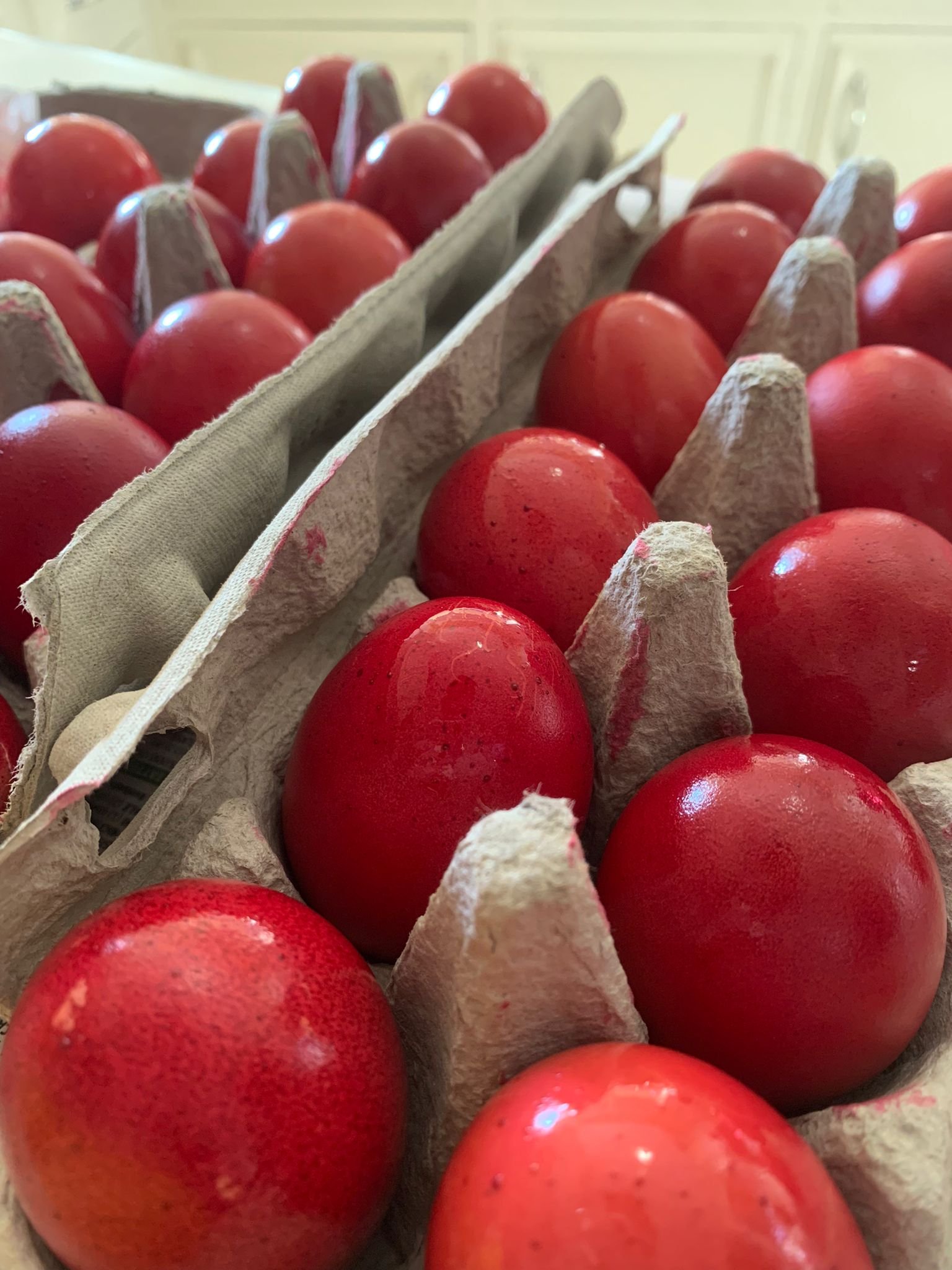
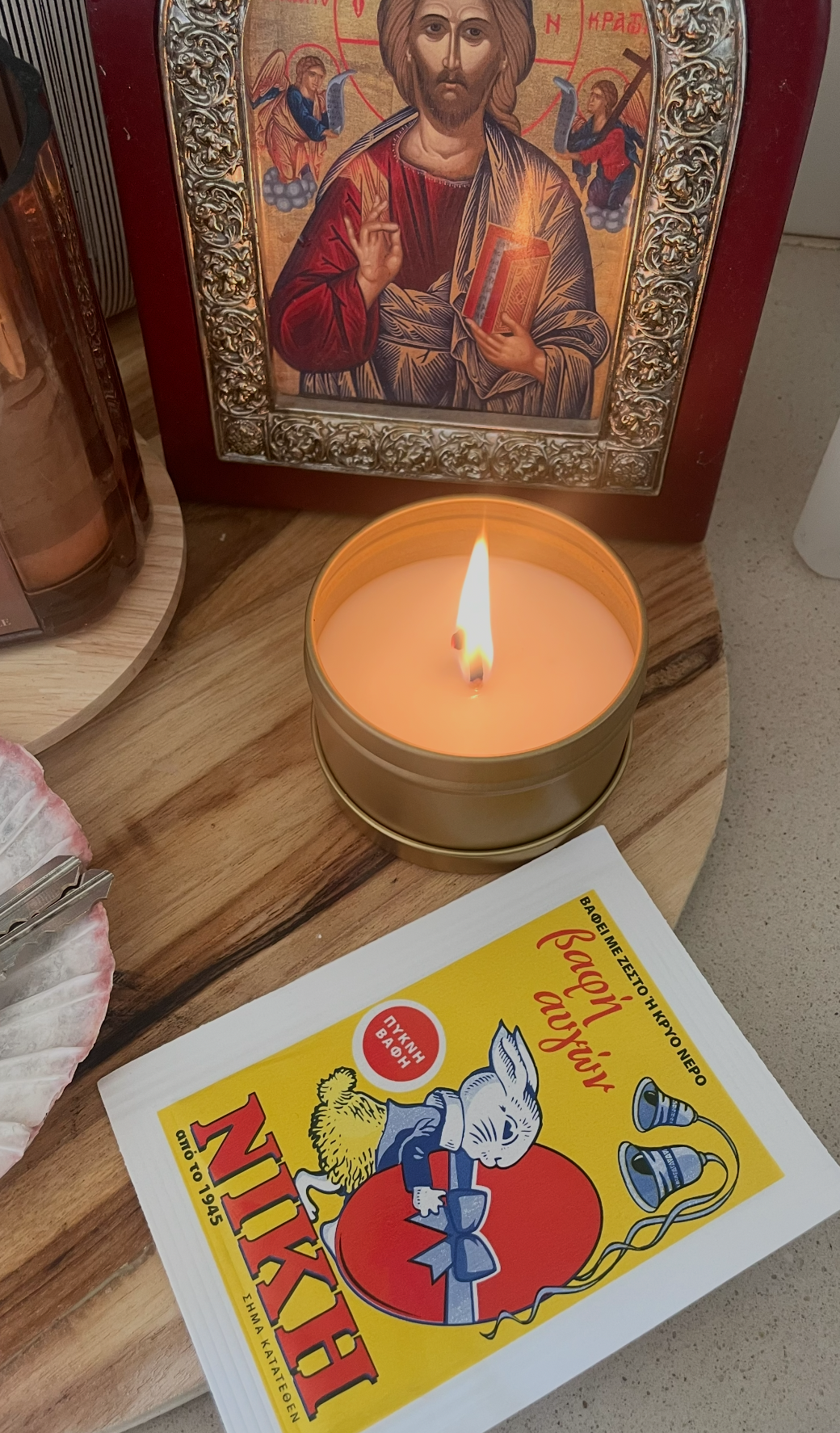
Eggs get dyed red (kokkina avga)
Tsoureki gets baked and wrapped like a gift
People start lining up at bakeries early, because no one wants the leftovers
Religiously, Holy Thursday is also tied to the moment the story turns toward the Crucifixion. In many churches, the evening service includes readings of the Passion, and you’ll see people holding candles and following along quietly.
The red eggs aren’t just a pretty tradition. The colour symbolises the blood of Christ, and the eggs themselves represent new life and the Resurrection.
The red egg tradition (and the annual competition)
The eggs are dyed on Holy Thursday, left to dry, and then brought out later for tsougrisma, the egg-cracking competition.
The rules are simple. Two people tap eggs, point to point. One egg cracks. One egg survives. The winner keeps going.
Yes, it gets competitive. And yes, kids try to rig it.
You’ll hear stories of:
eggs mysteriously "resting" in the freezer
eggs rubbed with wax like they’ve been polished for battle
kids swapping eggs mid-game when no one’s looking
It’s funny, but it’s also part of the joy of Easter. A symbol of new life, turned into a family tradition that everyone remembers.
Good Friday
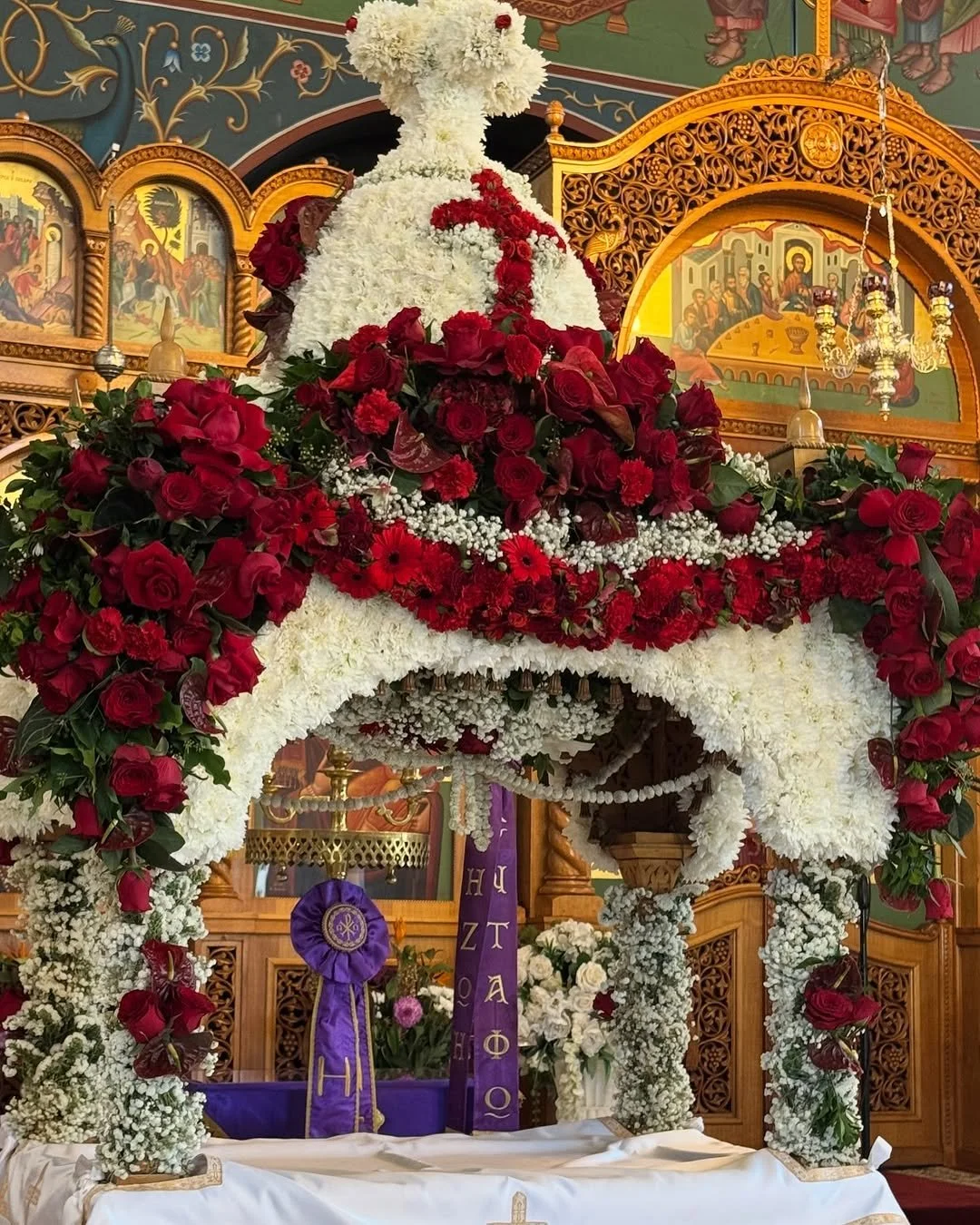
Good Friday is the day Greece feels the most still. It commemorates the Crucifixion of Christ, and you can feel the weight of it in the way the country moves.
Churches are filled with flowers and candlelight. Streets slow down. People speak more softly. It’s one of the most emotional nights of the week.
Earlier in the day (or even the night before), locals often help decorate the Epitaphios with fresh flowers, which is why it looks so full and beautiful by the time the procession begins.
Churches decorate the Epitaphios (the symbolic tomb of Christ) with flowers
The evening procession carries the Epitaphios through the streets
It’s less “tourist activity”, more “local ritual”
If you join the procession, you’ll notice how reverent it feels. People follow quietly, holding candles, remembering the burial of Christ.
Holy Saturday and midnight Resurrection
Holy Saturday is the turning point. It leads to the moment the whole week has been building towards.
People gather outside churches holding candles. Just before midnight there’s this hush, and then the flame spreads through the crowd like a chain reaction.
At midnight, the Resurrection is announced:
“Christos Anesti!” (Christ is risen)
“Alithos Anesti!” (Truly, He is risen)
That’s why it feels so powerful. After the grief of Friday, midnight is the release. The whole crowd sings the hymn, “Christos Anesti”. It gives me goosebumps. It’s one of the most beautiful moments of all of the Easter celebrations.
Then fireworks. Then hugs. Then everyone heads home to break the fast.
And then comes the tradition everyone takes seriously, bringing the light home.
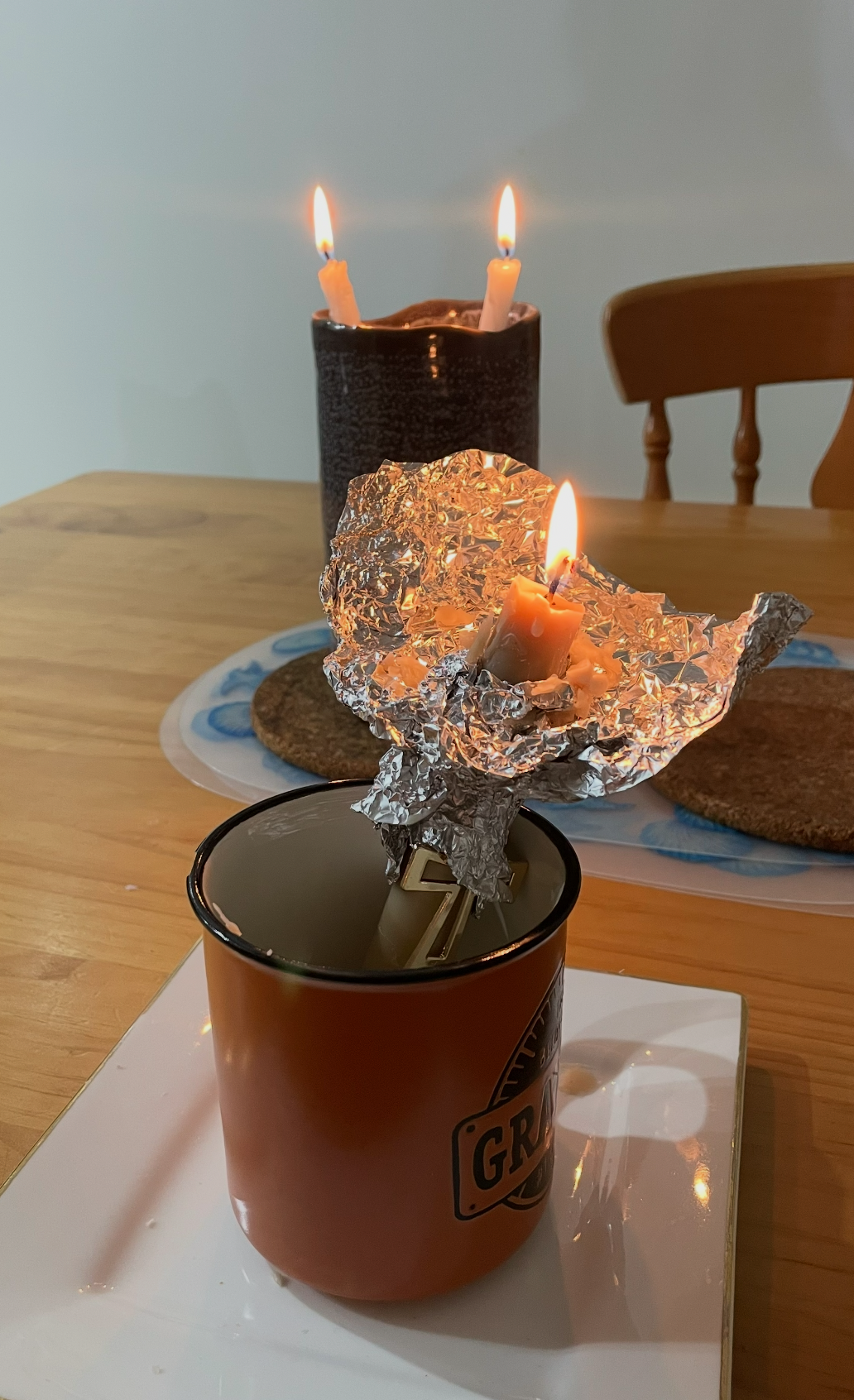
You’ll see people cupping their hands around the flame, shielding it from the wind, or carrying lanterns like precious cargo. The goal is simple, keep your candle lit all the way home.
In my house (and in a lot of Greek homes), there’s a ritual at the front door. We lift the candle up to the top of the door frame and smoke a cross with the flame, like a blessing for the home. Wax everywhere, obviously. But it’s tradition.
Easter Sunday
Easter Sunday celebrates the Resurrection, and the mood changes completely.
This is when Greece becomes loud again. Backyards fill with smoke from the lamb, tables turn into feasts, and families gather for the kind of meal that takes all day.
Lamb on the spit (yes, the full backyard production)
Red egg cracking (tsougrisma) at the table
Wine, music, and at least one person insisting you eat more
Easter Monday
Easter Monday is the exhale.
People go out for coffee, eat leftovers like professionals, and Greece slowly comes back online.
What to eat at Greek Easter (the classics)
You’ll see the same Easter foods everywhere, but every family swears theirs is the only correct version.
Tsoureki (sweet braided bread)
Koulourakia (buttery biscuits)
Red eggs (cracked at the table)
Magiritsa (post-midnight soup)
Roast lamb (Easter Sunday lunch)
Behind the food is the rhythm of the week itself. Many people fast through Lent and Holy Week, so that first meal after midnight on Saturday feels meaningful, not just tasty. Then Easter Sunday turns into a celebration of the Resurrection, and the table becomes the centre of the whole day.
Cycladic Spaces tip: buy tsoureki from a proper bakery. The supermarket stuff is fine, but it won’t make you emotional.
If you’re travelling during Greek Easter (keep it simple)
If you’re in Greece around Easter, plan like it’s a long weekend, because it is. Some places reduce hours, Athens can feel unusually quiet, and popular destinations fill up fast. Choose your base before Good Friday, don’t book tight ferry connections, and give yourself buffer time.
For planning help, start with my Guide to travelling Australia to Greece, then use the Greek ferries guide if you’re moving between islands.
Best places to experience Greek Easter in Greece
If you want the big, unforgettable versions of Greek Easter, these places deliver.
Corfu
Corfu goes full theatre.
Holy Saturday morning is famous for pot throwing (botides), when locals smash huge clay pots from balconies and the whole town erupts.
Chios
Chios is known for the rocket war in Vrontados. It’s loud, intense, and not subtle.
Meteora
If you want something more spiritual and jaw-dropping, Meteora during Easter feels unreal.
Crete
Cretan villages do Easter with food, music, and massive family energy.
The Cyclades
The Cyclades at Easter are beautiful, but a little quieter than summer. More local, less glossy. If you like the idea of seeing Greece without the peak-season chaos, it’s a great time.
If you’re choosing islands and want options that aren’t the same three names everyone repeats, read Greek islands beyond the obvious.
What to wear to church at Easter
In Australia, Easter week is basically Greek Fashion Week. People show up to church like they’re about to be photographed. Hair done. Outfit planned. Shoes chosen with absolute confidence, even though you’ll be standing outside holding a candle for ages.
In Greece, it’s a little more low-key (depending on where you are), but the vibe still leans polished, especially for the big nights.
Here’s the sweet spot:
Dress like you’re going somewhere important, because you are
Keep it respectful (covered shoulders and knees is a safe rule)
Bring a light jacket for the night procession, it gets chilly
Wear shoes you can stand in, church courtyards are not the place to suffer
Don’t stress about “tourist outfits”, black, neutrals, and simple pieces always work
And if you’re going to the midnight Resurrection service, just know this. You will leave smelling like candle wax and fireworks. It’s part of the experience.
One more warning from experience, watch your hair. Someone’s hair gets singed by a candle every single year. It’s basically tradition at this point.
Greek Easter in Australia (how Aussie Greeks celebrate)
If you grew up in an Australian Greek family, Easter isn’t a single day. It’s basically a social calendar.
In a lot of homes, the rhythm looks like this. Church on Thursday, Friday, and Saturday night, with the big build-up on Holy Saturday when everyone turns up holding candles, dressed up like it’s a wedding, and trying not to drip wax all over the car.
After church on Saturday night, we go back to someone’s house to break the fast. Traditionally it’s magiritsa, but in my house we do avgolemono, because no one except my dad actually likes magiritsa. That’s when the red eggs come out, and the cracking starts.
Then Sunday is the main event. Easter lunch, usually with a lamb on the spit, family everywhere, and someone insisting you sit down because you’ve been “standing too long”.
And the baking exchange is serious business. People show up with plates of koulourakia, tsoureki, sweets, and red eggs wrapped in cellophane like tiny gifts, then swap them with friends and family like it’s Easter currency.
What Greeks say at Easter (save this)
This is the easiest way to feel like you’re part of it.
Kali Anastasi (Happy Resurrection) – said before Easter Sunday
Christos Anesti (Christ is risen) – said from midnight onwards
Alithos Anesti (Truly, He is risen) – the reply
Xronia Polla (Many years) – a classic celebration greeting
Greek Easter can look like candles and fireworks from the outside, but when you’re in it, you feel the whole week under your skin.
Good Friday carries a quiet heaviness. Midnight feels electric. You’ll watch people protect a tiny flame like it matters (because it does). Then Sunday arrives and the grief lifts, the table fills, and the house smells like lamb and lemon and sweet bread.
If you’re travelling, leave room for the rhythm of the week and let it unfold. If you grew up Greek in Australia, you already know the feeling, it hits before the first red egg even dries.
FAQs
When is Greek Easter 2026?
Greek Orthodox Easter Sunday is 12 April 2026, with Good Friday on 10 April and Easter Monday on 13 April.
Why is Greek Easter on a different date?
Greek Easter follows the Orthodox Church calendar rules, which use different calculations to Western Easter. Some years it lands on the same weekend, other years it doesn’t.
What is Pascha?
Pascha is the Greek word for Easter. You’ll hear it everywhere during Holy Week.
What does “Christos Anesti” mean?
It means “Christ is risen”. The reply is “Alithos Anesti”, which means “Truly, He is risen.”
Is Greek Easter a good time to travel?
Yes, if you plan around a long-weekend vibe. Some places reduce hours and popular destinations can fill up fast.
What closes during Easter in Greece?
Opening hours vary, but many businesses reduce hours across Holy Week. Good Friday and Easter Sunday can be very quiet, especially outside tourist centres.
Will ferries run during Greek Easter?
Yes, but ferries can sell out and schedules can change, so book ahead and avoid tight connections.
Is Athens worth visiting during Easter?
Definitely. Athens can be peaceful because many locals are away, which makes sightseeing feel easier.
