
Updated October 2026
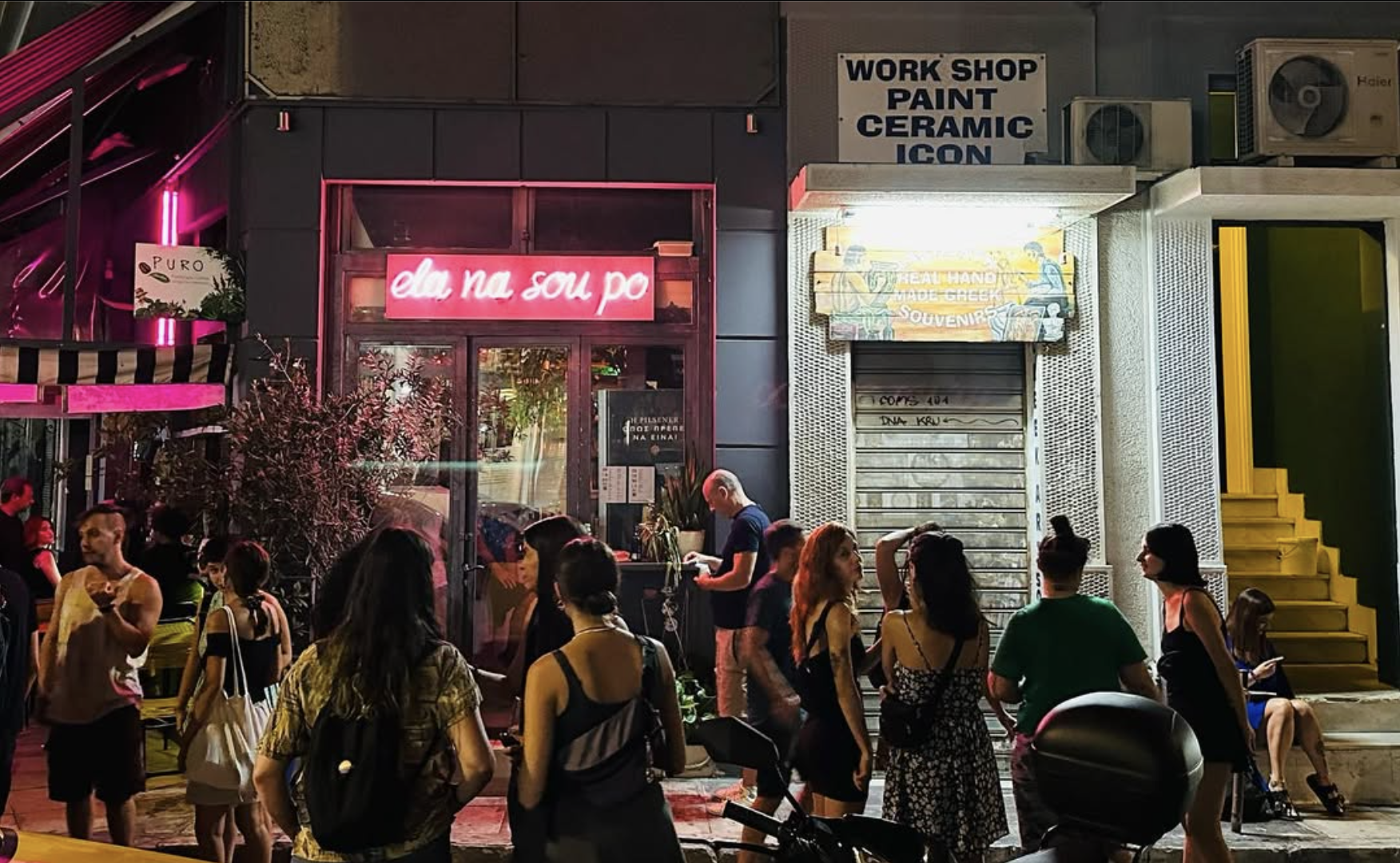
Saturday night in central Athens. No parking within a kilometre. Tables spilling off the footpath, packed shoulder to shoulder. A drink in your hand in a plastic cup with the bar’s logo on the side, because the glassware ran out three hours ago. Ten euros. You’re standing on a patch of pavement about a metre square, and you’ll be defending it from the next group for the rest of the night. It photographs beautifully.
Here’s the part the photo leaves out. A few years ago, this was one of the streets your Athenian cousin told you to avoid after dark. Now it’s the address everyone wants. That shift has a name, Athens gentrification, and once you understand how it works you can’t unsee it on a trip. If you’re planning one, our Athens travel guide is where to start. This is the piece about what sits underneath the cocktail strip.
Quick answer
Gentrification is what happens when wealthier residents, businesses and short-term rentals move into a working-class neighbourhood, push property values and rents up, and price out the people who lived there. In Athens it has reshaped areas like Koukaki, Kypseli and Metaxourgeio in under a decade, driven by the Airbnb boom. The Greek government froze new short-term rental permits across the city centre in January 2025 to slow it down.
What is gentrification, in plain terms?
Start with the word, because it gets thrown around a lot without much meaning attached. Gentrification is the process where higher-income people and the businesses that cater to them move into a lower-income neighbourhood. Rents and property prices climb. The bakery that sold day-old bread becomes a specialty coffee shop charging five euros a cup. Over time, the people who gave the area its character can no longer afford to live there, and the neighbourhood reshapes itself around a wealthier, and often a visiting, crowd.
It doesn’t happen overnight. It happens in a sequence you can almost set your watch by.
How a neighbourhood turns over, step by step
Cheap rent. Artists, students and migrants move into a run-down area because it’s what they can afford, and they make it interesting.
The first cafes. A wine bar opens. Then three more. The area gets a reputation for being a bit edgy and a lot of fun.
The short-term lets. Owners realise a flat earns more on Airbnb in a week than a local tenant pays in a month. Long leases disappear.
The squeeze. Rents double, the souvlaki shop becomes a cocktail bar, and the families who held the street together are gone.
The neighbourhoods Athens was told to avoid
The sharpest irony of the whole thing is that the hottest addresses in Athens today are the ones the guidebooks warned you off a decade ago. Koukaki, the slice of streets below the Acropolis, was a quiet residential pocket until Airbnb named it one of the trendiest neighbourhoods in the world and the whole place tilted toward visitors almost overnight. Kypseli, with its grand 1930s apartment blocks, spent years on the “don’t bother” list and is now one of the fastest-rising rental markets in the city.
Metaxourgeio, an old industrial and red-light quarter, is galleries and natural-wine bars now. Exarchia, the historic home of the city’s students, anarchists and bookshops, got a metro station it fought hard against and a wave of boutique hotels to go with it. Petralona and Pangrati, working-class to their bones, are the places every young Athenian now wants to drink. These were the «περιοχές προς αποφυγήν», the areas to avoid, and now they’re the itinerary.
What changed, and how fast
One thing changed more than any other: the short-term rental. A flat let to tourists by the night earns the owner far more than one let to an Athenian family by the year, so the flats went to the tourists. The scale of it is hard to overstate. According to Eurostat, guests spent 14.1 million nights in Greek short-term rentals in 2024, up from 9.9 million in 2019, a 42 per cent jump in five years. In 2024, for the first time, short-term rental beds outnumbered hotel beds across the country.
The footpath economics follow from there. When a landlord can earn a hotel’s nightly rate with none of a hotel’s overheads, rent on the remaining long leases climbs to match. The 2026 rent map put Petralona up 15.6 per cent in a single year and Kypseli up 14.3 per cent, with central Athens averaging close to ten euros a square metre. That ten-euro plastic cup carries the rent behind the bar, passed straight to you.
Athens has started to push back. In January 2025 the Greek government stopped issuing new short-term rental permits across the first, second and third municipal districts, the dense heart of the city, and it has since extended the freeze through the end of 2026. Whether it works is another question. The flats already converted stay converted, and the families already priced out don’t move back because a permit window closed.
The traveller’s part in it
This is the uncomfortable bit, and skipping it would be dishonest. The traveller is not a bystander here. Every booking in a converted flat, every ten-euro drink on a street that used to be someone’s quiet Tuesday night, is a small vote for the version of the neighbourhood that pushed the locals out. The chase to stand in the “cool” place, the one your friends tagged, is the engine. The algorithm points everyone at the same four streets, and the streets buckle under the weight.
For a lot of us in the diaspora, it’s sharper still. You fly across the world to the neighbourhood your yiayiá grew up in, and the kafeneio where your great-uncle played cards is a wine bar with a waitlist. Nobody is the villain in this story. The landlord is trying to pay their own rising bills, the bar owner is running a business, and you just wanted a nice night out in a city you love. The harm is cumulative. One booking, one drink, one more group on the footpath, multiplied by everyone doing the same thing on the same four streets.
How to visit Athens without hollowing it out
You can love Athens and travel through it with some care. None of this asks you to stay home. It asks you to spread your weight.
Sleep in a hotel, or a licensed long-standing rental. Hotels are built to absorb visitors. A flat carved out of a residential block is a home that a family can no longer rent. Our where not to stay in Athens guide goes deeper on this.
Spend your money where the neighbourhood keeps it. The periptero, the kiosk on the corner. The laiki, the weekly street market. The family taverna with the handwritten menu, not the bar selling a logo on a plastic cup.
Go to the streets nobody tagged. Athens has dozens of neighbourhoods and the list only ever names four. Walk twenty minutes past the hotspot and you’ll eat better and pay less.
Treat a lived-in street as a home. People sleep above those bars. Keep the noise down on the way out, and use the bin.
Learn ten words of Greek. It changes how you’re treated and it signals you came as a guest, not a customer.
Back on that square metre of footpath with the warm plastic cup, it’s worth asking what you came for. A neighbourhood is never the lighting or the natural wine or the exposed brick. It’s the people who live there, the ones who make it worth the flight. Travel in a way that keeps them in it.
Frequently Asked Questions
What is gentrification?
Gentrification is the process where wealthier residents and businesses move into a lower-income neighbourhood, pushing up rents and property prices until the original residents can no longer afford to stay. The area’s character shifts to suit the newcomers. In cities like Athens, short-term holiday rentals have become one of the biggest drivers of it.
Which Athens neighbourhoods have gentrified?
Koukaki, below the Acropolis, is the most cited example after Airbnb named it one of the trendiest neighbourhoods in the world. Kypseli, Metaxourgeio, Exarchia, Petralona and Pangrati have all shifted fast too. Many were once labelled areas to avoid, and are now among the most sought-after places to stay and drink in the city.
Did Athens ban Airbnb?
Not a full ban. In January 2025 the Greek government stopped issuing new short-term rental permits in the first, second and third municipal districts of central Athens, and later extended the freeze to the end of 2026. Existing rentals can keep operating, but no new ones can register in those central districts for now.
Is Koukaki still worth visiting?
Yes. Koukaki is walkable, close to the Acropolis and full of good food. Visit it, just with some awareness. Stay in a hotel rather than a converted flat, spend in the older local businesses, and wander the quieter streets around the edges rather than only the tagged ones.
How can I travel to Athens responsibly?
Sleep in a hotel or a licensed long-standing rental, spend money in family-run and neighbourhood businesses, visit areas beyond the four streets everyone photographs, keep the noise down in residential pockets, and learn a few words of Greek. The aim is to spread your money and your footprint rather than piling onto the same handful of blocks.
Keep reading
Where not to stay in Athens, the straight-talking companion to this piece.
The Athens itinerary for 3, 4 or 5 days, for spreading your time across the city.
Athens summer nightlife on the riviera, for a night out that takes the pressure off the centre.
