
Palm Sunday and Lazarus Saturday in Greece | Traditions, Food and What to Expect
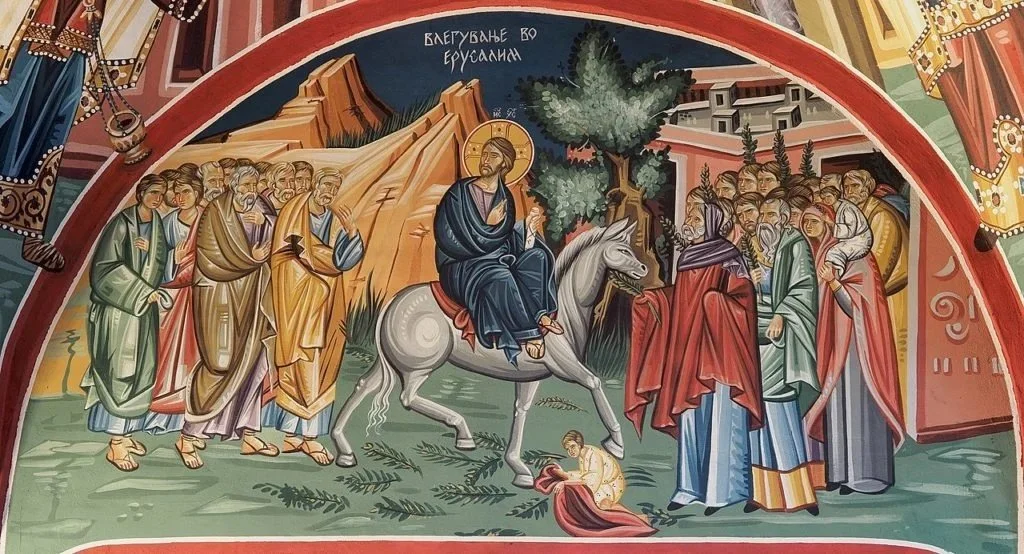
There is a weekend in the Greek calendar that gets swallowed by everything that comes after it. Holy Week is so loud, so full, so emotionally consuming that the two days that open it tend to disappear into the noise.
This is a shame, because Lazarus Saturday and Palm Sunday are two of the most beautiful days in the Orthodox year. They sit in a strange, liminal space: after the long quiet of Lent, before the grief of Good Friday and the midnight explosion of the Resurrection. They are days of joy, deliberately placed. The Church knows what is coming. It gives you this weekend first.
If you are in Greece for Greek Easter, or if you grew up in a Greek family in Australia and these days are woven into your memory whether you chose them or not, this is what Lazarus Saturday and Palm Sunday look like from the inside.
Palm Sunday and Lazarus Saturday 2026 dates
Lazarus Saturday 2026: Saturday 4 April
Palm Sunday 2026: Sunday 5 April
Easter Sunday 2026: Sunday 12 April
These two days open Holy Week in Greece. They sit between the end of Lent and the beginning of the Passion, and they are deliberately joyful.
Lazarus Saturday, the miracle before the week
Lazarus Saturday 2026 falls on 4 April.
The day before Palm Sunday commemorates the raising of Lazarus from the dead, the last and greatest miracle Jesus performed before his own Passion. Lazarus had been dead for four days when Jesus arrived in Bethany, stood at the tomb, and called out to his friend. The stone was rolled away. Lazarus walked out, still bound in his burial shroud.
It is a story about death and life happening in the same breath. The Orthodox Church reads it as a foreshadowing: if Jesus has power over the death of his friend, then the Resurrection that follows a week later is not a surprise. It is a promise already kept.
What makes Lazarus Saturday unusual in the liturgical calendar is that it is the only time in the entire Church year when the resurrection service of Sunday is celebrated on a different day. Lazarus Saturday borrows the joy of Sunday. It takes it early, because what follows will be heavy.
Lazarakia, the bread shaped like a dead man
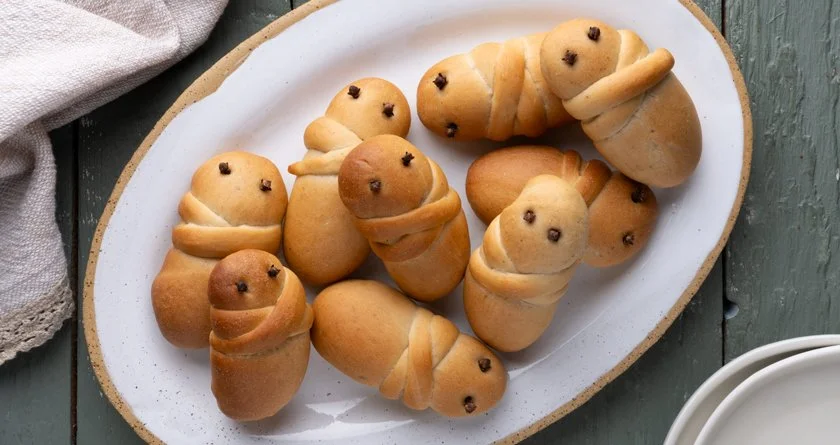
The most distinctive tradition of the day is the baking of lazarakia, small sweet breads shaped to look like Lazarus emerging from his tomb. Arms crossed over the chest, body wrapped in a shroud, cloves for eyes. They look, frankly, a little macabre. They taste wonderful.
Lazarakia are Lenten, made without eggs or dairy. The dough is mildly spiced and sweet, often filled with chopped walnuts, raisins, honey or fig jam, depending on the region. The symbolism is direct: even in the midst of death, there is sweetness. Even in the shroud, there is something worth unwrapping.
There is an old Greek saying: "Lazaro den plaseis, psomi den tha chortaseis." If you don't shape a Lazarus, you won't have your fill of bread. The baking is part of the day. You do it with your hands, usually with children, and the kitchen smells like cinnamon and cloves and something you cannot quite name but recognise as the beginning of Easter.
The Lazarines, children singing door to door
In parts of central Greece, Thessaly, Macedonia and Thrace, there is a tradition that goes back centuries. On Lazarus Saturday, girls (historically young women, now mostly children) dress up, fill baskets with flowers and lazarakia, and go from house to house singing the Lazarus carols.
They are called Lazarines, or Lazaritses. The songs describe the miracle: Lazarus sleeping, the call to rise, the palms of tomorrow. In return, the households give the children eggs, fruit, coins or sweets.
In Trikala, there is still an annual competition. The most beautiful basket, the rarest traditional song, the best overall presentation. In Kozani, the Lazarines gather at one house at noon, visit the priest and the president of the village, then process to the Church of the Panagia before dancing and singing into the evening.
On Rhodes and in Crete, children go door to door singing carols and collecting money for their local churches. In Epirus, the visits are accompanied by the ringing of bells.
The most extraordinary version is from Cyprus. Children dress entirely in yellow flowers, covering even their faces. When the other children begin singing the carols, the flower-covered child lies down on the ground and pretends to be dead. When the singers reach "Lazarus, come forth," the child leaps up. The game moves to the next house.
These are not museum customs. Some have faded, yes. But in the villages and regional towns where they survive, they are alive with noise and laughter and the particular kind of seriousness that children bring to something they know matters but cannot fully explain.
Palm Sunday, Kyriaki ton Vaion
Palm Sunday 2026 falls on 5 April.
Palm Sunday, Kyriaki ton Vaion (Κυριακή των Βαΐων), commemorates Christ's entry into Jerusalem. He rode in on a donkey, an animal of peace rather than war, and the crowds laid down cloaks and palm branches in his path, proclaiming him king.
It is one of the Great Feasts of the Orthodox Church and one of its most joyful. But there is a tension in it that the Church does not hide. The crowd that welcomes Jesus on Sunday will turn against him by Friday. The palms that celebrated his arrival will be replaced by thorns. Joy and betrayal sit in the same week, almost in the same gesture.
The palm crosses
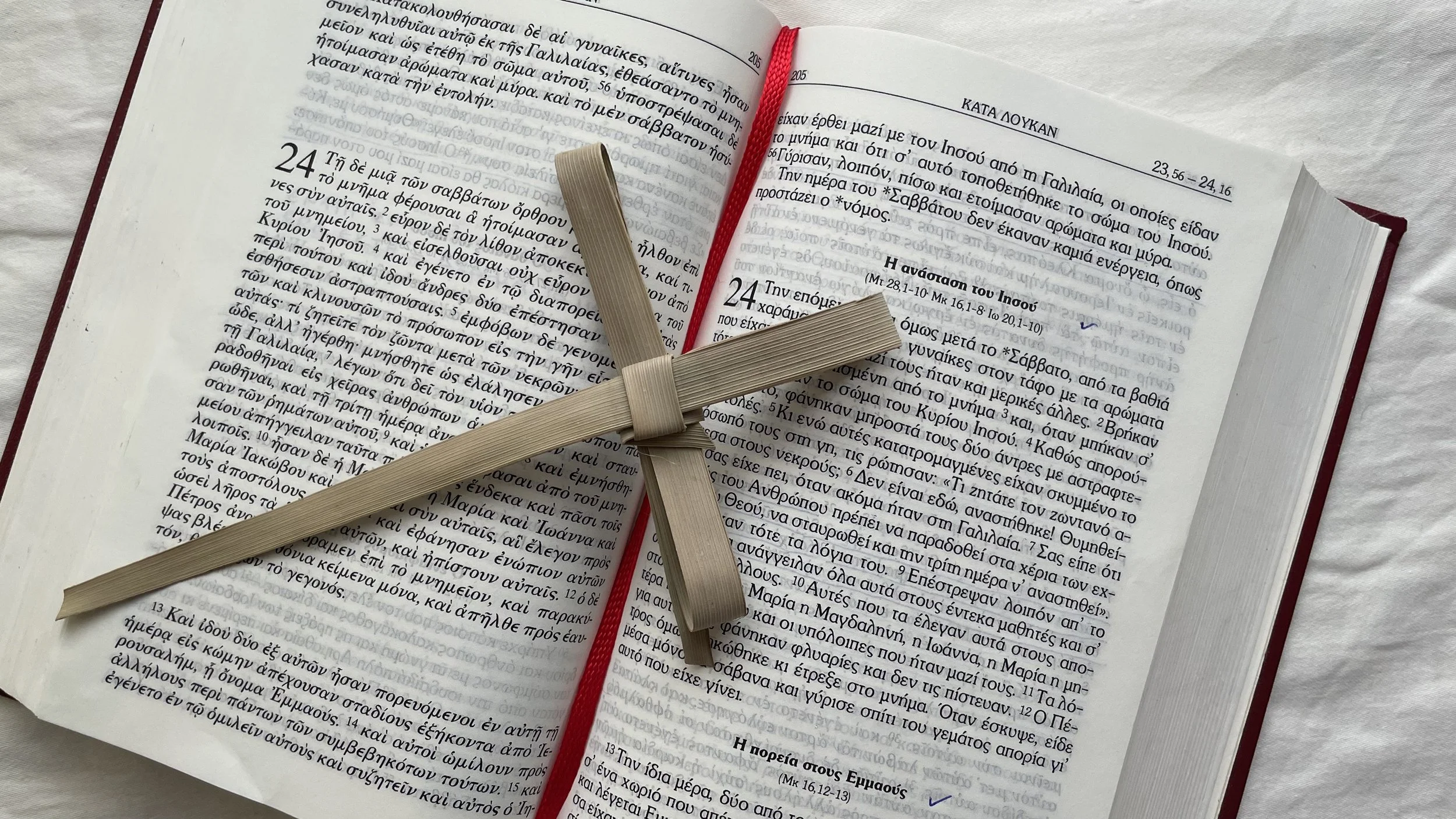
One of the loveliest details of Palm Sunday in Greece is the small crosses woven from palm leaves. They are blessed during the Divine Liturgy and distributed to the faithful at the end of the service. A basket of them sits on a table in front of the icon of Christ, and people take one as they leave.
The crosses go home with you. People tuck them behind icons, hang them near doorways, place them on bedside tables. They are a small, quiet blessing for the house. They stay there all year, sometimes replaced only when the next Palm Sunday comes around.
In ancient times, the palms were woven into all kinds of shapes: moons, ships, donkeys. The cross became the most common, but the tradition of creative palm-weaving has roots that go deep.
In Lesbos, children make bundles of bay twigs decorated with red and green cloth and a small bell at the top. After church, they carry the bundles home, strike them on the ground three times, and say a verse to drive out fleas and mice. Then they cut a twig for the lady of the house and receive an egg in return. Blessing and pest control in the same gesture. Practical faith.
Bakaliaros skordalia, the fish of the feast
Palm Sunday falls during Lent, but the fasting rules ease. Fish, oil and wine are permitted. For many Greek families, this is the cue for one of the year's best meals.
The traditional Palm Sunday plate is bakaliaros with skordalia: fried cod (originally salt cod, soaked for 24 hours to draw out the brine) dipped in a light beer batter and fried until golden, served with skordalia, a punchy garlic and potato mash that will clear your sinuses and very possibly your social calendar for the rest of the afternoon.
It is the same dish served on 25 March, Greek Independence Day, which is also a fish day during Lent. The combination of crisp, flaky cod and thick, garlicky skordalia with a squeeze of lemon is one of the great Greek flavour pairings, and if you have never tried it, Palm Sunday is the day.
In Australian Greek households, the tradition holds. Church in the morning, fish at lunch, family around the table. In Australia, you can swap the salt cod for fresh blue eye, which my father (a fishmonger, so this is not casual advice) would tell you is one of the finest table fish caught in our southern waters. The spirit is the same. Lent loosens its grip for a day. The table fills.
If you want to understand what Greeks eat at Easter and why each day has its own plate, Palm Sunday is where the rhythm starts.
The Corfu procession
Most of Greece observes Palm Sunday with church and lunch and a gentler pace. Corfu does it with a procession.
The island holds a grand procession on Palm Sunday featuring the relics of its patron saint, Agios Spyridon. The procession commemorates the island's deliverance from plague, attributed to the saint's intervention, and it draws the entire town into the streets. If you happen to be on Corfu for Easter week, this is the first of several extraordinary public rituals. (The pot-throwing on Holy Saturday morning is the one that gets the headlines, but Palm Sunday sets the tone.)
The weekend between
What I find most moving about Lazarus Saturday and Palm Sunday is their placement. They are designed as a pause. After 40 days of Lent, the quiet of fasting, the particular stillness that comes from sustained restraint, these two days open a door.
Children sing at your door. You bake bread in the shape of resurrection. You eat fish with garlic so strong it makes your eyes water. You take a small palm cross home and put it somewhere safe.
And then Holy Week begins.
Monday, the chandeliers and icons are draped in black and purple. By Thursday, the kitchens are in overdrive with red eggs and tsoureki. By Friday, the streets are candlelit and quiet. By Saturday midnight, the whole country is shouting Christos Anesti.
But before all of that, there is this weekend. Two days of joy that the Church gives you on purpose, because it knows what the week will ask.
If you are planning to be in Greece for Easter, do not arrive on Good Friday. Arrive for Lazarus Saturday. Bake something. Go to church on Palm Sunday and take a cross. Eat the fish. Let the week unfold from the beginning.
For planning help, start with the ultimate guide to travelling to Greece from Australia. If you are spending time in the capital before heading to the islands, the Athens travel guide has everything you need.
And if you want to understand the full arc of Holy Week, from Palm Sunday through to the midnight Resurrection, read the complete Greek Easter 2026 guide.
Frequently Asked Questions
When is Palm Sunday 2026 in Greece?
Greek Orthodox Palm Sunday falls on Sunday 5 April 2026, one week before Easter Sunday on 12 April 2026.
What is Lazarus Saturday?
Lazarus Saturday is the day before Palm Sunday in the Orthodox calendar. It commemorates Jesus raising his friend Lazarus from the dead in Bethany, the last miracle before his Passion. Greek traditions include baking lazarakia (small sweet breads shaped like Lazarus in his burial shroud) and children singing Lazarus carols door to door.
What do Greeks eat on Palm Sunday?
The traditional Palm Sunday meal is bakaliaros with skordalia: fried cod (usually salt cod) with a garlic and potato mash, served with lemon. Fish, oil and wine are permitted on Palm Sunday despite it falling during Lent.
What are lazarakia?
Lazarakia are small, sweet, lightly spiced breads shaped to look like Lazarus wrapped in his burial shroud, with crossed arms and cloves for eyes. They are Lenten (no eggs or dairy) and often filled with walnuts, raisins, honey or fig jam. Families bake them on Lazarus Saturday, the day before Palm Sunday.
What are palm crosses in Greece?
On Palm Sunday, Greek Orthodox churches bless small crosses woven from palm leaves and distribute them to the faithful after the Divine Liturgy. People take them home and place them behind icons, near doorways or in other meaningful spots as a blessing for the house.
What is Kyriaki ton Vaion?
Kyriaki ton Vaion (Κυριακή των Βαΐων) is the Greek name for Palm Sunday. It translates to "Sunday of the Palms" and is one of the Great Feasts of the Orthodox Church, commemorating Christ's triumphal entry into Jerusalem.
Is Palm Sunday a good time to visit Greece?
Yes. Palm Sunday marks the start of Holy Week, which is one of the most culturally rich periods to experience Greece. Arriving on Lazarus Saturday or Palm Sunday means you can experience the full arc of Easter, from the joy of the opening weekend through to the Resurrection at midnight on Holy Saturday.
