
Kalodromo, Naxos
A marble sculptor, his wife, and five thousand years of Naxian stone
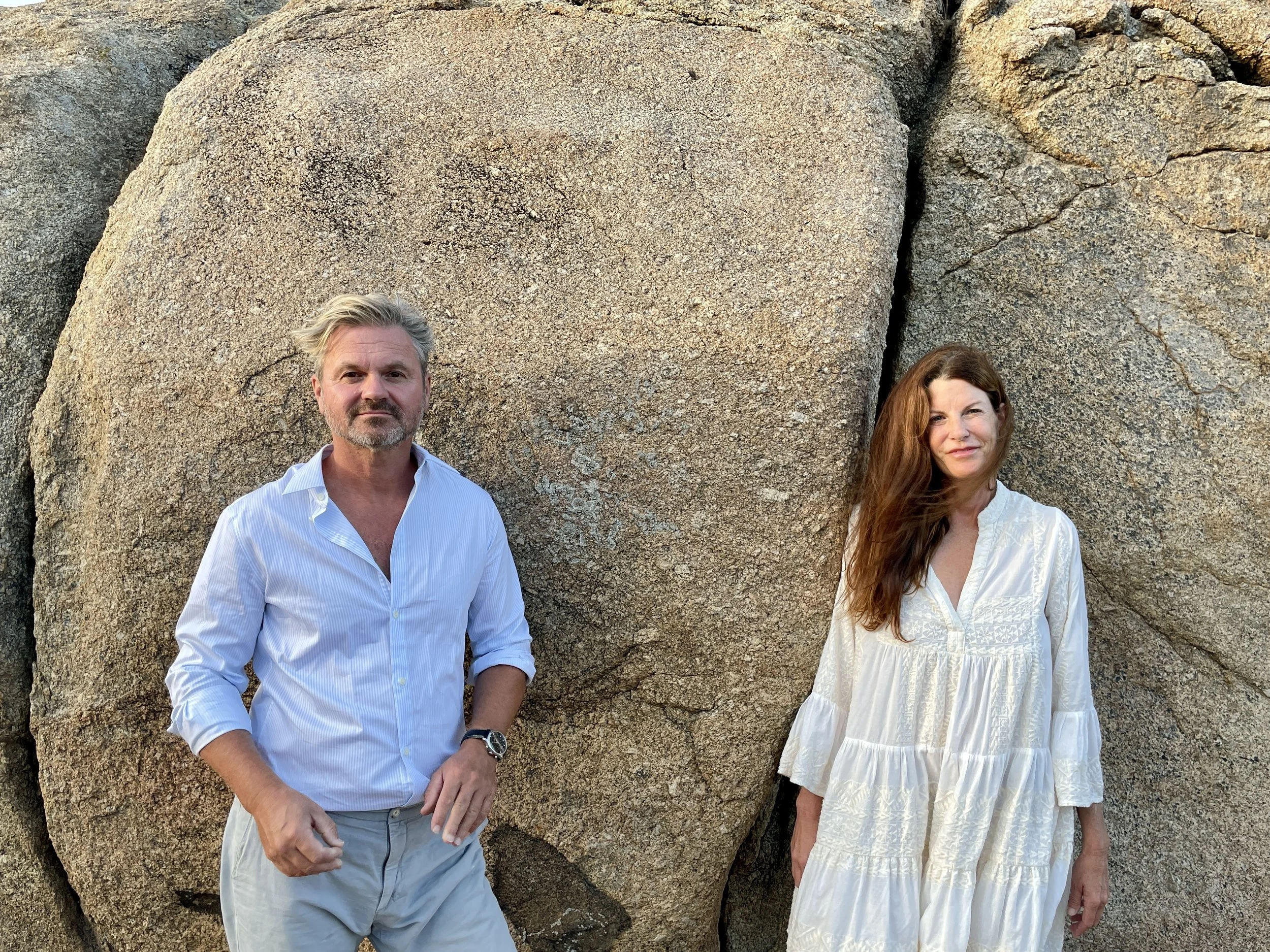
There is a marble studio on Naxos, tucked into the heart of the island where the land rises green and ancient, where a Swiss-born sculptor named Tom von Kaenel sits under a shady tree surrounded by cacti, palms, and oleander, and carves Naxian marble by hand. His wife Priska works beside him, finishing each piece with sandpaper, managing the world that exists beyond their garden walls. They produce perhaps one hundred handmade marble vessels a year. Maybe fewer. The stone comes from quarries down the road. They call their studio Kalodromo, which means good way in Greek.
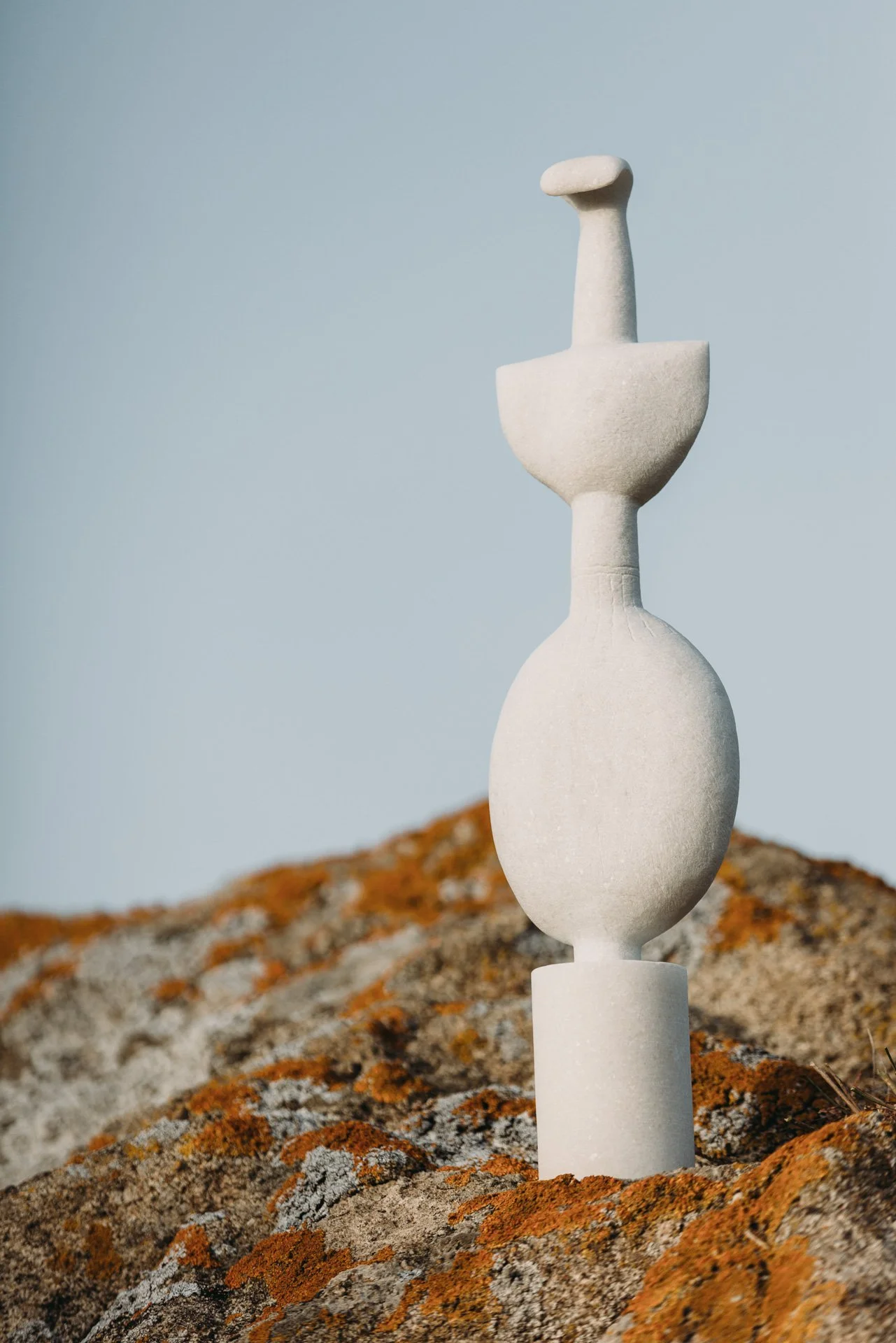
I visited them once, on one of those Cycladic afternoons when the light does that thing it does—turning everything gold and white and impossibly clear. We sat in their garden swapping stories, and I watched Tom’s hands as he talked about stone. These are hands that have spent decades learning what marble wants to become. He doesn’t use measuring instruments beyond compasses and scales. His eye decides the final shape. Each deviation from perfect symmetry gives the form its tension, its life. The marble sculptures and vessels are kept raw, unpolished, so the traces of the craft remain visible. The crystalline surfaces shimmer.
They are unbelievably beautiful.
Kalodromo Naxos by Cycladic Spaces
.
Naxian marble carries five thousand years of human ambition in its crystalline structure. This is the stone that roofed the Acropolis, that became the kouros statues lining Greek sanctuaries, that travelled by ship from this Cycladic island to Delphi and Delos and Athens. The coarse crystals allow light to penetrate at a thickness of just one centimetre, lending it an ethereal, almost breathing quality. When historians talk about the origins of Greek monumental sculpture, they point here, to Naxos, where the abandoned giants of Apollonas and Melanes still lie half-carved in their ancient quarries—ten metres of ambition frozen mid-creation by a crack in the stone, a miscalculation, the unknowable whims of marble.
Tom came to Naxos because the marble called him here. He had worked with granite in Switzerland for years—it was what was available—but marble felt too permanent, too heavy with history. Then he and Priska moved to Greece in 2016, and suddenly the stone was lying at his door. “The archaic beauty of this island gives me nearly everything I’ve needed to become the sculptor I am today,” he told Athens Insider. “I am very grateful to live here.”
There’s something in this that feels almost too romantic to be true in 2026, when we’re all drowning in mass production and algorithmic sameness. A contemporary marble artist moves to a Greek island to work with ancient stone using hand tools. His wife puts the finishing touches on each vessel. They don’t attend fairs. There are no product series. Every handcrafted marble piece is unique, handwritten in stone.
.
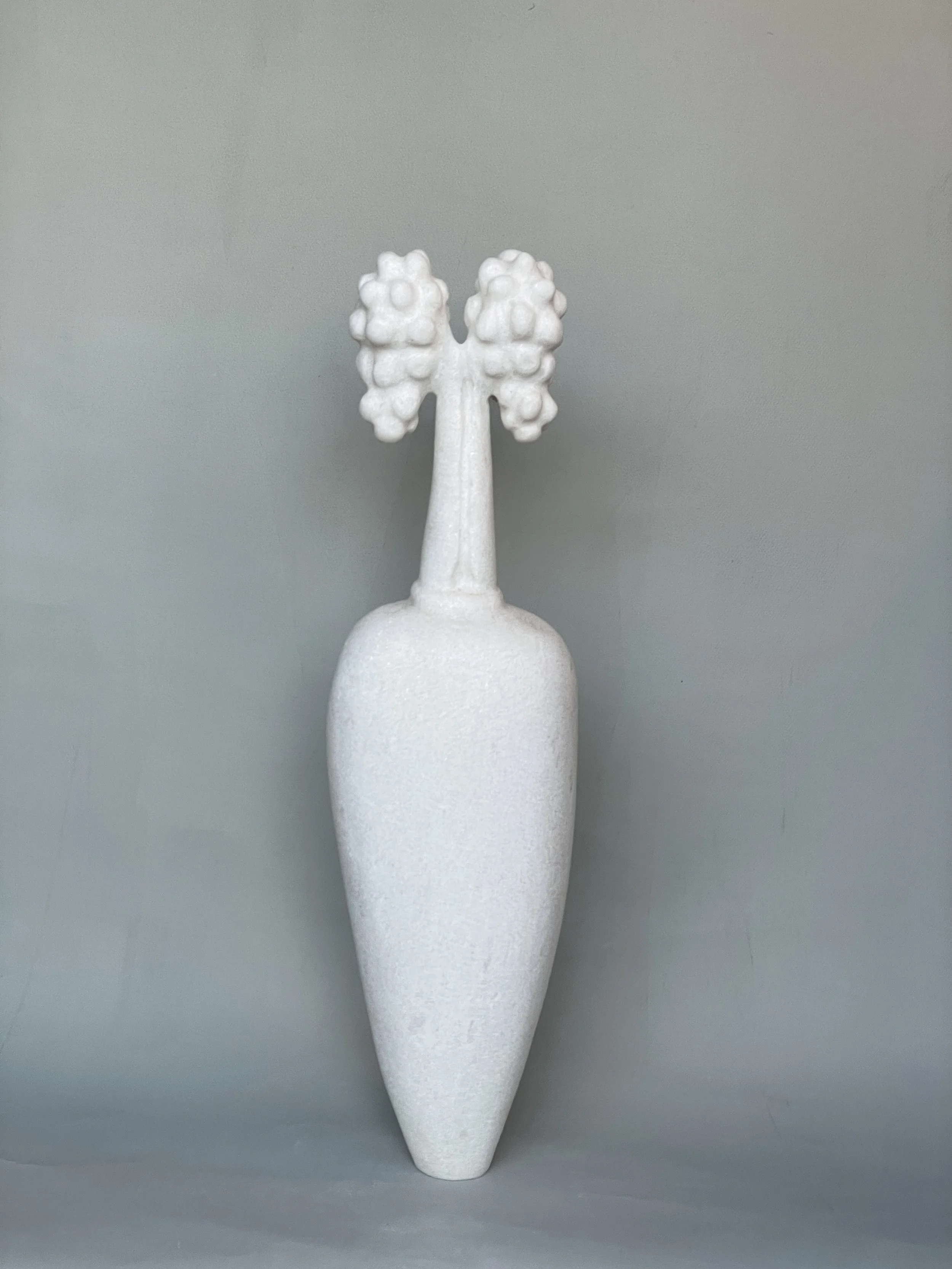
Tom’s influences read like a syllabus for anyone who cares about form: the Cycladic idols of the third millennium BC, Hans Coper’s mid-century ceramics, Brancusi, Noguchi, the Bauhaus, Minoan culture, Carlo Scarpa, Japanese aesthetics. His marble vessels and sculptures hold elements of early Cycladic craftsmanship, antiquity, baroque, and twentieth-century ceramics, reinterpreted and reassembled. He speaks of myths still being alive—of gods and goddesses sitting in every tree and creek, whispering. “Maybe this sounds a little bit crazy?” he admitted in an interview. “But that’s why I like to combine simplicity with mythological expression.”
It doesn’t sound crazy at all. It sounds like the only sane response to living on an island where civilisation has been carving stone for five millennia, where the light still falls the way it fell on the sculptors who made the Lions of Delos, where nature dictates your working hours and the seasons shape what’s possible. Tom works outdoors year-round in his Naxos workshop—strong winds in winter, relentless heat in summer. He depends on nature. And nature, in turn, teaches him to look differently.
.
The tragedy Tom names is one we all recognise but rarely articulate: most people can’t see the difference between unique handcrafted marblework and something churned out by a machine. “It’s a pity,” he says, “but also represents the world today.” The price becomes an issue. The labour becomes invisible. The five thousand years of inherited knowledge becomes just another aesthetic choice in a sea of options.
And yet. A young art student once told Tom he adored an object but couldn’t afford it. “In moments such as those,” Tom said, “I am really touched.” Because recognition matters. Because someone seeing the work—truly seeing it—is its own form of completion.
Kalodromo’s marble pieces now sit in the Museum of Cycladic Art in Athens, in galleries across Europe and North America, in the homes of people who understand what they’re holding. When asked what he hopes people will take from his work hundreds of years from now, Tom laughed: “If my work is touching people after hundreds of years, I will celebrate that—hopefully sitting on a cloud with a glass of champagne.” Then, more seriously: “All that I put into my sculptures is goodness. If people start to see and feel this, then I am heavenly satisfied.”
.
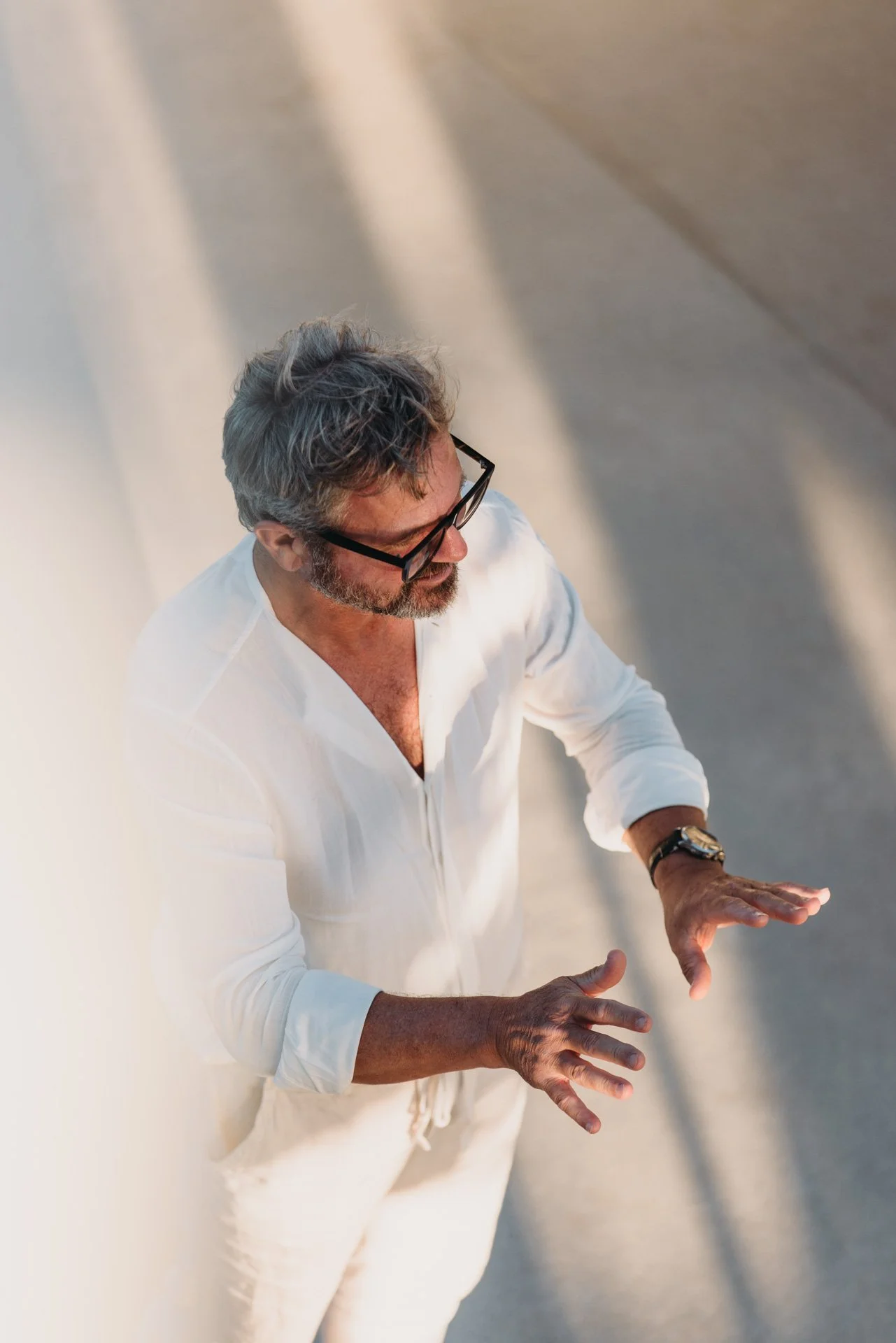
When Tom describes his process of creating marble art, he returns again and again to the stone itself. “The stone guides our design,” he writes, “which challenges us, often pushes us to our limits—but allows us to master more and more with serenity and dedication to the stone. We are convinced that this can be seen and felt when looking at and touching the vessels. This is the core and beauty of this work.”
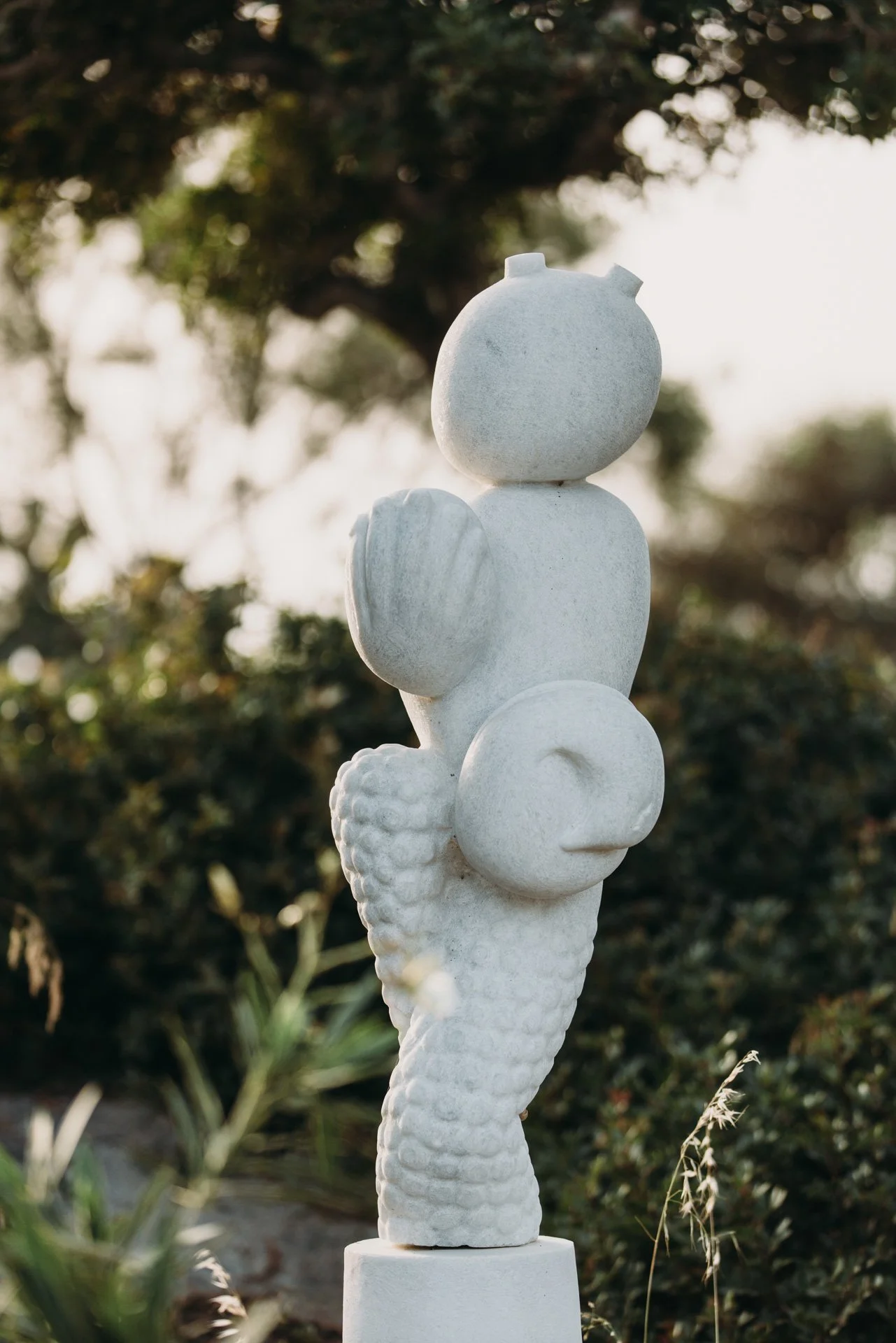
Serenity and dedication to the stone. There’s a philosophy here that has nothing to do with productivity metrics or scaling or disruption. Tom trained as a technical draughtsman and an art teacher. He taught art for twenty years before he ever thought of himself primarily as a marble sculptor. He is drawn to oppositions—marble’s strength and its delicacy, its ability to resemble both flesh and rock, often within the same work. He trusts his hand to learn what it needs to learn.
Priska is part of everything. “It is hard to describe,” Tom says, “but she is in some way a part of everything I do.” She handles the administration, the social media, the customer care—the world outside the workshop that allows the work inside it to continue. When you visit Kalodromo on Naxos, you’re visiting both of them, their shared life, the partnership they’ve built around this ancient material.
Asked what Greece means to him, Tom answered simply: “Good sense and madness.”
On Naxos Island, he likes to eat at Taverna Axiotissa and the Music Café and nearly every kafenion in the villages. He swims at a hidden small bay. He shops at the weekly farmers’ market. When he’s not sculpting, he paints, walks through his cactus garden, reads books, meets friends. The book on his bedside table? Sophocles’ Oedipus.
His insider tip for anyone visiting Naxos: eat dinner at Petrino, the small restaurant above Abrami Beach. Only with reservation. The meal is excellent, the view of the sea is amazing. Below is a small beach for a swim. “Probably with a mermaid,” he adds.
.
Kalodromo means good way. Not the fast way, not the efficient way, not the scalable way. The good way. It’s a name that contains an entire philosophy, a quiet resistance to everything that tells us value comes from volume, that more is always better, that the goal is optimisation.
Tom and Priska have chosen to live inside a different kind of time. The time of marble, which remembers the Acropolis. The time of the Cyclades, where sculptors have been working Naxian stone for five thousand years. The time of hands, which learn what they need to learn if you trust them. Their handmade marble vessels hold all of this—the ancient quarries and the Cycladic idols and the myths still whispering in the trees—rendered in crystalline white stone that lets the light shine through.
You can visit their marble studio by appointment. Call ahead. Sit under the shady tree. Let Tom tell you about the stone.
It’s the good way.
—
Visit Kalodromo Marble Studio, Naxos
By appointment: +30 699 653 5590
kalodromo.ch | @kalodromonaxos
Stockists include Museum of Cycladic Art (Athens), Fish & Olive Gallery (Naxos),
CAN Christina Androulidaki Gallery (Athens), and select galleries across Europe, USA, and Canada.
