
Greek Paprika Pepper Dip: The Red Sauce From the Souvlaki Shop
Updated July 2026
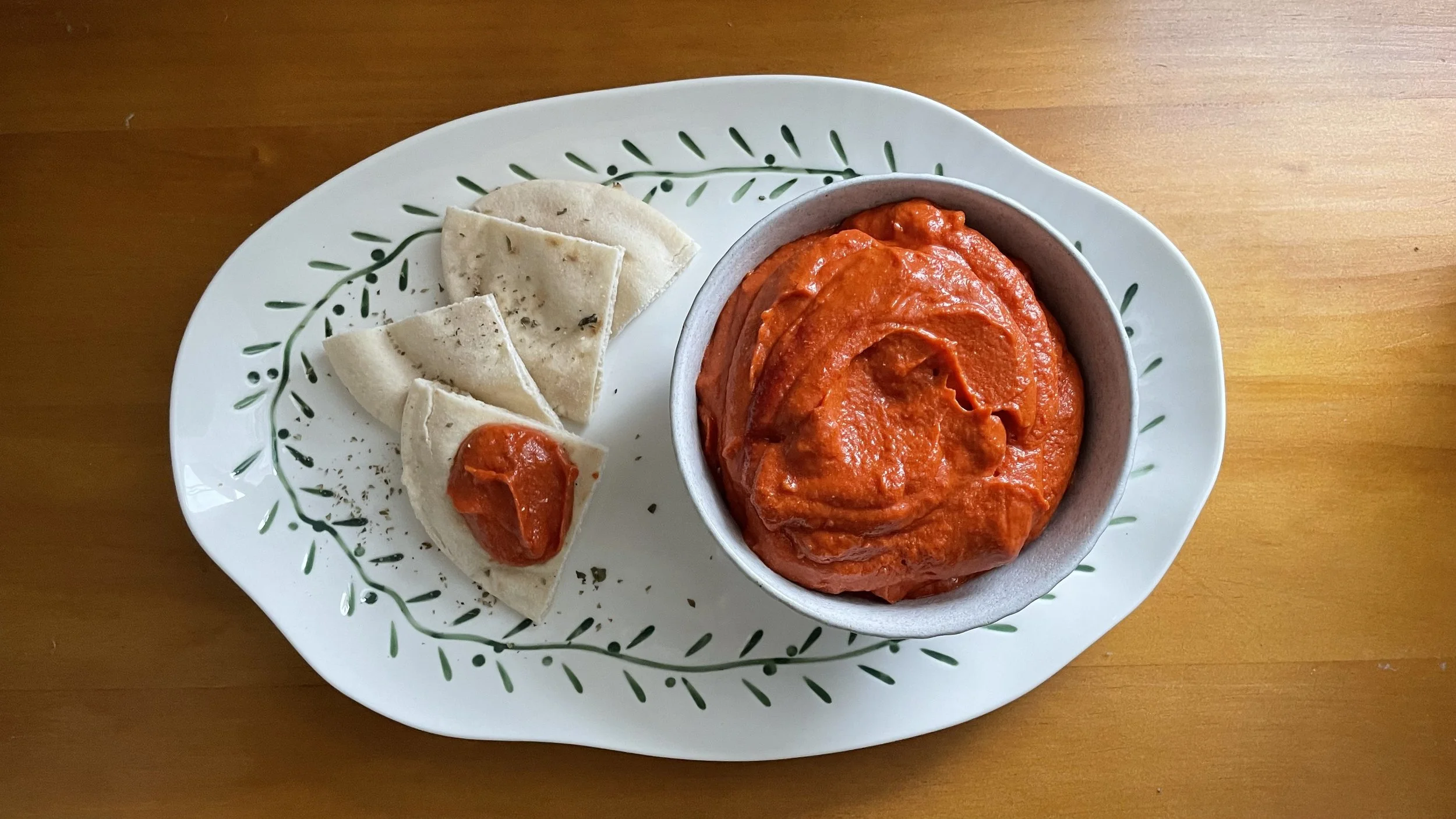
If you have eaten a souvlaki in northern Greece, you have met this dip. It comes in a little tub on the side, deep brick-red, sweet and tangy and faintly smoky, and you drag your chips and your pita and eventually your finger through it until it is gone. If you have ever stood at the counter wondering what the red sauce on your gyros is, this is it. Most people in Greece never make it. They buy it in a pot from the supermarket for a couple of euros, the same way they buy tzatziki.
That is a shame, because the homemade version is better, it takes ten minutes, and there is no cooking involved. You put everything in a food processor and you press the button. This is the recipe I make when people are coming over and I want one thing on the table that everyone fights over.
No hot sauce in this one. The original street version leans sweet and smoky rather than spicy, and that is how I like it.
The quick version
Prep: 10 minutes
Cooking: none
Makes: about 450g, enough for 6 to 8 as a starter
Keeps: up to a week in the fridge in an airtight container
What this dip is, and where it comes from
This is a northern Greek thing. Its home is up around Macedonia and Thessaloniki, the part of Greece that quietly out-eats Athens, where it lives on the counter of every souvlaki and gyro shop. People call it paprika dip, or just "the red one," and travellers tend to google it as the red souvlaki sauce or the red sauce on gyros. It is a cousin of the better-known feta dips like htipiti and tirokafteri, but it leans on tomato and roasted pepper rather than going heavy and creamy with cheese.
The colour does the talking: tomato paste and sweet paprika for the brick-red base, roasted red pepper for body, and feta for the salt and the tang. The feta is doing the same job here that it does across Greek cooking, and like all good feta it earns its keep. If you can get proper Florina peppers, the sweet red peppers from the north with protected status, use them. They are the real thing.
Ingredients
Quantities are forgiving. Taste as you go and adjust.
240g double-concentrate tomato paste. The thick kind in a tube or jar, not passata. A Greek brand like Kyknos is ideal if your local continental deli stocks it, otherwise a quality Italian one works too.
Half a jar of roasted red peppers (about 45g). Look for Florina peppers at a Greek or continental grocer. Roasted red capsicum from the supermarket works fine too.
100g Greek feta, good quality. Dodoni is widely stocked in Australia, or buy a wedge of brined feta from the deli counter rather than the dry pre-crumbled tubs.
1 tablespoon mild mustard (a smooth Dijon is perfect).
50ml extra virgin olive oil, the best you have.
1 garlic clove.
1 tablespoon white wine vinegar.
2 teaspoons dried oregano.
2 teaspoons sweet paprika.
1 teaspoon honey (or sugar). Greek honey if you have a jar going.
A pinch of ground black pepper.
No added salt. The feta brings plenty.
How to make it
Put everything except the black pepper into a food processor.
Blitz until smooth, scraping down the sides once or twice so the paprika and oregano distribute evenly.
Taste. Add the pinch of black pepper, and adjust: more honey if it is too sharp, a splash more vinegar if it is too flat, more feta if you want it saltier.
Scrape into a bowl or jar and chill for at least an hour. It firms up and the flavours settle as it sits.
That is the whole job. If it tastes a little raw and punchy straight out of the processor, do not worry. An hour in the fridge rounds it off.
How to serve it
This dip was built for chips, so start there: hot oven chips, a bowl of this, and you have lost the room. Beyond that, it goes on warm pita or flatbread, alongside grilled meat and souvlaki, on a meze board next to tzatziki and olives, or spread thick under the fillings in a wrap.
It also pulls its weight on a bigger spread. Put it out as part of an Easter or name-day table and it disappears first. It is the cheap, loud, crowd-pleasing end of Greek food, a long way from the country's Michelin-starred tables, and just as worth your time.
Cycladic Spaces tip: make it a day ahead. Like most Greek dips, it is better on day two once the garlic and oregano have mellowed into everything else.
Make ahead and storage
Keep it in an airtight container in the fridge for up to a week. It does not freeze well, the texture turns grainy, so make what you will eat. If a little liquid separates on top after a few days, stir it back through and it comes good.
Greek paprika pepper dip FAQs
What is the red sauce on Greek souvlaki or gyros? It is usually this paprika dip: a sweet, smoky red dip of tomato paste, roasted red pepper and feta. Shops in northern Greece serve it on the side of souvlaki, gyros and chips. Some versions are spicier, but the base is the same.
What is Greek paprika dip made of? Tomato paste, roasted red pepper, feta, olive oil, garlic, mustard, vinegar, oregano, sweet paprika and a little honey, blitzed smooth. No cooking required.
Is it spicy? Not in this version. The classic northern street version is sweet and smoky rather than hot. If you want heat, a pinch of chilli flakes does the job, but it is not traditional.
What can I use instead of Florina peppers? Any jarred roasted red pepper or roasted red capsicum. Florina peppers are sweeter and more authentic, but the supermarket jar still makes a very good dip.
What do you eat it with? Chips, warm pita, flatbread, souvlaki and grilled meats, or as part of a meze board. It also works as a sandwich and wrap spread.
Can I make it dairy-free? The feta is doing a lot of the work, so it changes the dip, but a firm dairy-free feta-style cheese will get you close. Add a little extra salt to compensate.
How long does it keep? Up to a week in the fridge in an airtight container. It does not freeze well.
Where to read next
Eat like a local in Thessaloniki, the food capital where this dip belongs.
Michelin star restaurants in Greece, for the other end of the Greek table.
The best time to visit Greece, for when to go and eat it at the source.
Make a batch on a Sunday and you will find a reason to put it on everything by Wednesday.
