
The Greek Admin Setup Guide for Australians
If you’ve just got your Greek citizenship, inherited property, or need to manage tax obligations, you’ll need to set up your administrative life in Greece. This guide covers exactly how to do that from Australia: what you need, in what order, and how long each step takes. Good luck, you’re going to need it.
The Order of Operations
Everything in the Greek system has dependencies. You can’t open a bank account without an AFM. You can’t manage your taxes without myAADE. You can’t do anything remotely without a Power of Attorney. Here’s the sequence:
Power of Attorney (if doing everything remotely)
AFM (Greek tax number)
myAADE/TAXISnet (digital tax portal)
Personal Number (unified digital ID)
Greek bank account (optional but recommended)
If you’re travelling to Greece and can visit a tax office (DOY) in person, you can skip step 1 and get the AFM same-day. From Australia, plan for the full sequence to take four to eight weeks.
Power of Attorney (Plirexousio)
A Power of Attorney (PoA) authorises someone in Greece, usually a lawyer or accountant, to act on your behalf. You’ll need one for almost everything you do remotely: getting an AFM, signing property documents, accepting an inheritance, opening a bank account, and dealing with tax offices.
How to get one from Australia
Book an appointment at the Greek Consulate in Sydney, Melbourne, or Canberra through MyConsulLive. Bring your Greek passport or ID, and the details of the person you’re authorising. The consulate certifies your signature and the PoA is valid for use in Greece immediately.
Alternatively, you can sign a PoA before an Australian notary and have it Apostilled by DFAT, then translated by a NAATI-accredited Greek translator. This route takes longer but works if consulate appointments are scarce.
General vs specific
A general PoA gives broad authority across all legal and financial matters. A specific PoA limits authority to named tasks (e.g. “apply for AFM and file tax returns on my behalf”). Always use a specific, time-limited PoA unless your lawyer specifically advises otherwise. A general PoA is more authority than most professionals need and creates unnecessary risk.
Timeline: 1–2 weeks (consulate route). 2–4 weeks (Apostille route).
Getting Your AFM (Greek Tax Number)
The AFM (Arithmos Forologikou Mitroou) is your nine-digit Greek tax identification number. You need it for everything: property ownership, tax filing, bank accounts, utility contracts, even buying a SIM card on a contract. It’s issued once and never changes.
Three ways to get an AFM from Australia
Through a Greek professional: Your lawyer or accountant in Greece applies on your behalf using the PoA. They submit the M1 form, your passport copy, and proof of address to the DOY (tax office) or electronically through myAADE. This is the most common route for diaspora clients. Expect two to five business days once documents are submitted. Cost: €100 to €500 (professional fees; the AFM itself is free).
Via myAADElive video call: AADE now offers a free remote video identification service. You submit an electronic application, then verify your identity by video call with a tax office employee. The AFM and authentication key (Kleidarithmos) are sent to your email. Free, but availability depends on scheduling and demand.
Through the Greek Consulate: Some consulates process AFM applications directly, though availability varies and some have suspended this service. Call the consulate in Sydney, Melbourne, or Canberra to confirm before booking. If available, processing takes two to six weeks.
What you need
Valid passport (Greek or Australian). Proof of address (Australian utility bill or bank statement). Completed M1 form (your professional will handle this). If applying through a professional: a signed PoA. If you’re married: your spouse’s details and potentially a marriage certificate (Apostilled and translated).
Activating myAADE and TAXISnet
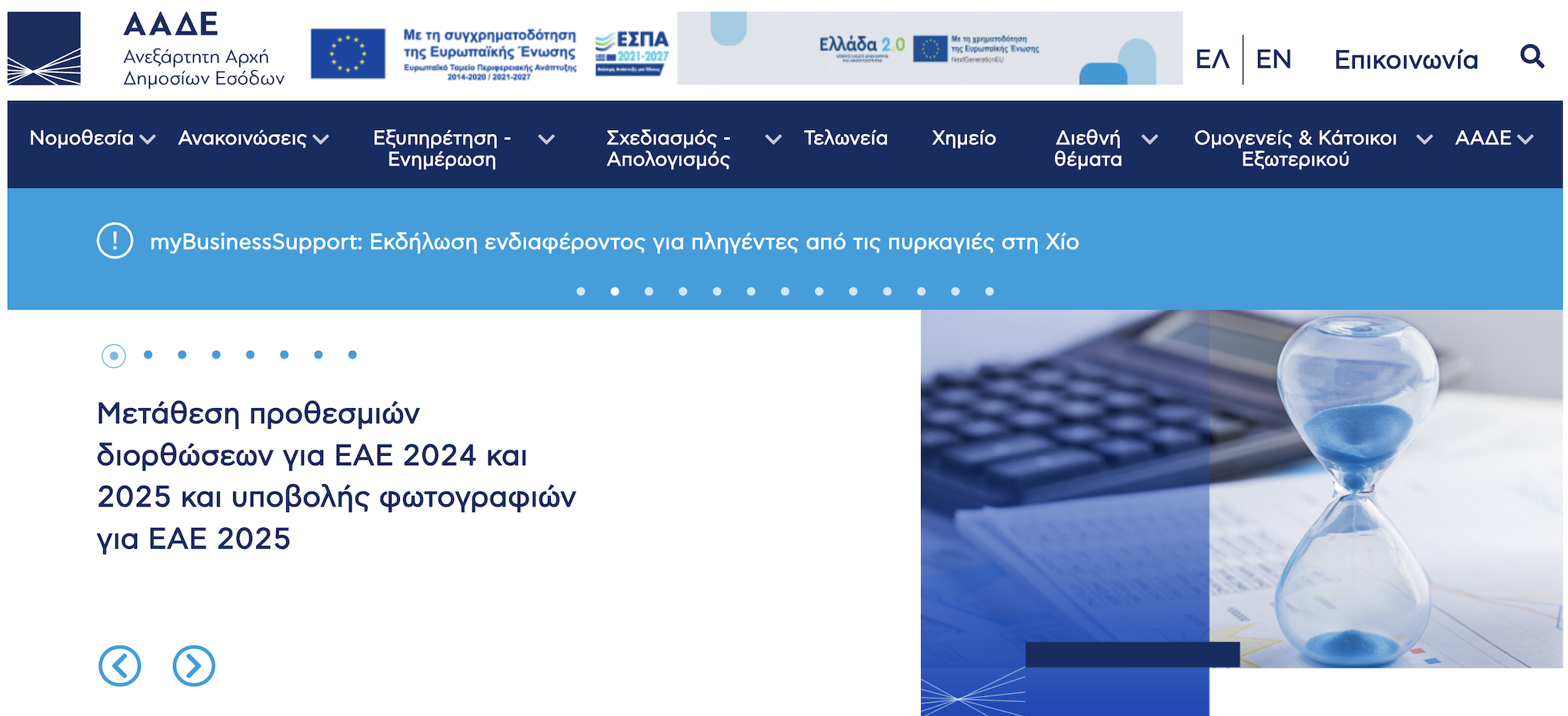
Once you have your AFM, you need to activate your access to myAADE, the Greek tax authority’s online portal (formerly known as TAXISnet). This is where you file tax returns (E1), manage your property declaration (E9), check and pay ENFIA, download tax clearance certificates, and handle virtually all tax-related business.
When your AFM is issued, you also receive a Kleidarithmos (authentication key). You use this to create your myAADE account and generate login credentials. The system requires a Greek mobile number for two-factor authentication. If you don’t have one, your accountant can register their number during initial setup, or you can use a Greek SIM (available from some providers that ship internationally).
Critical point: Get your own myAADE login, not just your accountant’s. You should be able to log in independently and verify that filings are being made, ENFIA is correct, and nothing is outstanding. This is your most important safeguard when managing Greek tax remotely. I have PERSONALLY been screwed over by an accountant and they WILL hold your details for randsom and make your life hell.
The Personal Number (Prosopikos Arithmos)
Since June 2025, Greece has been rolling out a new unified digital ID: the Personal Number. This is a twelve-character alphanumeric code (incorporating your AFM) that will gradually replace the need for separate numbers across all government services. It is printed on the new Greek ID cards and stored digitally in the Gov.gr Wallet app.
As of late 2025, 9.3 million citizens (including Greeks abroad and minors) have been assigned a Personal Number, many of them automatically. If you have a Greek AFM and TAXISnet credentials, yours may already exist. You can check and confirm it through the myInfo platform on gov.gr. Greeks abroad who don’t have TAXISnet access can get their Personal Number through a Greek consulate.
The Personal Number does not replace your AFM for tax purposes. Think of it as a master key that will eventually link all your interactions with the Greek state. It’s not urgent for day-to-day property management, but it’s worth setting up while the system is still new.
Opening a Greek Bank Account
A Greek bank account is not strictly required to own property or pay taxes, but it makes everything significantly easier: paying ENFIA, receiving rental income, covering utility bills, and managing property expenses. Many Greek-Australians maintain a basic current account for exactly these purposes.
The in-person requirement
Most Greek banks require you to sign documents in person at a branch to open an account. This is the single biggest practical barrier for Greek-Australians who cannot travel to Greece. Two banks, Piraeus Bank and Eurobank, have been reported to accept account openings via Power of Attorney, but policies vary by branch and change frequently. Confirm directly with the bank before relying on this.
What you need
Aside from a lot of patience and courage, a valid passport (two forms of ID preferred). Greek AFM. Proof of foreign address (Australian utility bill). Proof of income or occupation (payslip, tax return, or pension statement). In some cases, a bank statement from your Australian bank showing the source of funds you intend to deposit. All documents may need to be translated into Greek.
Alternatives
If you can’t open a traditional Greek bank account remotely, a Wise or Revolut account with EUR capability can serve as an interim solution for sending money to Greece, paying professionals, and managing exchange rates. These are not replacements for a Greek bank account (ENFIA payments and some transactions require a Greek IBAN), but they reduce the urgency.
Timeline: Same day if in person with complete documents. 1–3 weeks via PoA (where accepted). Budget a bank visit during your next trip to Greece if possible.
NAATI Translations and DFAT Apostille
Any Australian document you use in Greece (birth certificates, marriage certificates, death certificates, wills, court orders) will need two things: an Apostille from DFAT and a certified translation into Greek by a NAATI-accredited translator.
Apostille
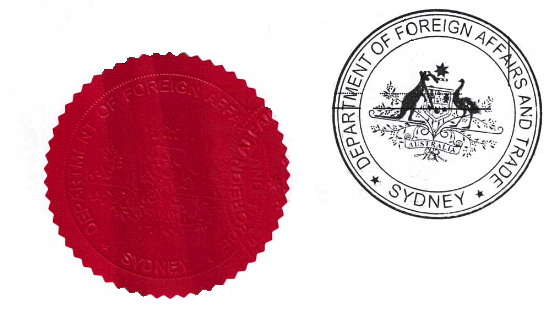
An Apostille is an international certification that authenticates the origin of a public document. Australia is a signatory to the Hague Apostille Convention. You apply through DFAT’s Smartraveller website. The Apostille is attached to the original document (or a certified copy). Processing takes approximately ten business days, plus postage. Cost: A$89 per document (as of 2025). The Apostille must be obtained before the document is translated.
NAATI translation
Once Apostilled, the document must be translated into Greek by a NAATI-accredited translator (Greek language). NAATI (National Accreditation Authority for Translators and Interpreters) is the Australian standard. Greek authorities accept NAATI-certified translations. You can find accredited Greek translators through the NAATI directory. Typical turnaround: three to seven business days. Cost: $50 to $150 per page depending on complexity.
Tip: If you’re going through the citizenship or inheritance process, you’ll need multiple documents Apostilled and translated. Batch them to save time and potentially negotiate a package rate with your translator.
Digital Tools Reference
myAADE – Tax portal. E1, E9, ENFIA, certificates, payments.
gov.gr – Central government services. Digital ID, certificates, declarations.
myInfo – Personal Number management and identity verification.
Gov.gr Wallet – Mobile app for digital ID, driving licence, and Personal Number.
MyConsulLive – Appointment booking for Greek consular services in Australia.
akinita.gov.gr – Property transfer and parental grant declarations.
diathikes.gr – Will registration (since November 2025).
Smartraveller (DFAT) – Apostille applications for Australian documents.
Frequently Asked Questions
Do I already have an AFM?
Possibly. If you’ve ever filed taxes in Greece, owned property, or had any official interaction with the Greek state, you may already have one. Your Greek accountant or lawyer can look it up, or you can check through myAADE if you have credentials. The AFM never expires and never changes.
Can I get an AFM without visiting Greece?
Yes. The three routes are: through a Greek professional with Power of Attorney, via myAADElive video call with the tax office, or through a Greek consulate in Australia (where available). Most Greek-Australians use the first option.
Do I need a Greek mobile number?
For myAADE two-factor authentication, yes. Your accountant can use their number during setup, or you can get a Greek SIM shipped internationally. Some providers offer eSIMs. It is not required for the AFM itself.
How much does all of this cost?
The AFM is free. Power of Attorney at the consulate is typically under A$100. DFAT Apostille is A$89 per document. NAATI translations run $50 to $150 per page. A Greek accountant charging for AFM setup and initial configuration typically charges €100 to €500. A Greek bank account has minimal or no opening fees.
Can I open a Greek bank account without visiting Greece?
Difficult. Most banks require an in-person visit. Piraeus Bank and Eurobank have been known to accept Power of Attorney for account opening, but policies vary by branch. Confirm directly. Plan to open an account during your next trip if possible.
What is the Personal Number and do I need it now?
The Personal Number is Greece’s new unified digital ID, rolling out since June 2025. It does not replace your AFM for tax purposes. Most Greek citizens (including those abroad) have been assigned one automatically. Check via myInfo on gov.gr. It’s not urgent for day-to-day property matters, but worth confirming.
What’s the difference between a general and specific Power of Attorney?
A general PoA gives someone broad authority to act on your behalf in all matters. A specific PoA limits authority to named tasks. Always use a specific, time-limited PoA unless you have a compelling reason and trust the person completely.
Do I need to Apostille documents before or after translation?
Before. The Apostille is applied to the original document (or certified copy) by DFAT. The translator then translates both the document and the Apostille together. Greek authorities need to see the Apostille certification on the original-language document.
How do I find a NAATI Greek translator in Australia?
Search the NAATI directory online at naati.com.au. Filter by language (Greek) and credential level (Certified Translator or higher). Many are based in Melbourne and Sydney. Ask the Greek community or your consulate for referrals.
Is there a checklist of documents I might need?
Common documents that need Apostille and translation for Greek matters: Australian birth certificate, marriage certificate, death certificate of deceased relative, Australian will (if applicable), proof of name change. Your Greek lawyer or accountant will tell you exactly which documents are needed for your specific situation.
The Greek bureaucratic system is getting better. The digital platforms are real, the remote options are expanding, and most of what you need can be handled from Australia with the right professionals and the right documents. The key is getting the sequence right, having your paperwork in order, and not trying to do it alone.
This article is based on publicly available information from Greek and Australian government sources as of March 2026. Processes, fees, and requirements change frequently. Confirm current requirements with your Greek professional and the relevant consulate before proceeding.
Sources
AADE: AFM and Digital Services
AADE: Greeks Abroad & Non-Residents
AADE: Tax Guide for Greeks Abroad (PDF)
AADE: FAQs for Greeks Abroad (PDF)
