
The man before the saint
On Kapodistrias, the film about him, and a Greek who deserves to be remembered
There are not many Greeks of the modern era I would call great without flinching. Kapodistrias is one of them. My family has thought so for as long as I have been listening, and I suspect, if you grew up in a Greek house, yours has too. So when I tell you that Kapodistrias (The Governor), the new film by Yannis Smaragdis, opens at Palace Cinemas around Australia this week, I am not telling you about it from a polite distance. I am telling you the way I would tell my cousins. Go.
Then come back, because there is more to say than the press materials will tell you.
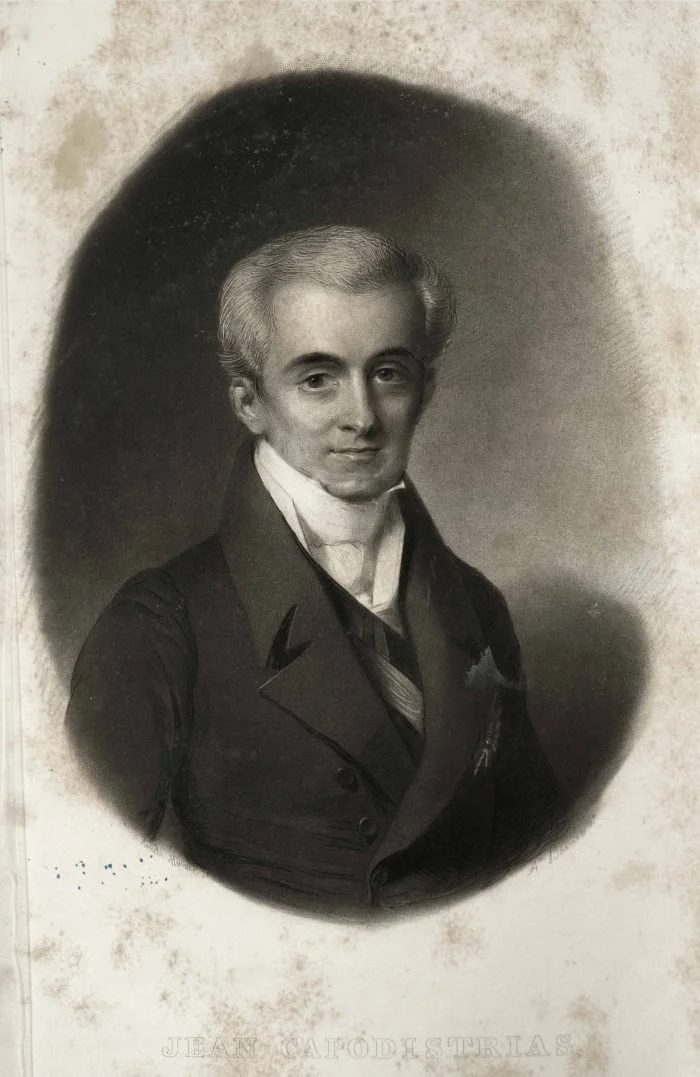
image courtesy of https://www.capodistriasmuseum.gr/
Ioannis Kapodistrias
Ioannis Kapodistrias was born in Corfu in 1776, when the island still belonged to Venice. He studied medicine and law in Padua, returned home, and treated his poorer neighbours without charging them. He drifted, as the talented young men of small empires do, toward diplomacy. By his late thirties he was Foreign Minister of the Russian Empire under Tsar Alexander I, co-running the foreign affairs of one of Europe's great powers. He helped draft the Swiss federal constitution and remains, to this day, an honorary citizen of Geneva. The shape of modern Switzerland, federal, neutral, weirdly stable, has his fingerprints on it. Long before he ever set foot in liberated Greece, he had already helped invent another country.
When the Greek revolution came, he resigned from St Petersburg, settled in Geneva, and worked the salons of Europe for years on behalf of a homeland that did not yet exist. In 1827, the Third National Assembly at Troezen elected him the first head of state of independent Greece. He arrived in 1828 to a country with no currency, no national bank, no functioning courts, no schools that answered to anyone, no army that answered to a centre. There were instead several powerful families who had run their corners of the resistance and assumed they would now run their corners of the state.
He worked, by every contemporary account, from five in the morning until ten at night, for three years, until they killed him. He founded the National Bank. He minted the Phoenix, the first national currency. He started schools, including the first orphanage on Aegina for the children the war had left behind. He brought in the potato to stave off famine, an unglamorous detail I find more moving than any monument. He used his personal fortune to fund the government, because there was no government yet that could fund itself. He refused his own salary.
On 27 September 1831, on the steps of the Church of Saint Spyridon in Nafplio, two men shot and stabbed him to death. He had been warned. He went to liturgy anyway. The bullet that missed is still lodged in the wall of the church, and you can put your finger in the hole.
What followed his death is the part that stays with me.
Greece collapsed into anarchy within months. The three guarantor powers, Britain, France and Russia, used the chaos as cover to install a seventeen-year-old Bavarian prince named Otto on a throne that had not existed before they invented it, and who arrived speaking no Greek, knowing no Greeks, and answerable to no Greek. The man who might have built a real state had been three years into a forty-year project, and they shot him on his way to church.
The Swiss philhellene Eynard, who knew him well, wrote when the news reached him: He who murdered Kapodistrias murdered his homeland. I think about that line often. It is not hyperbole. It is, plausibly, just description.
The film
This is the man Smaragdis has put on screen, and to his credit he has put him there without apology. The film is reverent. It is unembarrassed by faith. It frames Kapodistrias as a moral figure rather than a political operator, and it stages his life with the gravity of someone who believes the subject deserves gravity. In the cultural moment we live in, where every historical biopic seems contractually obliged to deflate its subject, to find the feet of clay, to flatten the great into the merely interesting, this is itself a choice worth taking seriously.
It will not surprise you that some of the Athens-based film critics have not taken it seriously. The major Greek film publications, Athinorama, LiFO, Athens Voice, FLIX, EFSYN, have largely panned the film as hagiography, accusing Smaragdis of building a saint instead of a man. Some of those criticisms are fair on their own terms. Smaragdis is a director of a particular school, and his Kapodistrias, like his Kazantzakis and his El Greco before, is unmistakably a luminous Greek soul rather than a complicated person. If you go in expecting a cool, ironic, deconstructive biopic of the kind festival audiences applaud, that is not the film you will see.
The Greek public has gone anyway. By late January, Kapodistrias had crossed 700,000 tickets and become the fifth highest-grossing Greek film of all time. People wept in the cinema. They stood at the credits. There is a thing the metropolitan critic class sometimes misses about its own people, which is that there is still an enormous appetite among Greeks for sincerity, for reverence, for the unironic veneration of a man who deserves it. The success of this film is partly that. We have not had a Kapodistrias film before. There are no real cinematic monuments to him. For a country that erects a bust of every minor warlord of the revolution, the absence of Kapodistrias from the national screen has been a strange, telling silence.
Smaragdis ended that silence. That is worth something, even if you have notes.
Context
There are two pieces of context I want you to carry into the cinema with you, because the press kit will not give them to you and they are part of the story.
The first is that the Greek state did not pay for this film. The National Centre for Cinematography, which funds Greek productions of every political stripe and aesthetic register, declined to fund this one. EU creative grants were closed off. What got Kapodistrias finished, in the end, was the diaspora. Greeks in New York, Toronto, Melbourne, Sydney, Adelaide, ordinary people writing ordinary cheques, alongside the late patron Nikos Mouyiaris, who told Smaragdis to hurry up and finish before he died, which he then did. ERT, NOVA and the public power company eventually came in. But the film exists because Greeks abroad decided it should. When Kapodistrias arrives at Palace Norton Street and the Astor this week, it is arriving at venues partly built and funded by communities of people like us. There is something quietly fitting about that. The man who valued the diaspora more than most of his contemporaries, who understood that Hellenism was bigger than the borders of any one Greek state, is now travelling to us through the same diaspora networks that helped make him in life.
The second is the matter of the British Foreign Office archives. The documents covering the period from 1828 to 1831, the years of Kapodistrias's governorship and assassination, remain classified in London. Nearly two hundred years on. The film points at this, fairly directly, and the British Embassy reportedly complained to the Mitsotakis government when it did. Make of that what you will. I will say only that the dominant theory of his death, two grieving Maniot men avenging an arrested patriarch, has more holes in it than is comfortable, and the only government on earth still actively hiding paperwork about it is the one whose ambassadors at the time openly considered him an obstacle.
You can decide for yourself what that means. I have already decided what I think.
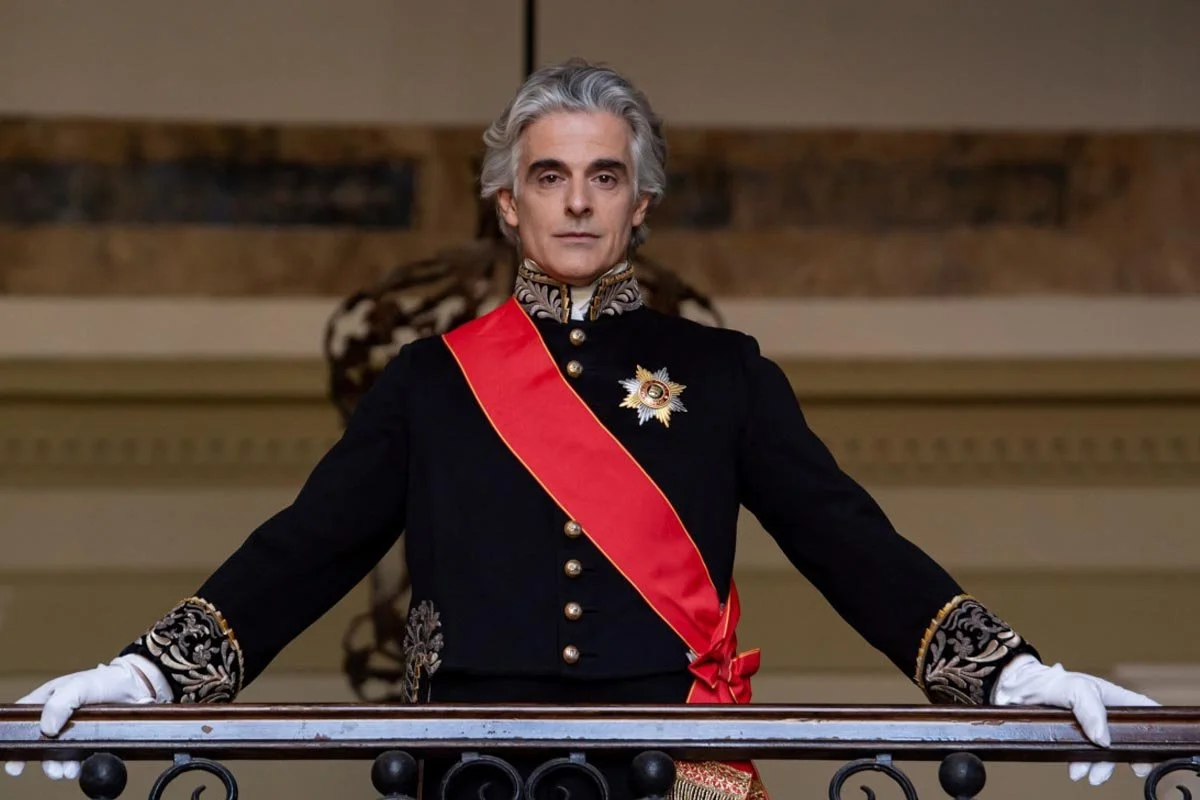
Go and see Kapodistrias. Take your parents if they will come, and your children if they are old enough. Antonis Myriagkos, by every account including the harshest, gives a performance of real weight in the title role. The film is not perfect, and you do not need it to be perfect to be moved by it. Few films about people we love are perfect.
What it is, for the Greek-Australian community at this moment, is rare. A Greek film, on Australian screens, about one of the few Greeks of the modern era whose life was unambiguously good, who served and was killed for serving, who built a country and was murdered for building it well. That is worth two hours and the price of a ticket. It is worth more than that.
We owe him, of all people, the courtesy of remembering him. The film is the occasion. The man is the point.
Kapodistrias (The Governor) screens nationally at Palace Cinemas from this week, including Melbourne, Sydney, Brisbane, Canberra, Perth, Byron Bay and Ballarat. Preview screenings: The Astor Theatre, Melbourne, Wednesday 29 April at 7.30pm and Sunday 3 May at 3pm. Palace Norton Street and Palace Moore Park, Sydney, Sunday 3 May at 3pm and 6pm. Tickets at palacecinemas.com.au.
