
The Marti Bracelet: An Ancient Greek Tradition for the First Day of Spring
On the ritual of twisting red and white thread on the last night of February, and why Greeks have been doing it for thousands of years.
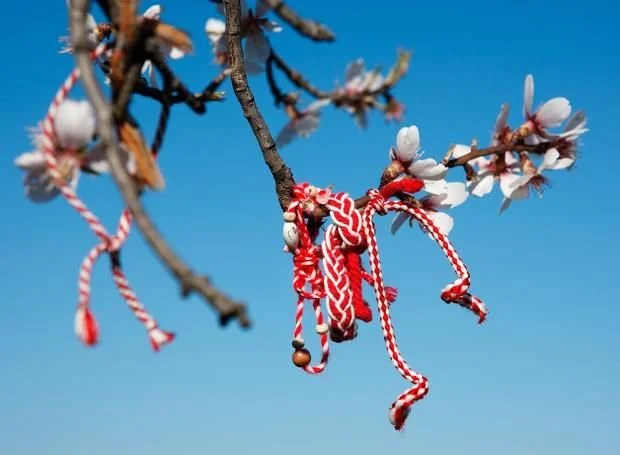
There is something quietly radical about a piece of string.
Not a gemstone, not a gold chain, not a signet ring engraved with your family crest. A thread. Two threads, actually, one red and one white, twisted together by your own hands on the evening of February 28th and tied around your wrist before you step outside the next morning. That's it. That's the whole thing. And yet this act, so small it barely registers as a gesture, let alone a ritual, has been performed in Greece for thousands of years.
The Marti bracelet, or martaki (μαρτάκι), takes its name from Martios (Μάρτιος), the Greek word for March. It marks the first day of spring in the Greek calendar, and if you've spent any time in Greece at the turn of the season, you'll have seen them everywhere: on the wrists of schoolchildren tumbling out of classrooms, on grandmothers buying spinach at the laiki, on bartenders and taxi drivers and toddlers in pushchairs. Red and white, twisted together, small enough to forget you're wearing it until you catch it in the light and remember what it means.
Where does the Marti bracelet tradition come from?
The tradition is old. Not old in the way we casually say things are old, not "my grandmother used to do this" old, but ancient mystery cult old. The roots of the Marti bracelet trace back to the Eleusinian Mysteries, those secretive springtime rites dedicated to Demeter and Persephone that drew worshippers to the sanctuary at Eleusis for nearly two millennia. Initiates of the Lesser Mysteries, the purification rituals held each spring, tied a thread called a kroki (κρόκη) around their right hand and left foot. The gesture was one of binding and protection, of marking the body as it prepared to cross a threshold between one state and another. Winter to spring. Death to life. The unknown to the known.
We don't know exactly what happened inside the Telesterion, the underground hall where the final rites took place. That was the whole point. The Mysteries were kept secret on pain of death, and the initiated honoured that silence for centuries. But the thread survived. The act of tying something to the body at the turning of the season persisted long after the cult dissolved and the sanctuary crumbled, long after Christianity rewrote the calendar and renamed the holy days. The string endured because the instinct behind it is older than any single religion: the desire to mark a change, to acknowledge that the world is shifting, and to participate, physically and deliberately, in that shift.
What does the Marti bracelet mean? The symbolism of red and white
I love the symbolism of the colours, partly because no one can entirely agree on what they mean.
The most common explanation is that the red thread represents life, vitality and passion, the flush of blood under skin, the redness of cheeks touched by the returning sun. The white thread stands for purity and light. Together they hold the tension of the season: the brightness of longer days against the rawness of a body emerging from winter. Other readings are more pragmatic. In older times, fair skin was prized because it signalled that you didn't labour in the fields, and the Marti bracelet was said to protect children's complexions from the deceptive March sun. Βάλε Μάρτη για να μη σε πιάσει ο ήλιος, "wear a Marti so the sun doesn't catch you." There's a charming practicality to this. March in Greece is tricky. The sun feels warm and generous, almost summer-like, but it carries a sting. Step outside without respect for it and you'll return flushed and feverish, wondering what happened. The Marti bracelet is a reminder: don't be fooled. The season is still becoming itself.
When do you take off a Marti bracelet? The regional customs of Greece
What I find most beautiful about the Greek March bracelet tradition, though, is not the making of the bracelet but the unmaking of it.
You wear your Marti through all of March, through the unpredictable weather, the sudden cold snaps, the afternoons so warm you could almost believe summer has arrived early. Then, depending on where in Greece you are, one of several things happens.
In some regions, you remove the Marti bracelet on March 31st and hang it on the highest branch of a fruit tree near your home, so the tree might stay healthy and bear well through the season. In others, you wait. You keep wearing it until you see the first swallow of spring, those sharp-winged travellers returning from Africa, and then you untie your Marti and leave it draped on a rose bush so the bird can carry the thread away to weave into its nest. In parts of central Greece, the bracelet comes off at Easter: burned in the flame of the lambada (λαμπάδα), the votive candle lit on the night of the Resurrection, or thrown into the coals beneath the roasting lamb on Pascha Sunday.
Each version of the ending tells you something about the people who practise it. The tree-hangers are asking for abundance. The swallow-watchers are paying attention, scanning the sky, waiting for that particular silhouette, and the moment it appears, they answer it with an offering. The Easter burners are folding an older, pagan rhythm into the Christian one, letting the fire consume whatever the bracelet gathered during its month on the wrist. None of these endings are wrong. All of them are generous. The bracelet was never yours to keep. It was always meant to be given back.
The Marti bracelet across the Balkans
It's worth noting that this tradition doesn't belong to Greece alone. In Bulgaria, people wear a martenitsa (мартеница) on March 1st, often in the form of two small dolls, one red and one white, pinned to the lapel. In Romania and Moldova, it becomes the mărțișor, a small brooch or trinket given as a gift. In North Macedonia it's the martinki, and in Albania the verore. The thread changes shape as it crosses borders, but the impulse is the same across the Balkans: acknowledge the turning of the season, protect the body, welcome what comes next.
How to make a Marti bracelet
We make Marti bracelets at Cycladic Spaces every year on the first of March, and it has become one of my favourite rituals, not despite its simplicity but because of it.
If you'd like to make your own, it couldn't be simpler. Cut two lengths of thread, one red and one white, about 60 centimetres each. Twist or braid them together. Tie the bracelet around your left wrist on the morning of March 1st, before you leave the house. Wear it through the month.
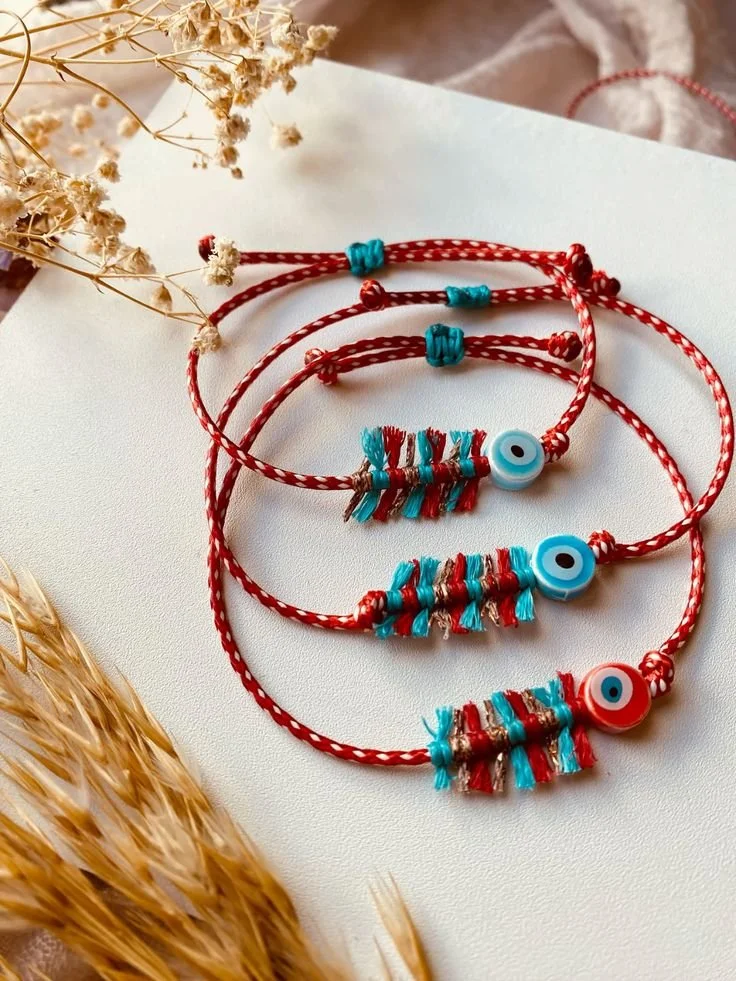
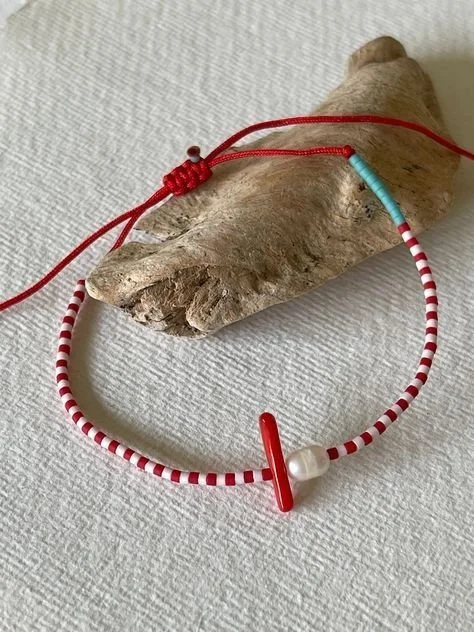
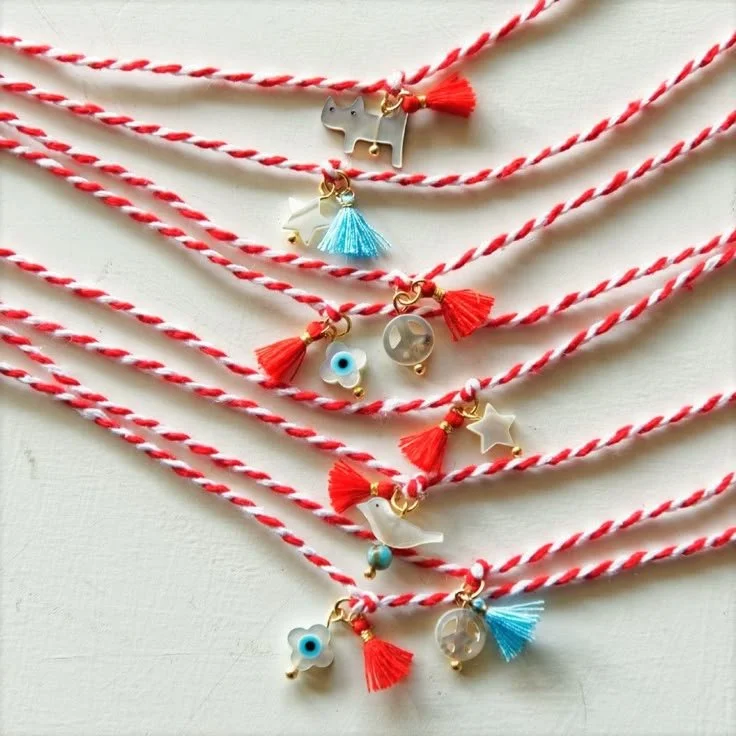
There is no right way to twist the threads. Some people braid them neatly, some wind them loosely, some add a bead or an evil eye charm (mati) for extra protection. Children in Greek schools make them with the focused intensity that children bring to anything involving string and scissors, and the results are gloriously imperfect. That's rather the point. The Marti bracelet is not a piece of jewellery. It's a gesture. An acknowledgement that the season has turned and that you are here, alive, paying attention to it.
Why we still make them
I think about this every February, sitting with red and white thread in my hands, how strange and wonderful it is that this act connects me to women in Eleusis who did something similar twenty-five centuries ago, and to my yiayia's generation, and to every Greek child who ever knotted string around a small wrist and ran out the door on the first morning of March. The Marti bracelet doesn't require belief in anything specific. It doesn't ask you to subscribe to a doctrine or show up at a particular building at a particular hour. It asks only that you notice: winter is ending. Spring is here. And you might want something on your wrist to remind you.
And when you see something that tells you spring has properly arrived, a blossom, a swallow, a morning so warm it makes you catch your breath, take it off and give it to a tree.
Some things don't need to be complicated to be sacred.
Καλό Μάρτη.
Frequently asked questions about Marti bracelets
What is a Marti bracelet? A Marti bracelet (also called a Martis bracelet or martaki) is a traditional Greek bracelet made from twisted red and white thread. It is worn from March 1st to mark the beginning of spring in Greece. The tradition dates back to the Eleusinian Mysteries of ancient Greece, where initiates tied threads called kroki around their hands and feet during springtime purification rites.
What do the red and white threads symbolise? The red thread of the Marti bracelet symbolises life, vitality and passion, while the white thread represents purity and light. Together, the two colours represent the transition from winter to spring. Traditionally, the bracelet was also believed to protect the wearer's skin from the strong March sun.
When do you put on a Marti bracelet? The Marti bracelet should be made on the last day of February and tied around the left wrist on the morning of March 1st, before leaving the house. This timing is an important part of the tradition across Greece.
When do you take off a Marti bracelet? This varies by region in Greece. In some areas, the bracelet is removed on March 31st and hung on a fruit tree. In others, it is removed when you see the first swallow of spring, so the bird can use the thread to build its nest. Some Greeks keep the bracelet until Orthodox Easter and burn it in the flame of the lambada candle or in the coals of the Pascha lamb fire.
Is the Marti bracelet only a Greek tradition? The tradition is practised across the Balkans, not only in Greece. In Bulgaria it is known as the martenitsa, in Romania and Moldova as the mărțișor, in North Macedonia as the martinki, and in Albania as the verore. Each country has its own variations, but all share the custom of wearing red and white on March 1st to welcome spring.
How do you make a Marti bracelet? Cut two lengths of thread (one red, one white) approximately 60 centimetres each. Twist or braid them together and tie the bracelet around your wrist. Some people add beads or an evil eye charm for extra protection. There is no single correct method, and handmade imperfections are part of the tradition.
